
Last updated November 2, 2026
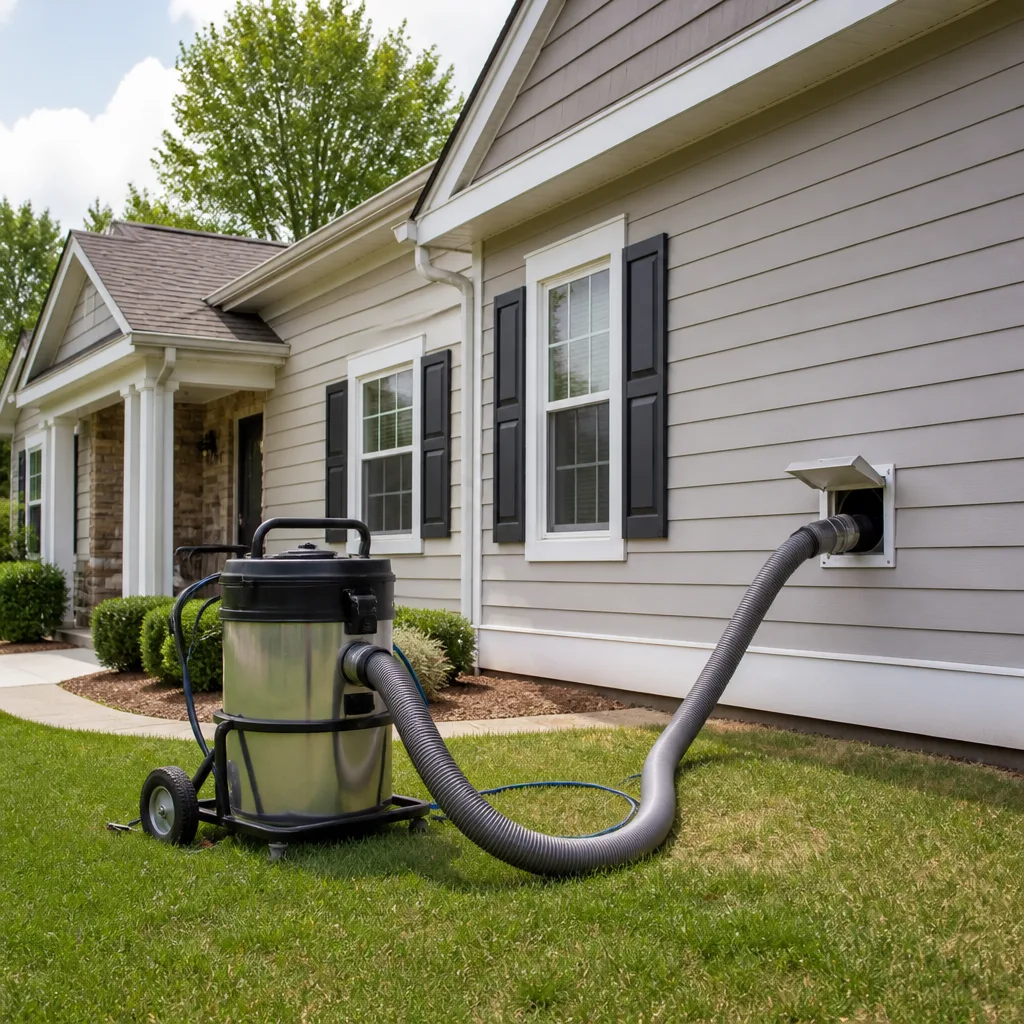 Whole-home duct cleaning
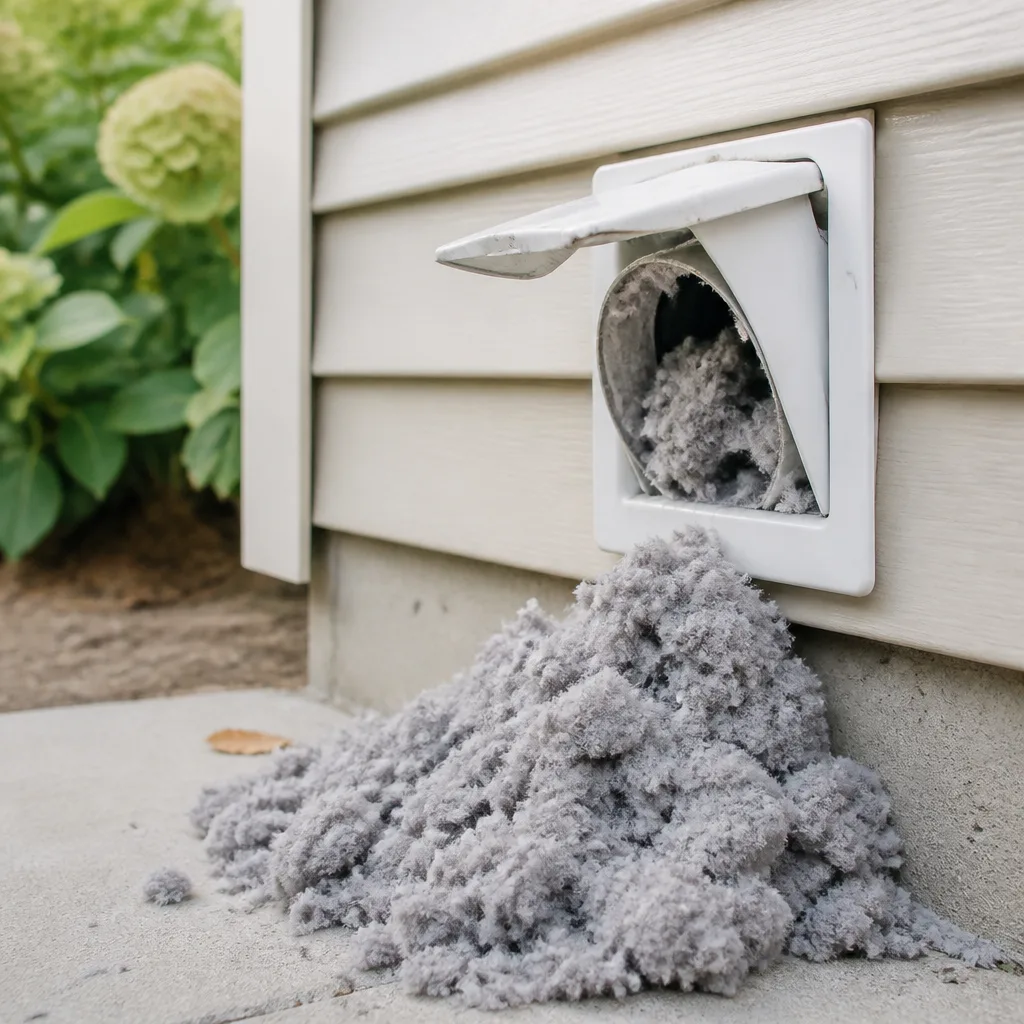 Dryer vent cleaning
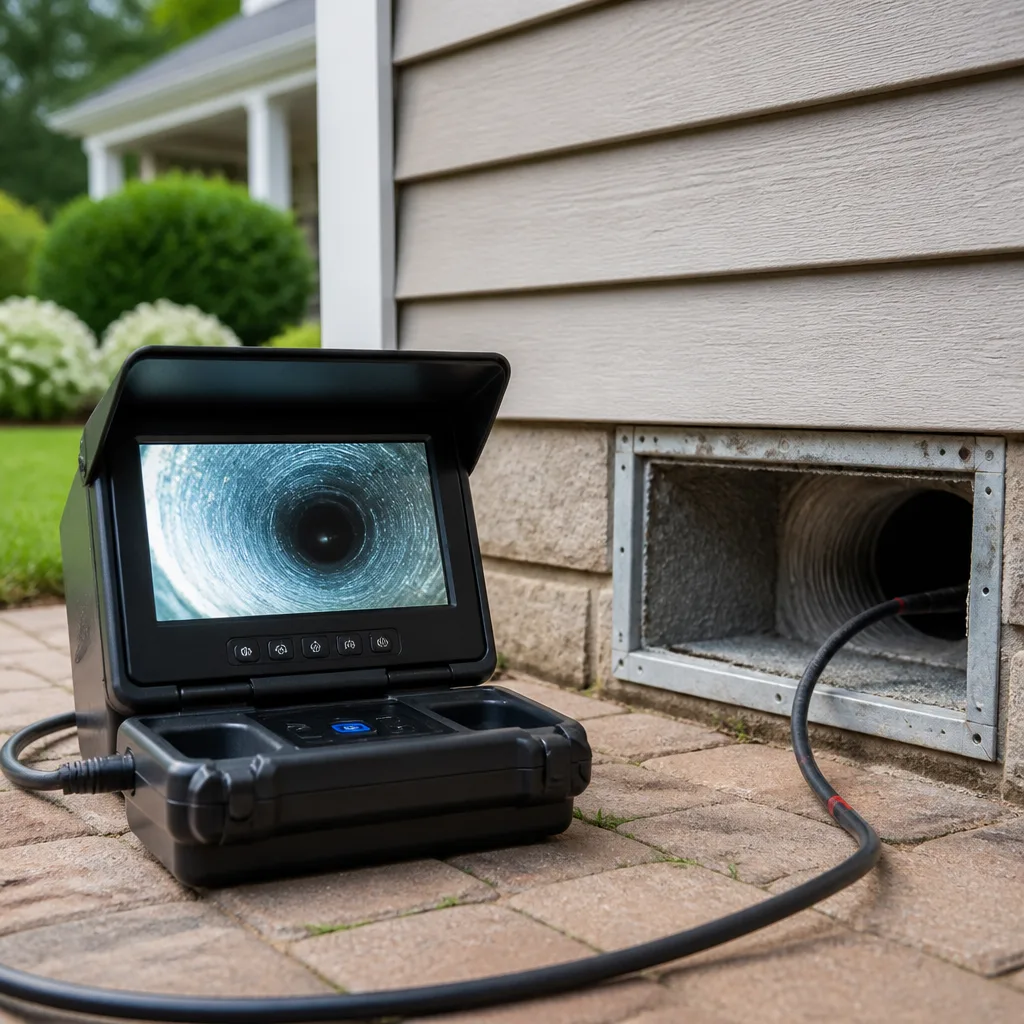 Camera inspection
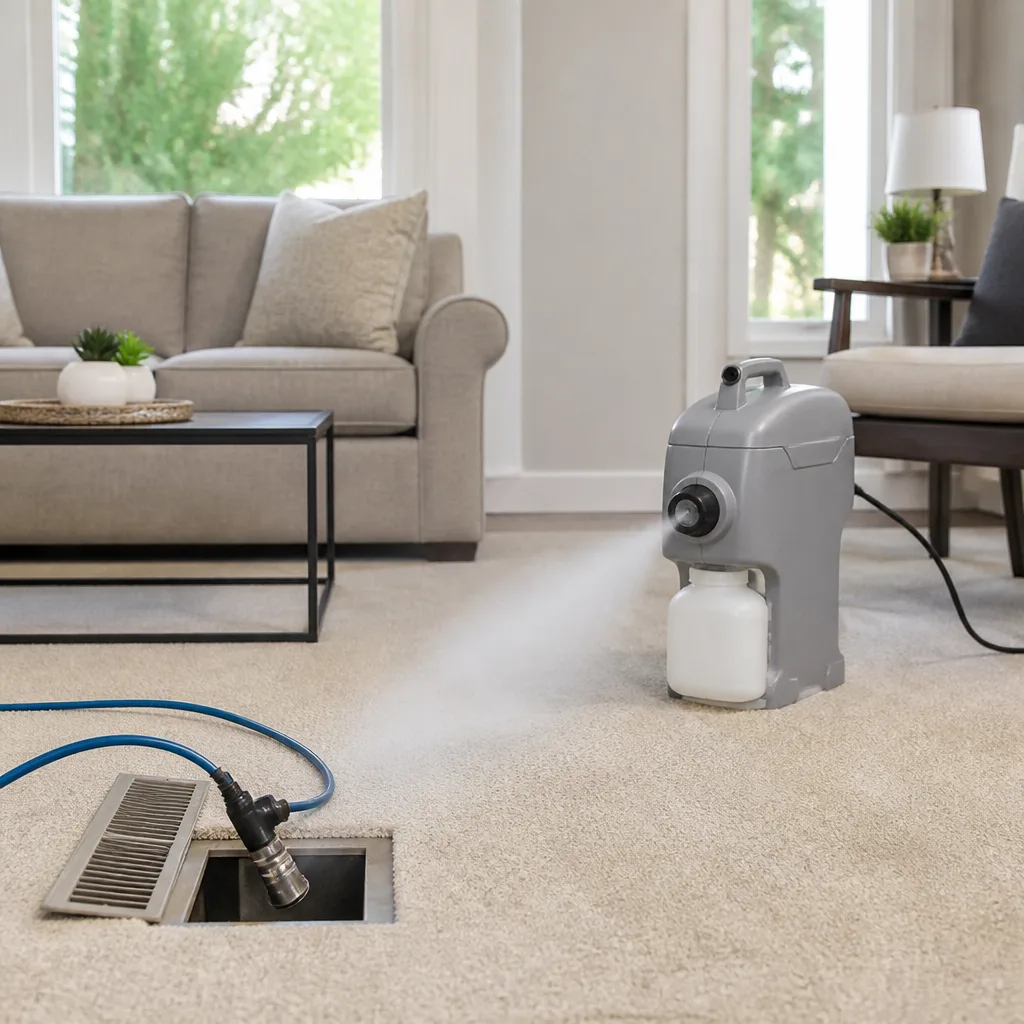 Sanitizing & deodorizing
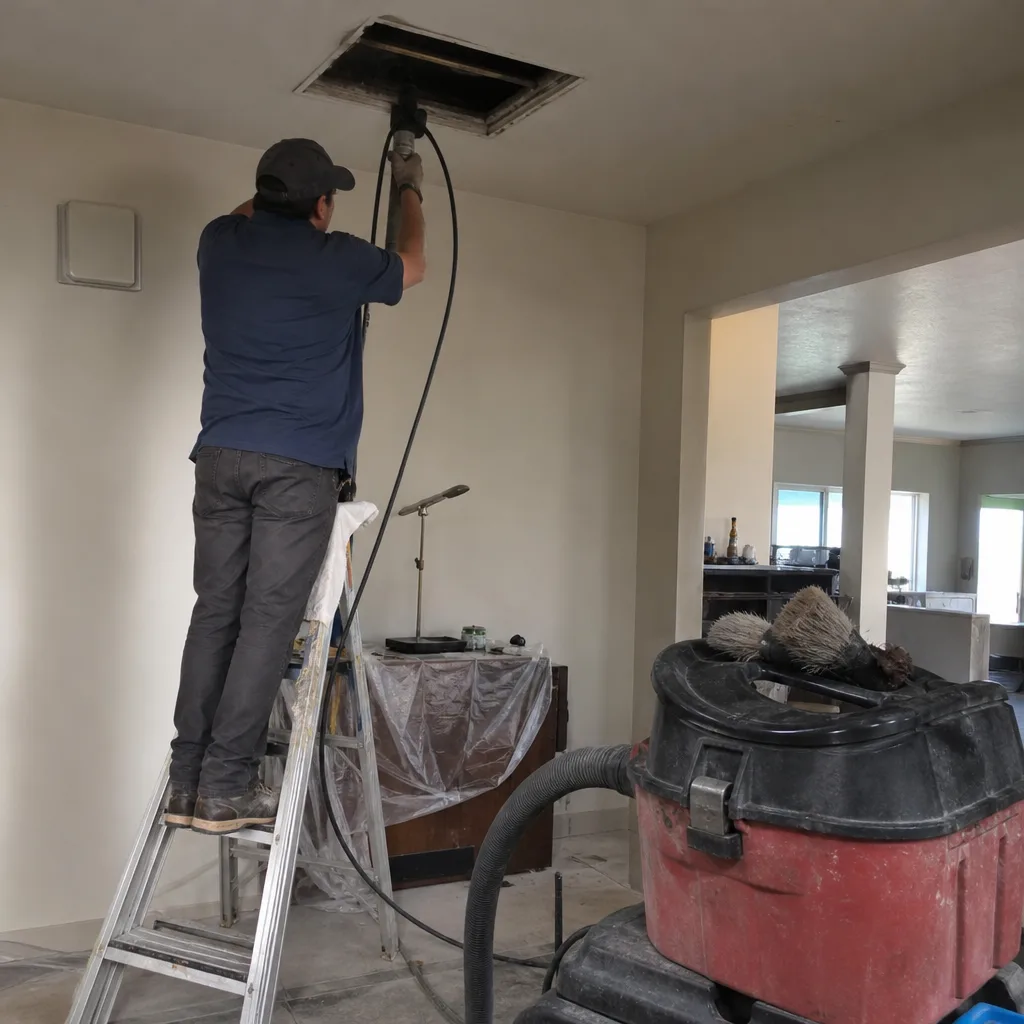
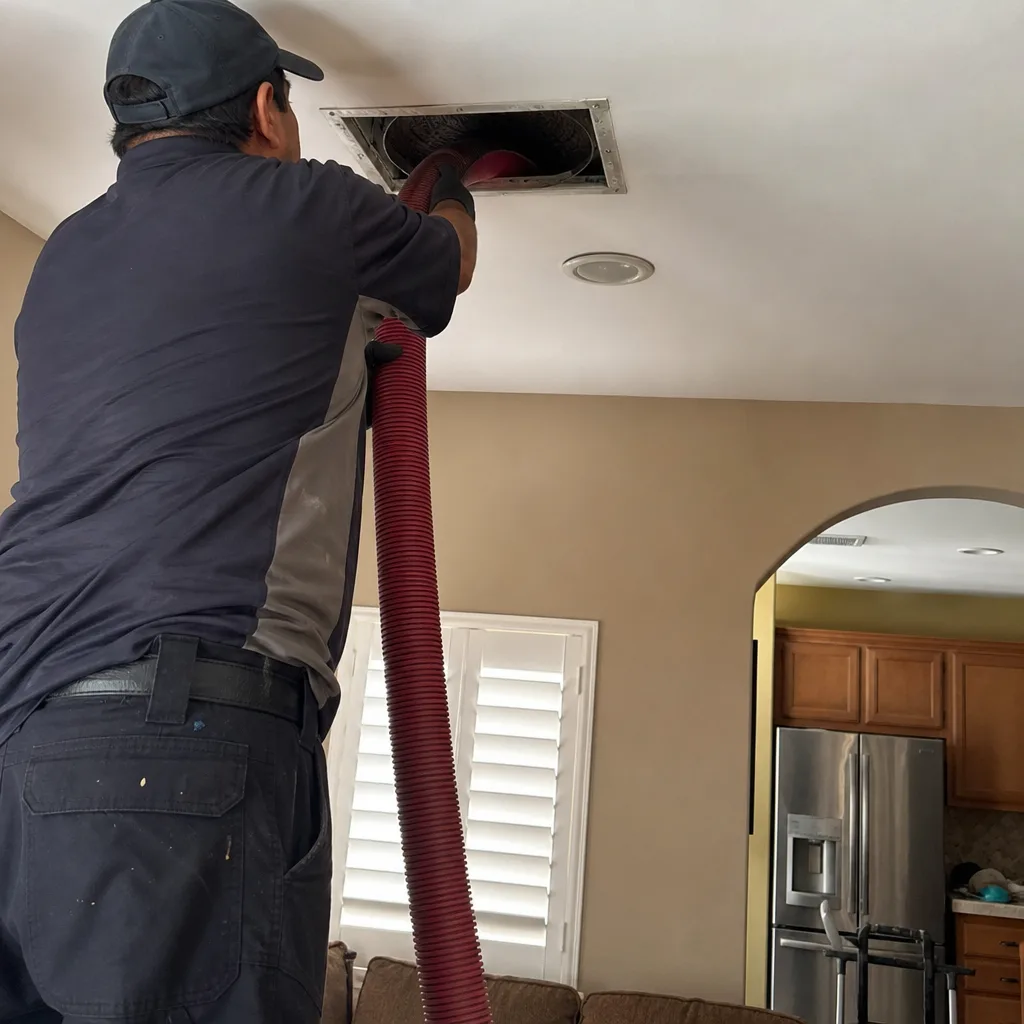
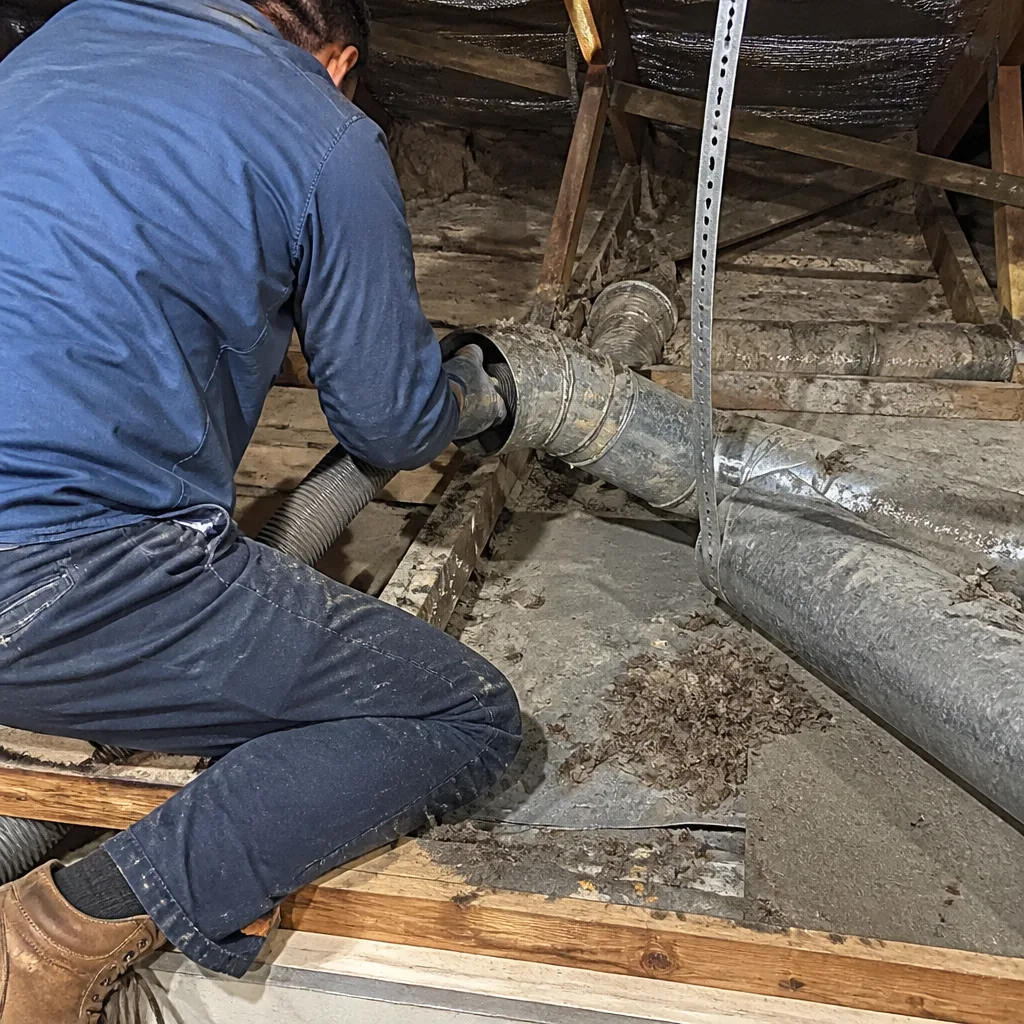
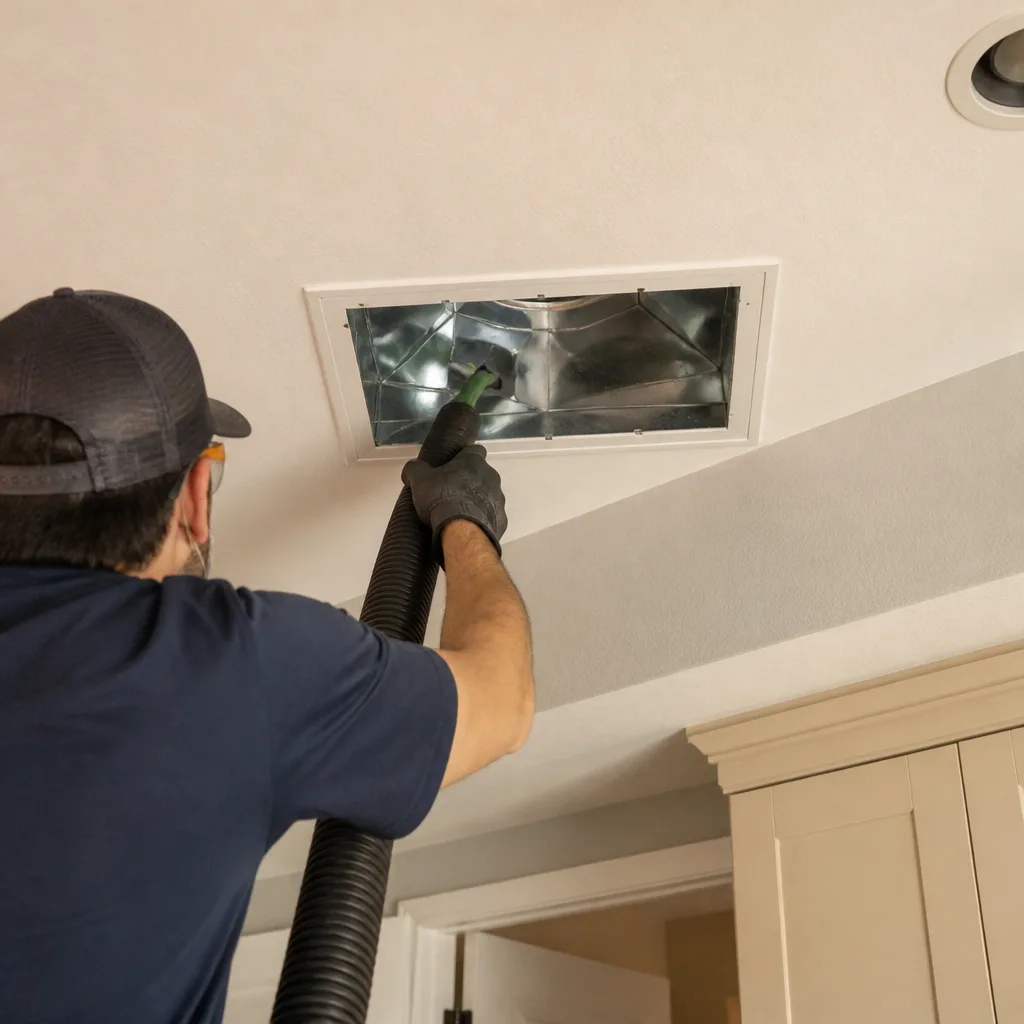
Whole-system duct and dryer vent check with before-and-after photos - you see exactly what came out of your vents
That "$99 whole-house special" is a bait ad - the real number appears once they are in your hallway, or the "clean" is a shop-vac at the register. We photograph the inside of your ducts before and after instead.
DIY vs Professional Air Duct Cleaning: The Hemet Homeowner’s Decision Guide
The most popular DIY duct cleaning method in Hemet homes, running a shop-vac hose a few feet into a floor register, generates roughly 1/20th the suction of professional negative-air equipment and typically moves contamination sideways through the trunk line rather than out of the system. This guide explains why the DIY-versus-professional decision is not really about skill or effort. It comes down to equipment physics, the nature of duct contamination, and what happens inside Hemet’s ductwork during hot, dusty summers. You’ll learn what DIY can genuinely accomplish, where it hits a hard wall, and how to spend your money intelligently whether you do the work yourself or call a contractor.
Styles & brands we work with
- Whole-home duct cleaning
- Dryer vent cleaning
- Camera inspection
- Sanitizing & deodorizing
Quick Answer
DIY air duct cleaning (register cleaning, return grille wiping, basic visual inspection) is useful as routine maintenance between professional cleanings, but it cannot extract debris from deep inside trunk lines or branch ducts because consumer vacuums lack the negative air pressure, cubic feet per minute (CFM), and reach required for full-system extraction. For Hemet homeowners dealing with wildfire smoke residue, dust accumulation from the San Jacinto Valley, pet dander, or visible mold at supply boots, professional cleaning with rotary brush agitation and HEPA-filtered negative air is the only method that actually removes contaminants rather than redistributing them. Our recommendation: do the free DIY tasks yourself, then schedule professional cleaning when inspection reveals the problems those tasks cannot address.
Table of Contents
- The Physics Problem: Why Your Shop-Vac Cannot Clean Ducts
- What DIY Can Legitimately Accomplish in Hemet
- What Professional Equipment Actually Does Differently
- Hemet-Specific Scenarios Where Professional Cleaning Is the Only Right Call
- The Hidden Cost of DIY Duct Cleaning Gone Wrong
- How to Use DIY Inspection to Make Professional Cleaning More Efficient
- What Duct Cleaning Actually Costs in Hemet: DIY vs Professional
- Common Mistakes to Avoid
- When to Call a Professional
- Frequently Asked Questions
The Physics Problem: Why Your Shop-Vac Cannot Clean Ducts
Air duct cleaning is not wiping. It is extraction. And extraction requires moving enough air fast enough to pull debris out of a confined space that you cannot directly touch. That is where consumer equipment hits a wall that no amount of effort gets around.
A professional truck-mount or trailer-mount duct cleaning system typically moves between 4,000 and 8,000 CFM (cubic feet per minute) with sustained negative static pressure measured in the thousands of pascals. The best consumer shop-vac on the market moves somewhere around 150 to 200 CFM at the hose inlet, and that number drops sharply the moment you add 20 feet of hose and push it around two 90-degree bends. Duct interiors are not straight open tubes. They are long, corrugated, punctuated with dampers, turning vanes, and boot connections that disrupt airflow and trap debris. Low-airflow tools simply cannot overcome that geometry.
Think about a valley rain gutter versus a plugged drain pipe. A gutter is open; you can scoop it. A branch duct is closed; you cannot reach six feet in with your hand, and a vacuum that moves 150 CFM cannot create enough air velocity through a 6-inch duct to lift settled dirt from the metal surface. Professional systems solve this by coupling high-CFM negative air with mechanical agitation, a rotary brush or air whip spinning inside the duct that physically knocks debris loose so the vacuum stream can carry it out. Without both elements, you are only moving what is already loose, and not even most of that.
In Hemet, this matters more than it does in a coastal climate. The San Jacinto Valley is a dust basin. Prevailing winds off the badlands push fine particulate into homes, and summer temperatures that routinely pass 100 degrees mean HVAC systems run for months at a stretch. Ducts in Hemet accumulate a specific mix: fine silt, blown dust, pet dander, and occasionally ash from fires in the San Bernardino National Forest or the foothills east of town. That material sits in branch lines and the plenum, exactly the places a shop-vac cannot reach. Understanding the physics explains why so many Hemet homeowners who try the DIY method end up calling a professional anyway, after they discover the visible dust at floor registers was only the surface layer.
One more fact worth knowing: duct systems in older Hemet homes, many built between the 1950s and 1980s, often have galvanized steel trunk lines with internal insulation or asbestos tape at joints. The last thing you want to do is shove an improvised tool into those spaces and dislodge material you cannot then capture. The physics is unforgiving, and the duct construction itself often makes amateur intervention riskier, not cheaper.
What DIY Can Legitimately Accomplish in Hemet
We want to be direct about this: DIY duct maintenance is worth doing, and most Hemet homeowners should do it. What it cannot do is replace professional cleaning. Here is what it can actually accomplish.
- Register and grille cleaning. Remove floor and ceiling registers with a screwdriver, wash them in warm soapy water, dry them fully, and reinstall. This removes visible dust, pet hair, and light debris that accumulates at the airflow points. Do this twice a year in Hemet, especially in spring after Santa Ana wind events.
- Return air grille inspection and cleaning. The return grille is usually the dirtiest visible component because it pulls air in. Vacuum it with a brush attachment, then wipe it down. While it is off, inspect the return can. If you see a thick dust blanket or pet hair mat, that tells you the system likely needs professional attention beyond the grille.
- Visual inspection of accessible duct interiors. Using a flashlight and a phone camera, you can look a few feet into supply boots and return cans. Take photos. This gives you a baseline and helps you communicate what you observe to a contractor before they arrive.
- Filter replacement. This is not duct cleaning, but it is the single highest-leverage air quality task a homeowner controls. In Hemet’s dusty climate, replace 1-inch filters every 30 to 60 days during cooling season, not the 90 days printed on the package. A clogged filter increases static pressure, forces the blower to work harder, and pushes dust deeper into downstream ductwork.
- Dryer vent maintenance at the wall connection. Pull the dryer hose off the wall, clean the lint trap and the hose interior, and reconnect it securely. This does not replace professional dryer vent cleaning in Hemet, but it addresses the most accessible section and helps you spot buildup before it becomes a fire hazard.
These tasks matter for a reason specific to Hemet: the dust load here is constant, and register-level debris shows up fast. A homeowner who performs these simple routines keeps visible dust under control and, just as important, builds a mental map of their system that helps them know when something has changed.
What DIY cannot do is remove debris from trunk lines, branch ducts, the plenum, or the blower compartment. Those areas require equipment that generates real negative air pressure and mechanical agitation. If your DIY efforts show visible dust at the registers within a few weeks of cleaning, that is not failure on your part. It is the system telling you the supply side is loaded and needs extraction work beyond what a household vacuum can generate.
What Professional Equipment Actually Does Differently
Professional duct cleaning in Hemet is defined by two things: the size of the equipment and the method of agitation. Both have to be present for the work to mean anything.
The standard professional setup uses a negative air machine or truck-mount vacuum delivering 4,000 to 8,000 CFM connected to the duct system through a large-diameter hose, typically 8 to 12 inches, sealed at the trunk line or plenum. That machine pulls the entire duct system under negative pressure while a technician works each vent with a rotary brush system. The brush spins inside the duct, dislodging debris from the metal or flex duct walls, and the high-CFM vacuum carries it out. This is the equipment we use: Rotobrush rotary brush systems paired with Nikro HEPA-rated negative air machines. The difference between this and a shop-vac is not incremental. It is a different category of task.
HEPA filtration matters too. A professional system captures the debris it extracts. Without HEPA filtration, a duct cleaning machine can exhaust fine particulate back into the home or into the garage, recirculating the exact material you are trying to remove. That is one of the big hidden failures in cheap duct cleaning operations: they move dust from the ducts into the living space. Nikro systems are built with HEPA filtration as a core component, which is why they are used in mold remediation and post-fire cleanup environments, not just routine duct cleaning.
For Hemet homeowners, there is another relevant tool set to know about: air filtration units from Abatement Technologies. These are negative air scrubbers that can filter the air inside the home during and after duct cleaning, capturing particles that get disturbed during the agitation process. In a dust-heavy environment like the San Jacinto Valley, where every door opening lets in more particulate, this kind of air scrubbing is what separates a thorough cleaning from a superficial one.
The professional method also includes inspection before and after. A competent technician photographs the duct interiors at the start, identifies blockages or damage, reports findings, and photographs again after extraction. You should expect this. It is how you know the work happened in places you cannot see. We also handle air duct repair in Hemet when inspection reveals torn flex duct, disconnected boots, or crushed sections, issues that cleaning alone cannot address. That is the other reason equipment matters: a properly equipped contractor can see the problem and fix it, not just clean around it.
Hemet-Specific Scenarios Where Professional Cleaning Is the Only Right Call
There are times in Hemet when a professional cleaning is not a preference. It is the only responsible option. Here are the scenarios we see most often in this valley.
Post-wildfire smoke infiltration. Fires in the San Bernardino National Forest, the hills around Sage, and the badlands east of Hemet have pushed smoke into this valley repeatedly over the past decade. Smoke particles are extremely fine, in the 0.3 to 2.5 micron range, and they penetrate duct systems, settle in the blower compartment and coil, and linger for months. Once smoke enters a duct system, the standard fix involves HEPA-vacuum extraction and air scrubbing. A shop-vac cannot do this, and a household air purifier cannot pull smoke particles out of duct interiors. If you have experienced a smoke event that left an odor inside the vents, this is a professional job.
Visible mold at supply boots. Hemet’s summer temperatures do not create the humidity problems of a coastal climate, but evaporative coolers, plumbing leaks, and condensation on uninsulated ducts in crawl spaces still create localized moisture. When you see dark staining on a supply boot or register, especially in bathrooms or near the kitchen, the issue is not surface dirt. It is a moisture problem plus fungal growth. Cleaning this properly requires HEPA containment, removal of affected material where appropriate, and addressing the moisture source. This is a health and safety matter as much as a cleaning matter. Do not attempt it with household cleaners and a vacuum.
Pest debris in trunk lines. Rodents, pack rats, and occasionally birds find their way into ductwork in Hemet, especially in older homes with gaps at registers or damaged vent screens. The evidence is unmistakable: droppings, nesting material, a persistent smell, or scratching sounds that have since gone quiet. This is not a cleaning task. This is a contamination removal task that requires full protective equipment, HEPA extraction, and often air duct repair to close the entry point. After the debris is out, the duct system needs sanitization and inspection for damaged flex duct.
Major renovation dust. Drywall sanding, flooring removal, and plaster work load a duct system with construction dust that poses a respiratory irritant and clogs coils and blowers. If you have recently completed a renovation on a Hemet home, schedule professional duct cleaning before you move back into normal operation. Construction dust is heavy, abrasive, and pervasive; DIY methods cannot extract it from the blower compartment, evaporator coil, or supply plenum.
One thing all these scenarios share: the contamination is not visible at the register. It lives deeper in the system. That is exactly the territory where professional equipment earns its cost and DIY methods fail no matter how carefully applied.
The Hidden Cost of DIY Duct Cleaning Gone Wrong
Most DIY duct cleaning attempts end with the homeowner spending an afternoon and concluding not much changed. Some end worse. Here is what we have seen in Hemet homes after enthusiastic amateur attempts.
Dislodged flex duct connections. Flex duct in attics is held to boots and trunk lines with zip ties or band clamps. When a homeowner feeds a shop-vac hose or, more commonly, a plumbing snake wrapped with a rag into a supply boot, the pushing and twisting can pull the flex duct off its connection inside the attic or crawl space. The visible result: a room that suddenly gets weak airflow and an attic space that is now being air conditioned. The fix requires attic access, reconnection, and sealing. That is an air duct repair, not a DIY job.
Damaged register dampers. Many Hemet homes have adjustable dampers at ceiling and floor registers, metal flaps designed to balance airflow between rooms. A vacuum hose shoved into a register can bend or break these dampers, leaving them stuck closed or flapping with airflow. The homeowner notices a room that gets hotter than before. The repair cost exceeds whatever the DIY attempt saved.
Debris pushed deeper into the plenum. Low-CFM vacuums often dislodge debris at a register but cannot carry it out through the hose. The debris moves downstream in the airflow, settles in the supply plenum against the coil, and now the problem is in the one component where it causes the most efficiency damage. A dirty evaporator coil reduces heat transfer, raises run times, and increases utility bills through the Hemet summer. The homeowner traded a duct problem for a coil problem.
Electrical and sharp-edge hazards. Duct interiors in older Hemet homes contain sheet metal screws, sharp joint edges, and occasionally wiring run through return cavities. Reaching into these spaces with bare arms or improvised tools risks cuts and shocks. We have seen homeowners discover this the hard way.
Drilling access holes without sealing them. Some DIY guides recommend cutting a hole in the trunk line to insert a vacuum hose, then patching it with tape. Without proper sealing, those patches fail, and the system now leaks conditioned air into the attic. Leaky ducts in Hemet are already a major efficiency problem; adding more leakage on purpose is a losing trade.
The common thread: duct systems are interconnected, and mistakes in one section affect the whole system’s performance. What looks like a simple cleaning attempt becomes a repair bill. That is why “do it yourself” has an invisible cost ceiling: the risk of damage rises with every inch of the system you cannot see.
How to Use DIY Inspection to Make Professional Cleaning More Efficient
Here is a better way to put DIY effort to work: use your time to inspect and document before a contractor arrives. A homeowner who provides specific observations helps a technician diagnose faster and target the work correctly. It does not lower the price, but it raises the quality of the outcome.
- Remove and photograph every register. Use your phone. Take clear photos of each supply boot from above or below, showing whether the interior is dusty, greasy, mold-stained, or clean. Label them by room. This gives the technician a map before the hoses come out.
- Check airflow by room. With the system running, note which rooms feel weak or inconsistent. Hold a tissue at each register and watch how far it moves. Rooms with poor airflow often have disconnected or crushed flex duct upstream, a diagnosis your observation can accelerate.
- Look at the return side. Open the return grille and photograph the return can. Note whether you see a thick dust mat, pet hair, signs of pest activity, or water staining. This is where the system’s contamination load often first becomes visible.
- Record odor events. If certain times of day or certain HVAC modes produce a musty, burning, or stale smell, write down when and under what conditions. Odor patterns help identify whether contamination sits in the ducts, the coil, the plenum, or the drain pan.
- Check the filter condition and position. A filter installed backward, oversized, or covered in dust tells the technician something important about how this system has been maintained. Include a photo.
- Note recent events. Wildfire smoke exposure, a rodent problem, a water leak, a renovation, a new pet. All of these change what a technician needs to look for and how aggressively the system should be cleaned.
This documentation does two things. It proves to you that you are not paying for a guess, and it gives the professional a data set that reduces exploratory time. When you call for air duct cleaning in Hemet, mention what you found. The conversation that follows is more useful to both parties than the usual “how much do you charge” opening.
What Duct Cleaning Actually Costs in Hemet: DIY vs Professional
Let us talk plainly about money, because this drives the DIY-versus-professional decision more than any other factor.
For a typical single-family home in Hemet, meaning something between 1,200 and 2,500 square feet with 8 to 14 vents and one air handler, professional air duct cleaning typically runs between $350 and $650. That range covers a full system clean with rotary brush agitation, HEPA-filtered negative air extraction, and post-cleaning inspection. Larger homes, multi-story systems, or jobs that include dryer vent cleaning or air duct repair will land higher, but $350 to $650 is the realistic baseline in this valley.
- Whole-system air duct cleaning: $350 to $650, depending on home size and vent count
- Dryer vent cleaning as an add-on or standalone: $90 to $180, less when bundled with duct cleaning
- Air duct repair (flex duct replacement, boot reconnection, sealing): $150 to $500 per section, depending on access and materials
- HEPA air scrubbing during or after cleaning: $100 to $250, usually included or offered as an add-on in smoke or mold situations
Now look at the DIY alternative. A decent shop-vac costs $80 to $150. Add a brush attachment and a hose extension, and you are at $120 to $200. You already have those in many households. The DIY approach costs almost nothing out of pocket. What it buys is the register cleaning and inspection work described earlier, which you should do regardless. The mistake is assuming those $120 worth of tools can accomplish a $500 professional cleaning. They cannot. The physics does not allow it.
The real cost comparison is not $120 versus $500. It is $120 spent on maintenance you should do anyway, versus $500 spent on extraction you cannot do yourself. When a Hemet customer asks us whether DIY is worth trying first, our answer is usually: do the register cleaning and inspection, document what you find, then spend the professional money where the evidence points. That is the economically rational sequence, and it avoids paying for a “cleaning” that the system does not actually need.
One warning: if you see online ads for whole-home duct cleaning at $79 or $99, ask what equipment will arrive and what exactly gets cleaned. At that price, the answer is usually a shop-vac, a few vent wipes, and no negative air extraction. You are paying someone to do the DIY task. That is not the professional cleaning we are describing here.
Common Mistakes to Avoid
- Assuming a shop-vac cleans ducts because it makes noise. Sound does not equal extraction. A vacuum that moves 150 CFM cannot carry debris out of a 20-foot branch duct. What it does is disturb surface dust and give you a false sense that something happened.
- Buying drill-attachment duct cleaning kits from online retailers. These attach to a cordless drill and spin a short brush inside the first few feet of a register. They cannot reach the trunk line, they break apart inside ducts, and they leave whatever they dislodge to settle elsewhere in the system.
- Using leaf blowers to “blow out” the ducts. We hear about this more often than we would like. It pressurizes the system, blows debris into the living space through every register, and can rupture old flex duct. If a neighbor or handyman recommends this, do not take the advice.
- Drilling into ductwork to insert a vacuum hose. The hole never gets properly sealed with tape, the system leaks from that point forward, and Hemet’s summer heat means every leak is air you paid to cool.
- Ignoring the return side. Homeowners focus on supply registers because that is where dust is visible. The return side pulls air in, which means it accumulates the most contamination. A DIY “cleaning” that skips the return has skipped the dirtiest part of the system.
- Cleaning registers but never checking the filter housing. A filter that does not seal properly lets unfiltered air bypass into the blower and coil. The ducts get blamed for dust that is actually bypassing the filter entirely. Check the filter fit before blaming the ducts.
- Assuming duct cleaning fixes all indoor air quality problems. It handles the ducts. It does not address the coil, the blower, the drain pan, attic insulation fibers, or exterior dust sources. Hemet homes with evaporative coolers especially need coil and pad maintenance that duct cleaning alone cannot provide.
When to Call a Professional
Call a professional duct cleaning company when your inspection finds visible mold at supply boots, pest debris or droppings in the ductwork, smoke odor following a wildfire event, or heavy dust accumulation inside branch ducts that DIY tools cannot reach. Also call when rooms have dramatically different temperatures, airflow is weak after DIY attempts, or a renovation has loaded the system with construction dust. These are not maintenance tasks. They are extraction jobs that require professional negative air equipment and someone who knows how the whole HVAC system connects. Duct Cleaning Hemet offers free estimates in Hemet and will walk you through what we find before any work begins. Call (877) 752-8890 to schedule.
Frequently Asked Questions
A full-system air duct cleaning for a typical Hemet home runs $350 to $650, depending on square footage and vent count. This includes rotary brush agitation, HEPA-filtered negative air extraction, and post-cleaning inspection. Dryer vent cleaning adds $90 to $180, and air duct repair is billed per section depending on what inspection finds. If you see quotes below $100 for a whole home, expect a shop-vac operation, not extraction equipment. Call (877) 752-8890 for an exact quote on your home.
Yes, but only for register cleaning, return grille wiping, filter replacement, and visual inspection. Those tasks keep visible dust under control and give you useful information about system condition. DIY cannot extract debris from trunk lines, the plenum, or branch ducts because consumer vacuums cannot generate the necessary negative air pressure or CFM. Treat DIY as maintenance, not extraction.
For most Hemet homes, professional duct cleaning makes sense every 3 to 5 years. Homes with pets, smokers, recent renovations, or wildfire smoke exposure may need it more often. The best signal is inspection: if you see dust accumulating at registers within weeks of cleaning them, or debris inside the return can, the system has a load worth extracting.
The low-priced operators are almost always using portable equipment, often a modified shop-vac, and cleaning only what they can reach by hand at the register. They skip trunk line extraction, they skip the return side, and they cannot provide before-and-after photos of deep duct interiors. The equipment difference explains the price difference. Professional negative air systems cost tens of thousands of dollars and take real time to set up. That cost shows up in the quote, and in the result.
Ask for before-and-after photos of the duct interiors, not just the registers. A legitimate professional operation photographs the trunk line, the return can, and representative branch ducts before starting and after extraction. If a company cannot or will not provide those photos, you have reason to doubt the work happened where you cannot see it.
We do both. After cleaning, if inspection finds torn flex duct, disconnected boots, crushed sections, or gaps at joints, we can perform the air duct repair in Hemet right then. That is the difference between a cleaning company and a duct specialist: we fix what cleaning reveals, not clean around it. Call (877) 752-8890 to schedule an estimate and inspection.
The Bottom Line
The DIY-versus-professional duct cleaning decision in Hemet reduces to a simple distinction. DIY maintains what you can see; professional extraction removes what you cannot. Register cleaning, filter replacement, and visual inspection are worth doing yourself, and every homeowner in this valley should do them regularly. Trunk line extraction, post-wildfire smoke cleanup, mold at supply boots, and pest debris removal require equipment no homeowner owns and training no YouTube video provides. Do the free work, document what you find, then call a professional when the evidence shows contamination beyond your reach. Duct Cleaning Hemet serves homeowners throughout Hemet with professional-grade equipment and a full-service scope that includes duct cleaning, dryer vent service, and air duct repair under one provider. Call (877) 752-8890 for a free estimate, and we will tell you honestly what your system needs.
Written by the team at Duct Cleaning Hemet, serving Hemet since 2013.
See the difference
 Before
 After
 Before
 After
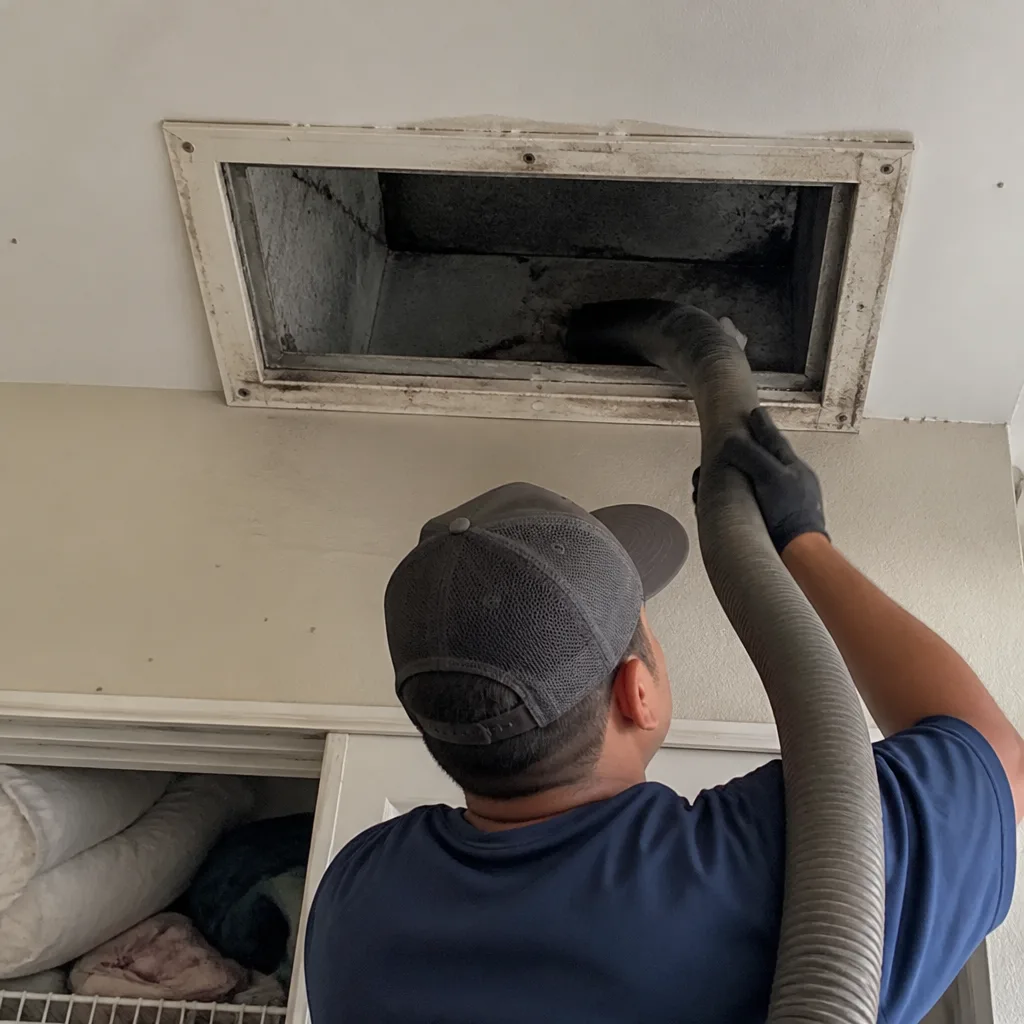 Before
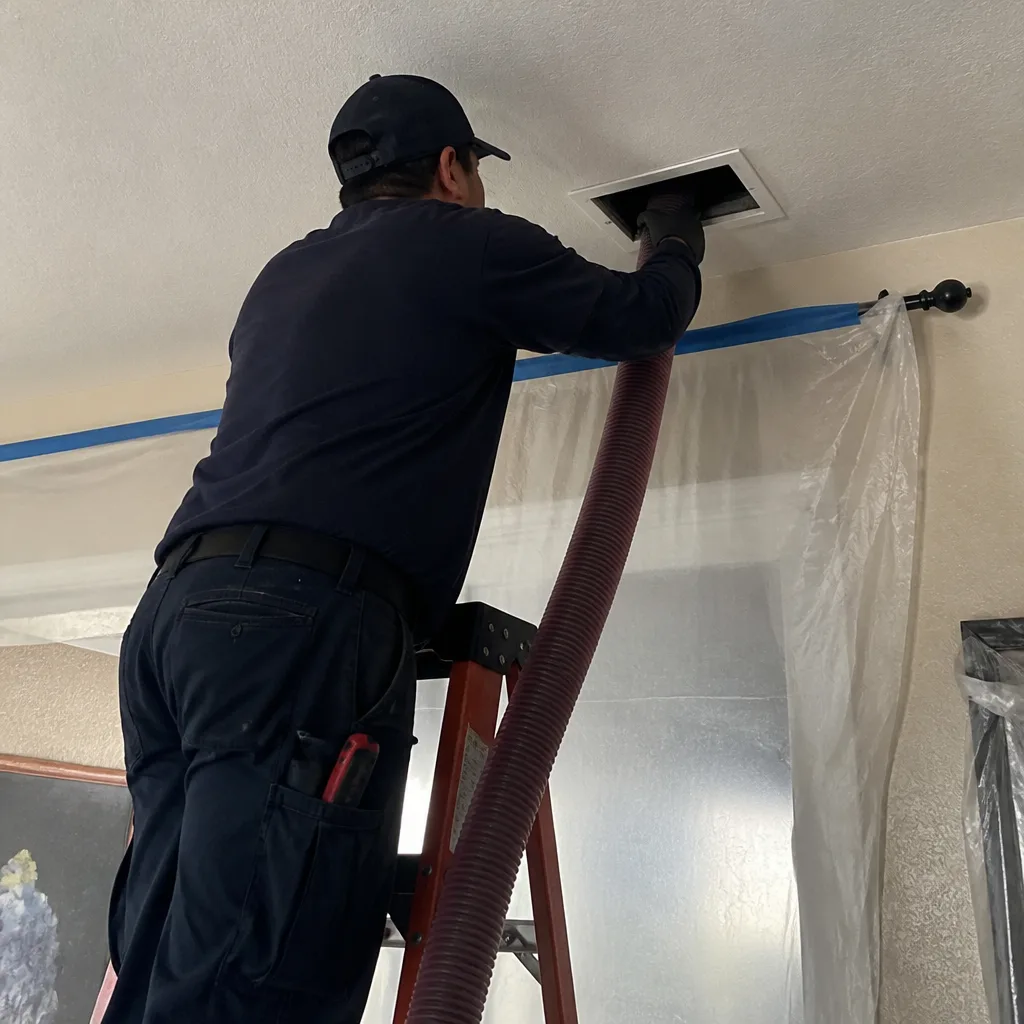 After