
Last updated November 2, 2026
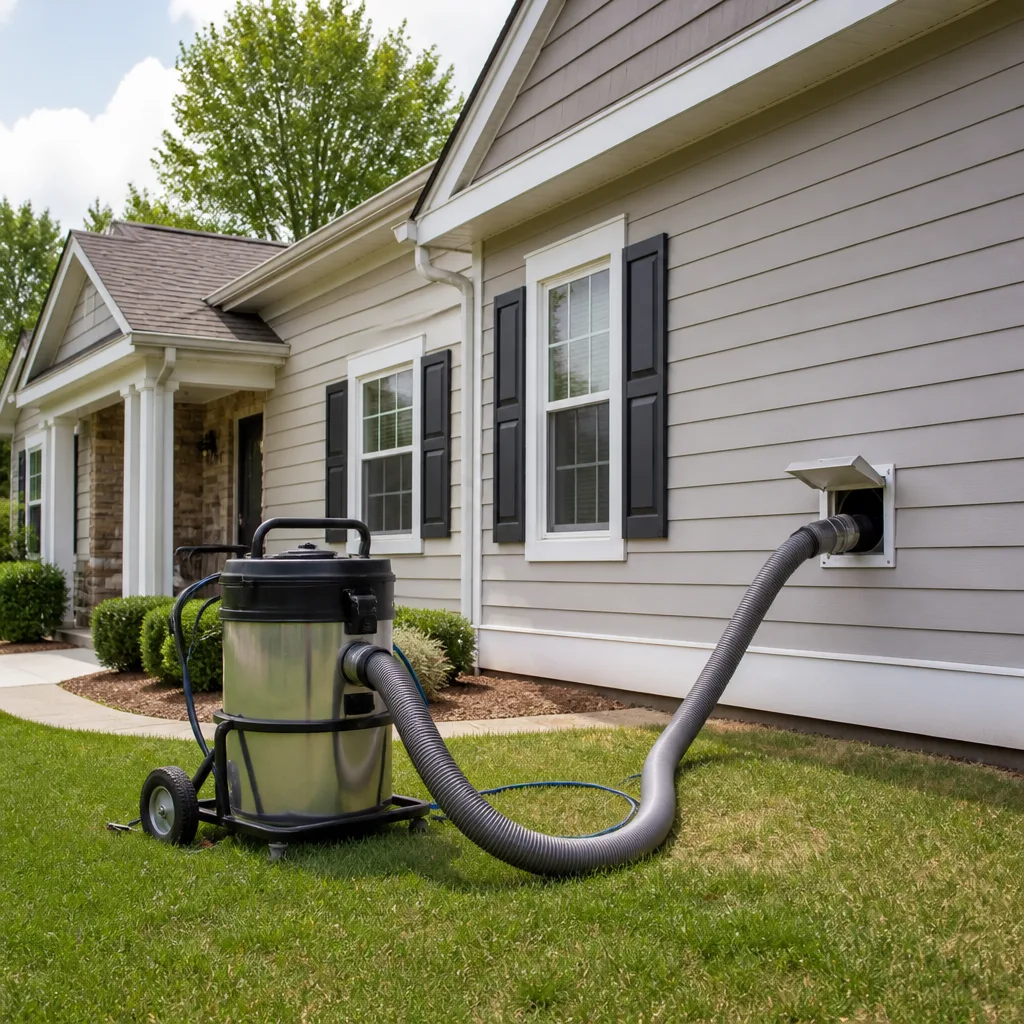 Whole-home duct cleaning
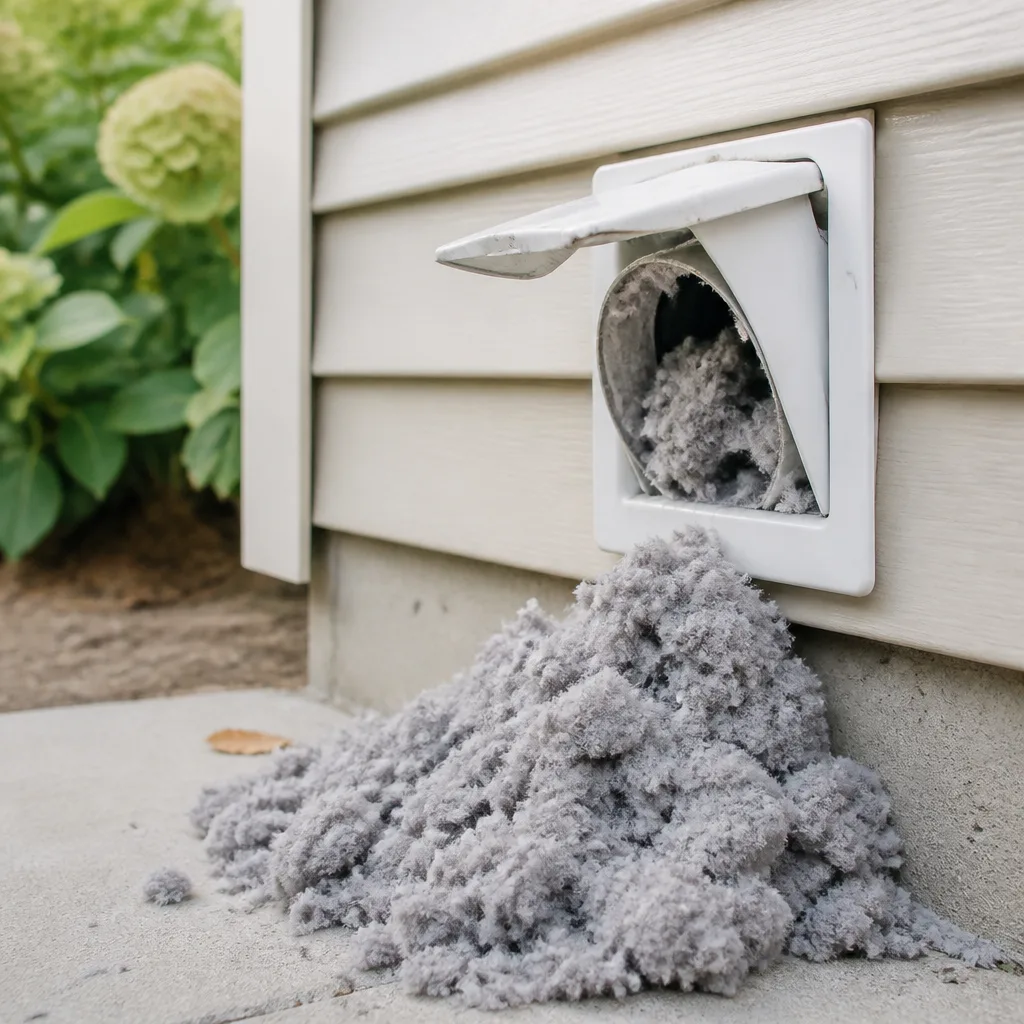 Dryer vent cleaning
 Camera inspection
 Sanitizing & deodorizing
Whole-system duct and dryer vent check with before-and-after photos - you see exactly what came out of your vents
That "$99 whole-house special" is a bait ad - the real number appears once they are in your hallway, or the "clean" is a shop-vac at the register. We photograph the inside of your ducts before and after instead.
Seasonal Air Duct Cleaning Care for Hemet: Year-Round Homeowner’s Guide
Scheduling duct cleaning in January because “it’s been a year” is the wrong framework for a Hemet home. The real question is whether your ducts were running during last summer’s heat dome or through a smoke event, because that’s what determines when cleaning is actually needed. Hemet’s climate doesn’t distribute duct stress evenly across twelve months. There are two or three specific windows where contamination accelerates sharply, and timing your cleaning and inspection around those windows is far more effective than following a fixed annual schedule. This guide maps those windows, explains what’s happening inside your ductwork during each season, and gives you a year-round maintenance framework built for the San Jacinto Valley, not a generic national average.
Quick Answer
In Hemet, the most strategic duct cleaning window is late spring (April to May), before your AC runs continuously through 110°F summers. A second priority window opens after wildfire smoke events, when fine particulate settles into ductwork and needs HEPA-filtered extraction, not a standard residential cleaning. Winter’s low-use period is ideal for duct repair rather than cleaning, since the system can be shut down without comfort impact.
Styles & brands we work with
- Whole-home duct cleaning
- Dryer vent cleaning
- Camera inspection
- Sanitizing & deodorizing
Table of Contents
- Why Hemet’s Climate Creates Two Distinct Duct Stress Windows
- Late Spring: The Most Strategic Pre-Season Cleaning Window
- Wildfire Smoke Events and Duct Contamination
- Post-Summer Inspection: What 4-5 Months of Continuous Operation Does
- Evaporative Cooler Season and Moisture Pathways
- Winter: The Ideal Season for Duct Repair
- Common Mistakes to Avoid
- When to Call a Professional
- Frequently Asked Questions
Why Hemet’s Climate Creates Two Distinct Duct Stress Windows
Hemet sits in the San Jacinto Valley, where summer temperatures routinely climb past 100°F and stay there for weeks. That’s not a mild heat pattern. It’s a sustained thermal load that forces your HVAC system into near-continuous operation from June through September. When air moves through ductwork for 16 to 20 hours a day, five months straight, the volume of particulate that passes through the system dwarfs what a home in coastal San Diego sees all year. Dust, pet dander, skin cells, and textile fibers accumulate inside supply and return ducts at a rate that surprises most homeowners the first time they see before-and-after photos of their system.
But the larger point is this: Hemet’s ducts don’t collect debris at a steady, predictable pace. They collect it in surges. The first surge happens when summer heat forces the system to run hard for months on end. The second surge happens when wildfire smoke from the San Bernardino National Forest east of us, or from fires in Riverside and San Diego counties, drifts into the valley and gets pulled through the return registers. Each event deposits a layer of fine material. If those layers sit in the ducts, they bond with normal household dust and form a coating that’s harder to remove the longer it stays. Timing matters, and it matters for reasons specific to this valley’s geography and climate.
We’ve inspected hundreds of Hemet homes, from Valle Vista to east Hemet, and the pattern holds across neighborhoods. Homes that clean ducts in late spring, before the heavy run season, start summer with lower resistance and better airflow than homes that clean in October. That timing difference shows up in filter capture, register output, and the visible condition of the duct lining when we run a camera through the system.
Late Spring: The Most Strategic Pre-Season Cleaning Window
April and May are the prime cleaning months in Hemet, and the reasoning is simple: you’re removing last year’s accumulated load before the system enters its hardest work period. By late spring, the winter dust has settled, the Santa Ana wind season has blown fine grit into attic and crawlspace returns, and the evaporative cooler (if you run one) has already introduced a moisture cycle. Clean ducts going into June mean your AC isn’t fighting clogged lines and caked-on debris while it’s already fighting triple-digit outdoor temperatures.
There’s a measurable efficiency angle here too. When dust builds up inside duct walls, it increases static pressure. Your blower works harder to move the same volume of air. That’s not theoretical, it’s basic HVAC physics. In a Hemet summer, when the system is already running near its limit, any added resistance translates directly into higher energy use and longer run cycles. Removing that resistance before summer starts is one of the few efficiency actions a homeowner can take that doesn’t involve replacing equipment.
A late-spring cleaning also makes the post-summer inspection far more meaningful. If the ducts start clean, any debris we find in October is from this year’s run season and this year’s smoke events. That gives you a baseline, something you can’t get if you clean at random intervals. We recommend Hemet homeowners schedule cleaning between April 1 and May 31, before the first serious heat wave, not after it. Once the system is running hard, scheduling around comfort becomes much harder for everyone.
For a full breakdown of what a proper cleaning involves, see our guide to Air Duct Cleaning in Hemet.
Wildfire Smoke Events and Duct Contamination
Wildfire smoke is no longer a rare occurrence in the San Jacinto Valley. In recent years, smoke from the Apple Fire, the El Dorado Fire, and larger blazes in the San Bernardino and Cleveland National Forests has blanketed Hemet for days at a time. During those events, your HVAC system becomes a particulate conveyor. The return registers pull smoky air into the ducts, the filter catches some of it, and the rest passes through and settles on duct walls, coil surfaces, and blower components.
Here’s what most homeowners don’t know: wildfire smoke particulate is not like household dust. It’s finer, often sub-micron in size, and it carries combustion byproducts including volatile organic compounds and, in some cases, trace metals from burned structures. A standard residential duct cleaning that uses a brush and a basic vacuum will disturb this material and send a portion of it back into the living space. Proper removal requires HEPA-filtered negative air equipment of the kind used in professional remediation environments. That’s the Abatement Technologies standard, and it’s what we run in Hemet homes after smoke events. The equipment creates a negative pressure environment inside the duct system so that dislodged particles are pulled into the filter, not blown into the house.
If your home was under smoke for more than 24 hours, the duct system absorbed material. Changing the HVAC filter helps, but it doesn’t address what already settled past the filter. A post-smoke duct cleaning is a specific, targeted service, and it’s worth doing sooner rather than later. The longer combustion particulate sits, the more it bonds with the duct surface, and the more likely it is to off-gas into the living space during subsequent heating cycles. Homes in the foothill neighborhoods, including the areas east of State Street, are more exposed to this because they’re closer to the fire corridors.
Post-Summer Inspection: What 4-5 Months of Continuous Operation Does
By the time October arrives in Hemet, your HVAC system has been running hard since Memorial Day. That’s four to five months of near-continuous operation, often through the hottest sustained temperatures in Southern California. The duct system shows the effects, and the inspection points are specific.
- Flex duct fatigue. Flex duct, the insulated flexible tubing used in most Hemet attic installations, degrades under sustained heat. The inner liner can separate from the outer insulation, creating a pathway for insulation fibers to enter the airstream. Attics in Hemet routinely reach 140°F or higher in summer, and that’s precisely the environment where flex duct breaks down fastest. We look for sagging runs, separated connections, and visible liner damage during a post-summer inspection.
- Loose register collars. The point where duct boots connect to the register is a common leak site. Thermal cycling loosens the mechanical connection over time. When the collar loosens, the negative pressure in the return pulls unfiltered attic air directly into the system. That’s filter bypass, and it means whatever your filter is doing, a portion of the air bypassing it is completely unfiltered. We find this condition in roughly three out of ten Hemet homes we inspect after summer.
- Coil and blower accumulation. Any particulate that makes it past the filter lands on the evaporator coil first, then the blower wheel. After a heavy summer, both components can carry a visible layer of grime that reduces heat transfer and airflow. This isn’t strictly a duct issue, but it’s part of the same airflow path, and it’s a standard part of a thorough post-summer inspection.
- Return-side dust loading. Return ducts accumulate material faster than supply ducts because they carry unfiltered air. In Hemet, where summer dust is a fact of life, return duct loading is typically heavier than supply-side loading. A post-summer inspection measures the depth of this accumulation and determines whether cleaning is needed before winter or can wait until spring.
If the inspection finds damaged flex duct or loose connections, the fix is Air Duct Repair in Hemet, not just cleaning. A cleaning removes debris. A repair restores the system’s integrity. They’re different services, and a good post-summer inspection tells you which one you need.
Evaporative Cooler Season and Moisture Pathways
A significant number of Hemet homes, particularly older construction in the central city and Valle Vista areas, use evaporative coolers for at least part of the cooling season. Evaporative cooling works by pulling air through water-saturated pads, which cools the air but also raises its relative humidity. That moist air travels through the same duct system that carries dry air during the rest of the year.
The moisture creates a biological growth risk that dry-climate homeowners often overlook. In most of Hemet, the ambient air is dry enough to discourage mold and bacteria from colonizing duct interiors. But during evaporative cooler season, the interior surfaces of supply ducts can stay damp for hours at a stretch. Add household dust as a nutrient source, and you have the conditions for microbial growth on duct walls, especially in the transition sections where the cooler connects to the main trunk.
This is a seasonal concern that peaks in late summer, when the cooler has been running for four months. By September, ducts that were clean in spring can carry a visible biological film near the cooler connection. The fix is a post-cooler-season cleaning with a focus on the supply run closest to the cooler, combined with inspection of the cooler’s pad condition and water distribution. If you run an evaporative cooler, the fall season is your trigger for evaluating whether the ducts need attention before winter sets in. Homes that convert from evaporative cooling to conventional AC also benefit from a full duct cleaning at the point of conversion, since the moisture history doesn’t disappear just because the cooler was removed.
Winter: The Ideal Season for Duct Repair
Winter in Hemet is mild by national standards, which makes it the perfect season for duct repair work that’s been pending since summer’s inspection. The system can be shut down for hours or even a full day without comfort impact, and without the urgency of hot-weather repair scheduling. That’s a luxury you don’t have in July, when any system downtime means a house that heats up faster than most people are comfortable with.
Here’s what winter is good for:
- Flex duct replacement. Damaged or degraded flex runs identified during the October inspection can be replaced at a comfortable pace. The attic is cool enough to work in, and the system is not under load.
- Register collar sealing. Loose register connections can be properly sealed with mastic and mechanical fasteners, restoring a tight seal between the duct and the living space.
- Return air path improvements. Many Hemet homes have undersized or poorly located return registers. Winter is the season to add or relocate returns, since the work doesn’t compete with cooling demand.
- Duct cleaning as a pre-spring task. While spring remains the optimal full cleaning window, a winter cleaning is perfectly reasonable if you missed the spring window. The system runs less in winter, which means less accumulated debris, which means a cleaning done in January or February will still leave ducts in good condition heading into summer.
We do more duct repair work in Hemet between November and February than in any other season, simply because it’s the right season for the work. The system is accessible, the attic is tolerable, and there’s no pressure to restore cooling in a hurry. If your post-summer inspection turned up issues, winter is the time to address them.
See the difference
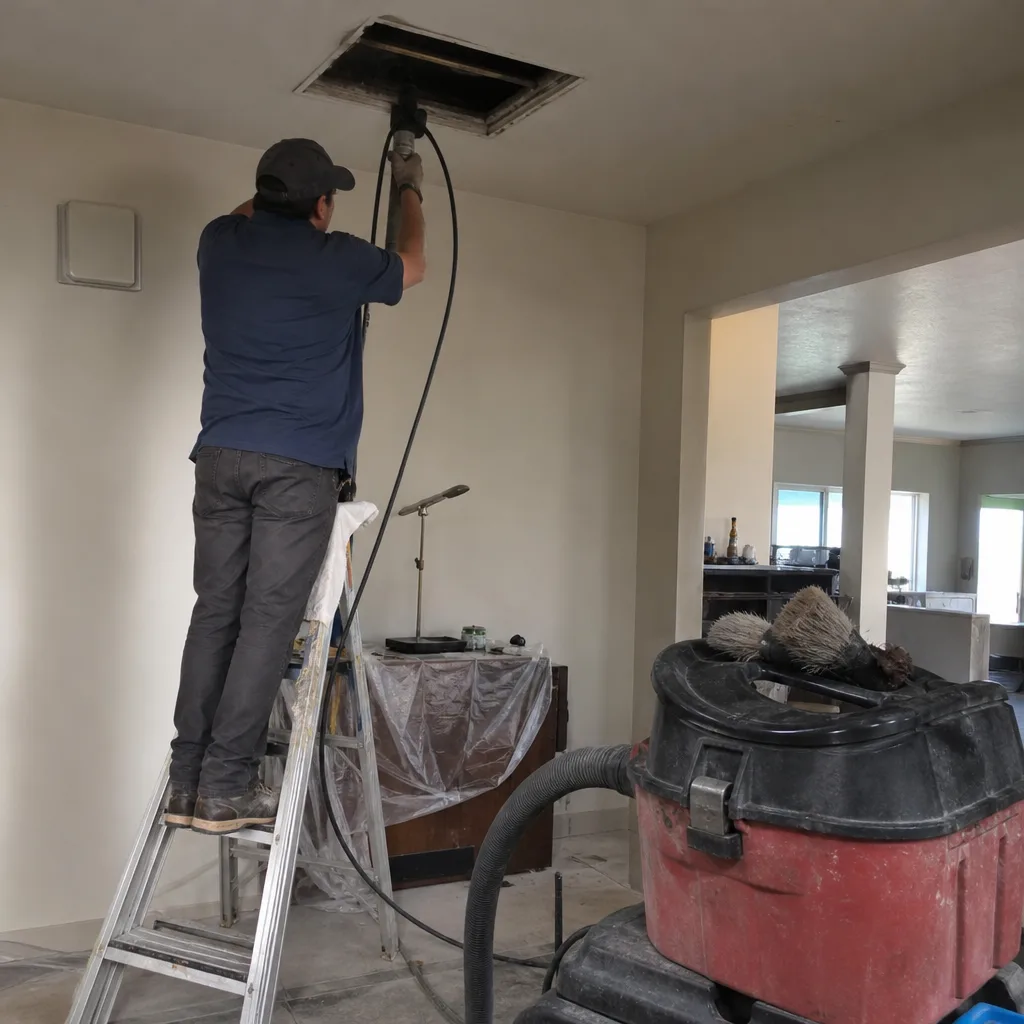 Before
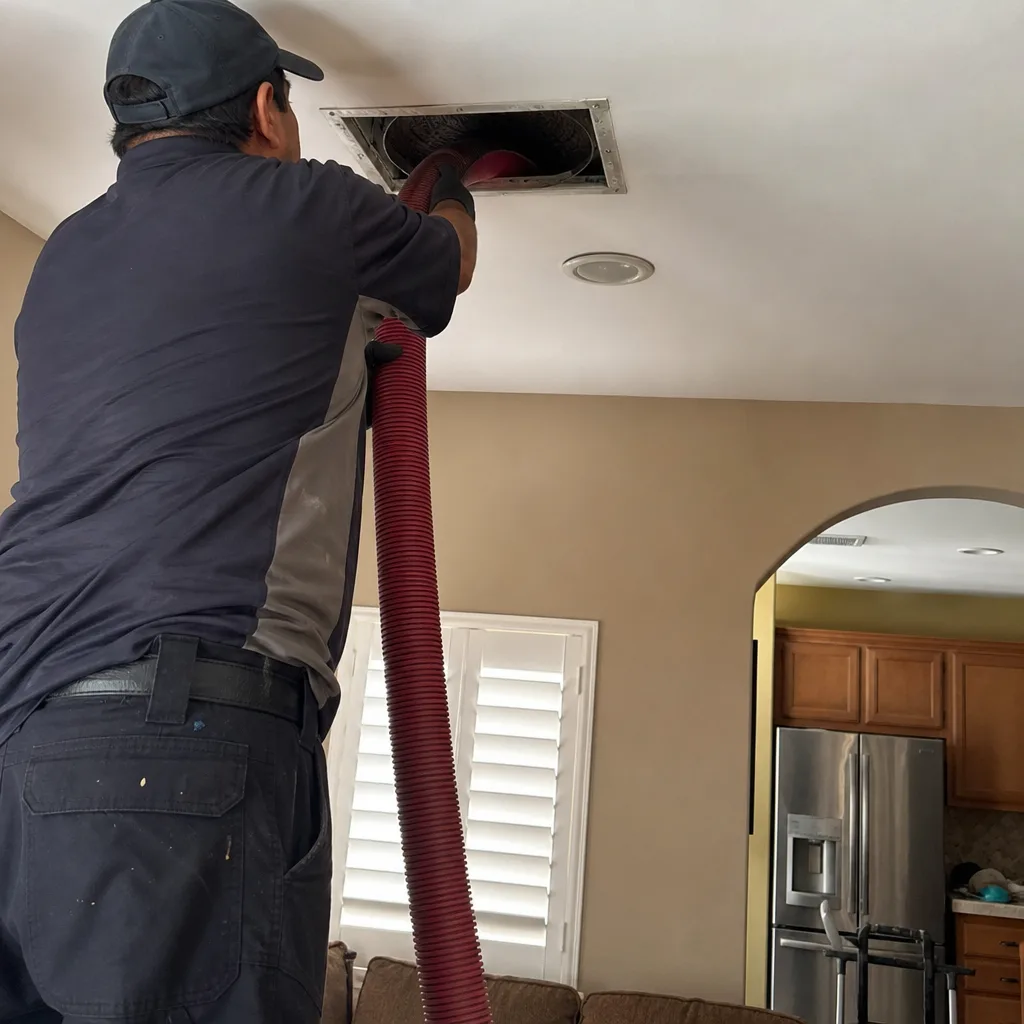 After
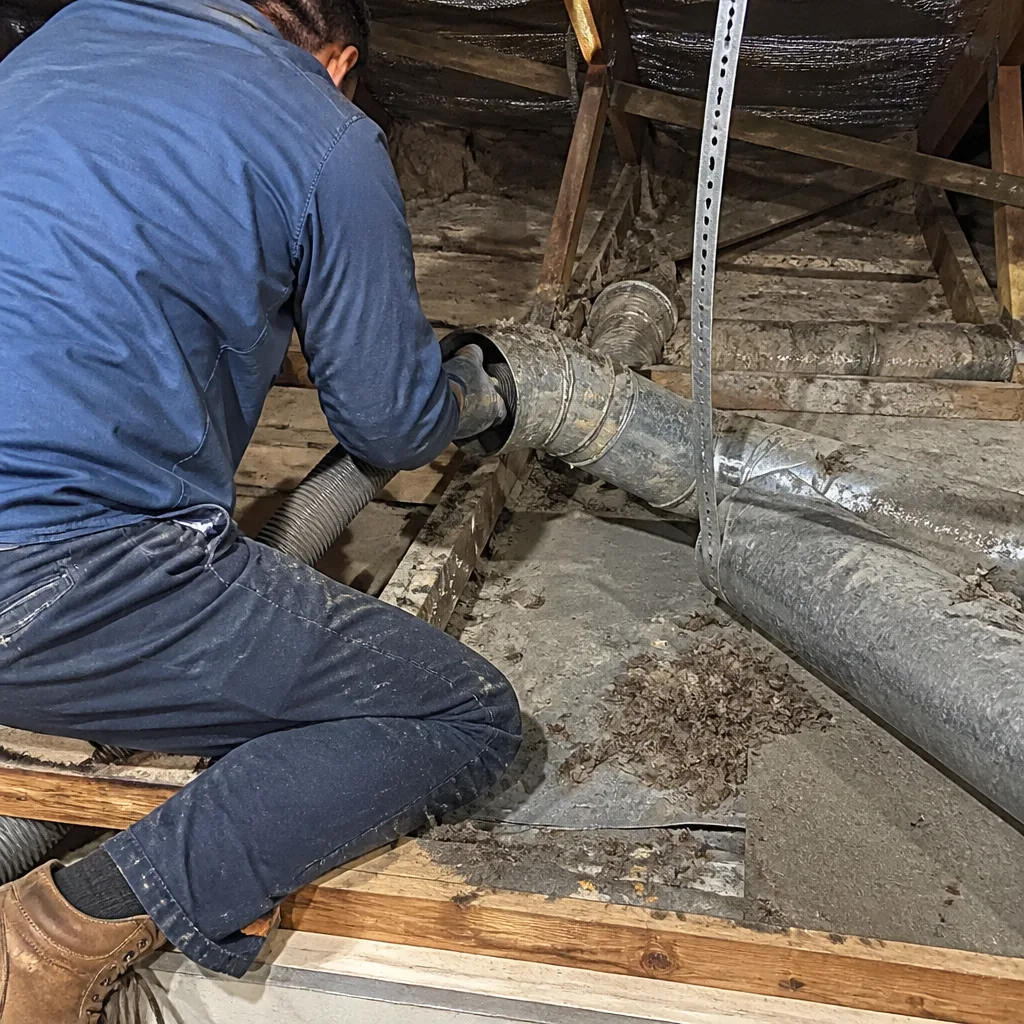 Before
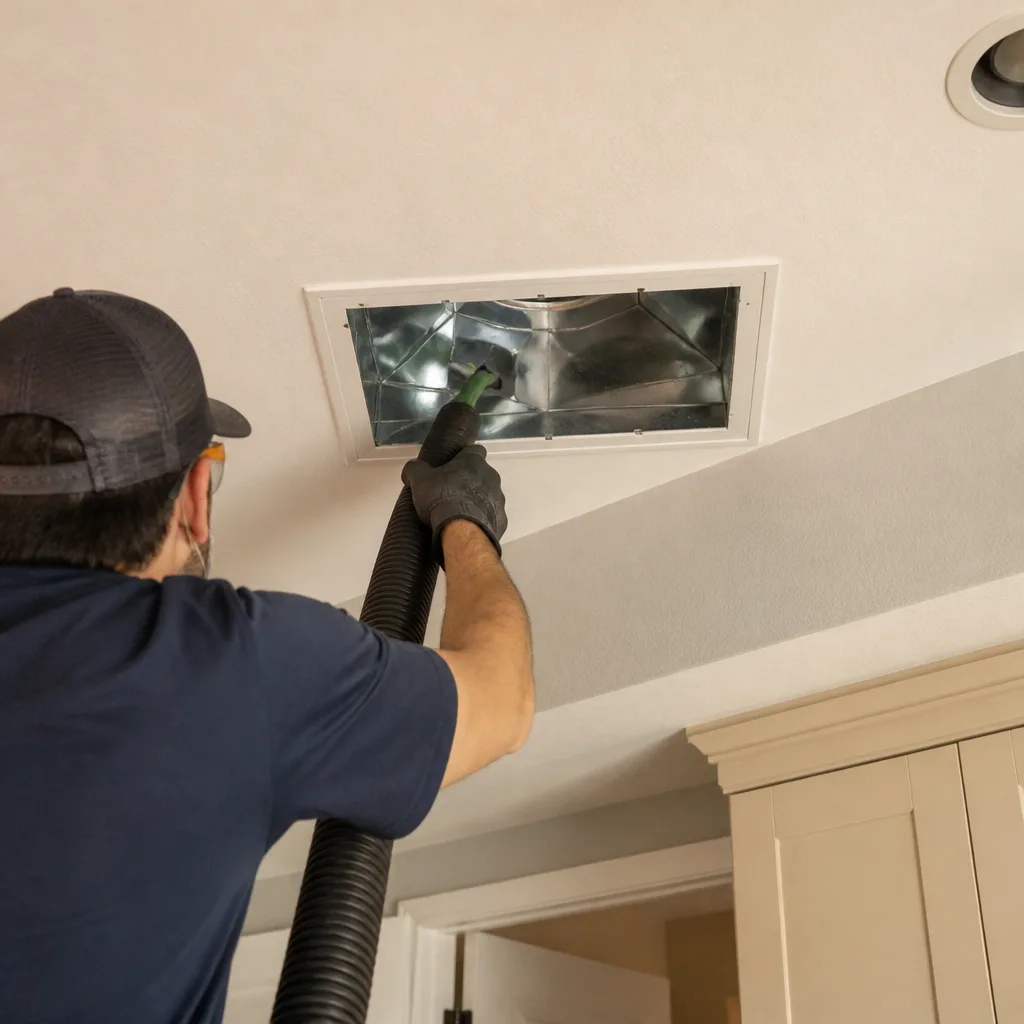 After
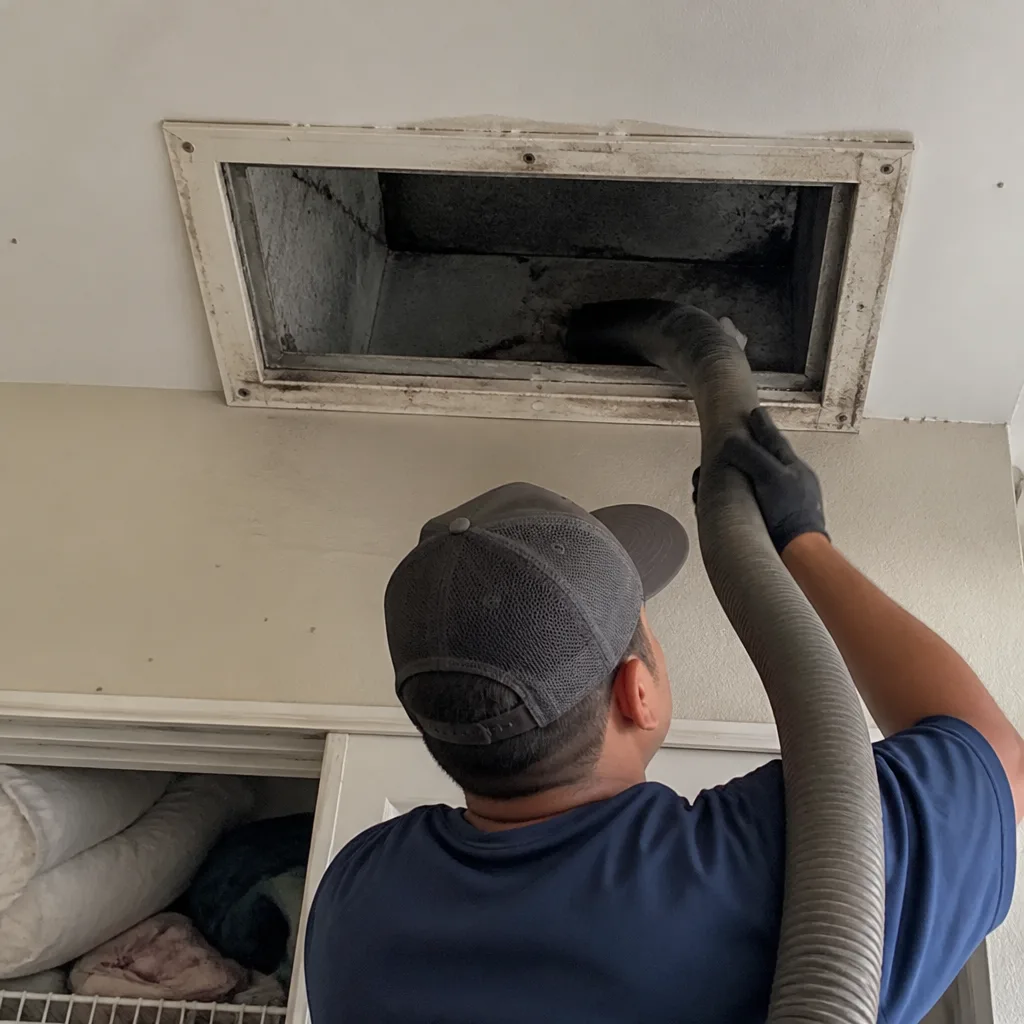 Before
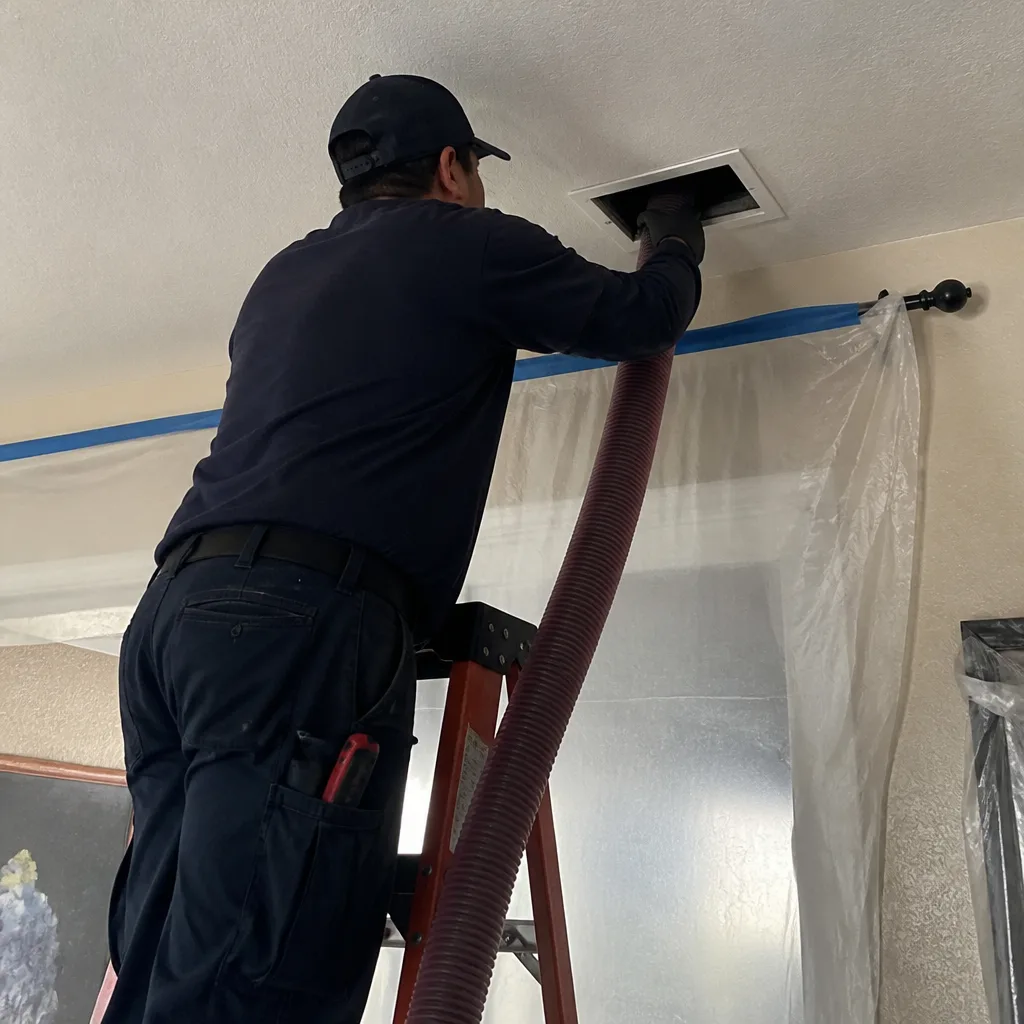 After
Seasonal Maintenance Schedule for Hemet Homes
This is the year-round schedule we recommend to Hemet homeowners who want to stay ahead of duct contamination instead of reacting to it:
- April to May: Schedule the pre-season duct cleaning. This is the single most important seasonal action for Hemet homes.
- June to September: Change HVAC filters monthly during peak run season. If your system uses a 1-inch filter, monthly replacement is not optional in Hemet’s heat. If you have a 4-inch media filter, check it monthly and replace it at least every three months.
- After any wildfire smoke event: Evaluate whether the ducts absorbed smoke particulate. If the home was under smoke for more than 24 hours, schedule a HEPA-filtered post-smoke cleaning.
- October: Post-summer inspection. Check flex duct condition, register collars, coil and blower accumulation, and return duct loading. Schedule repairs if needed.
- November to February: Complete any duct repair work. This is the ideal window for flex replacement, sealing, and return air improvements.
- March: Final pre-spring review. Confirm that the system is clean, sealed, and ready for summer load.
This schedule reflects how Hemet’s climate actually behaves, not a generic “clean once a year” rule. Homes with pets, residents with allergies or respiratory conditions, and homes in the dustier eastern parts of the valley may benefit from a second cleaning mid-summer. Homes with no pets, tight construction, and high-efficiency filtration may be able to stretch the spring-to-spring interval. If you’re not sure where your home falls, the condition of the return-side duct lining after a year is the honest answer, and a camera inspection will show it to you directly.
For more detail on what a proper cleaning involves, see Duct Cleaning Hemet home for an overview of our service approach and equipment.
Common Mistakes to Avoid
- Cleaning in January because “it’s been a year.” A January cleaning means you’re cleaning a system that’s been dormant, then immediately exposing it to five months of heavy summer load. Spring cleaning, before the load begins, is the higher-value timing in Hemet.
- Skipping a post-smoke cleaning because “the air looks clear.” Smoke particulate is sub-micron and largely invisible. The air can look fine while the ducts carry a layer of combustion residue. Visual clarity is not the metric.
- Ignoring evaporative cooler moisture. If you run a swamp cooler, the ducts have a moisture history that dry-climate houses don’t. Treating the system as if it’s always dry is a biological growth risk.
- Cleaning instead of repairing. A cleaning cannot fix a separated flex duct liner or a loose register collar. If the post-summer inspection found physical damage, repair is the correct action. Cleaning around a leak treats the symptom and misses the cause.
- Relying on a standard residential cleaning after a smoke event. Smoke particulate requires HEPA-filtered negative air extraction. A brush-and-vacuum cleaning without HEPA filtration can redistribute fine particulate through the house.
- Neglecting filter replacement during peak summer. A clogged filter increases static pressure and forces the blower to work harder. In Hemet’s summer, a 1-inch filter loaded with dust after three weeks is already restricting airflow. Monthly replacement is the rule, not the exception.
When to Call a Professional
The seasonal schedule above covers routine maintenance, but some situations require professional evaluation sooner rather than later. If you see visible dust deposits on register covers despite regular filter changes, or if airflow from specific registers has noticeably dropped, the issue is likely inside the duct system. If you smell a musty odor when the system first starts, particularly after running an evaporative cooler, that points to biological growth that needs professional attention. If you’ve had a wildfire smoke event and the house smells smoky weeks later, the ducts are retaining particulate. If flex duct runs are visibly sagging in the attic or you’ve spotted separated connections at registers, repair is needed before the next heavy run season. Hemet homeowners can get an assessment of any of these conditions at no cost. Duct Cleaning Hemet offers free estimates in Hemet – call (877) 752-8890 to schedule an inspection.
Frequently Asked Questions
Most Hemet homes benefit from duct cleaning once every two to three years, timed in late spring before the summer cooling season. Homes with pets, allergy sufferers, evaporative coolers, or recent wildfire smoke exposure may need annual cleaning. The deciding factor is how much material has accumulated inside the ducts, and a camera inspection is the honest way to measure that.
Late spring, specifically April through May, is the best season for duct cleaning in Hemet. You’re removing the previous year’s accumulated material before the system enters its heaviest run period, which means the system starts summer with clean duct surfaces and the lowest possible static resistance.
Yes, wildfire smoke enters the return registers and deposits fine particulate throughout the duct system, on the coil, and on the blower wheel. Standard filter changes help but cannot remove material already settled past the filter. Post-smoke cleaning with HEPA-filtered negative air equipment is the proper protocol for removing combustion particulate from ducts.
Household vacuums and shop vacs do not generate the airflow or filtration needed to clean a full duct system, and they lack the brush tools to dislodge adhered debris. Duct cleaning requires professional equipment like the Rotobrush rotary brush system and Nikro HEPA vacuum units. Homeowners can replace filters, vacuum register covers, and keep returns unobstructed, but full duct cleaning is a professional service.
A cleaning addresses debris inside the ducts. A repair addresses mechanical damage: separated flex duct liners, loose register collars, disconnected sections, or torn insulation. A post-summer inspection can show which condition you have. If the duct system itself is compromised, cleaning will not fix it, and repair is the correct service.
For a full explanation of repair scope, see our page on Air Duct Repair in Hemet. If you’re also concerned about the dryer exhaust path, read about Dryer Vent Cleaning in Hemet, which is a separate service with a different risk profile – dryer vents accumulate lint and present a fire hazard, not just an air quality concern.
Yes and no. The dry air means less biological growth risk compared to humid climates, but Hemet’s summer dust, Santa Ana wind grit, and wildfire smoke are heavier particulate loads than most coastal California homes see. Hemet ducts accumulate material faster during the summer run season than the same system would in San Diego or Orange County. The contamination profile is different, not necessarily lighter.
The Bottom Line
Hemet’s climate writes a specific seasonal script for duct care, and following it beats any generic annual schedule. Clean in late spring, before the system runs hard through the hottest months. Treat wildfire smoke events as contamination triggers that require HEPA-filtered extraction, not a standard cleaning. Inspect in October after the summer load, pay attention to flex duct condition and register connections, and complete repairs during the mild winter window when the system can be shut down without discomfort. If you run an evaporative cooler, add moisture-related inspection to your fall routine. The schedule isn’t complicated. Clean before the load, inspect after the load, repair during the downtime. Call (877) 752-8890 for a free estimate on any of these services, from whole-system cleaning to targeted repair work.
Written by the team at Duct Cleaning Hemet, serving Hemet since 2013.