Last updated November 2, 2026
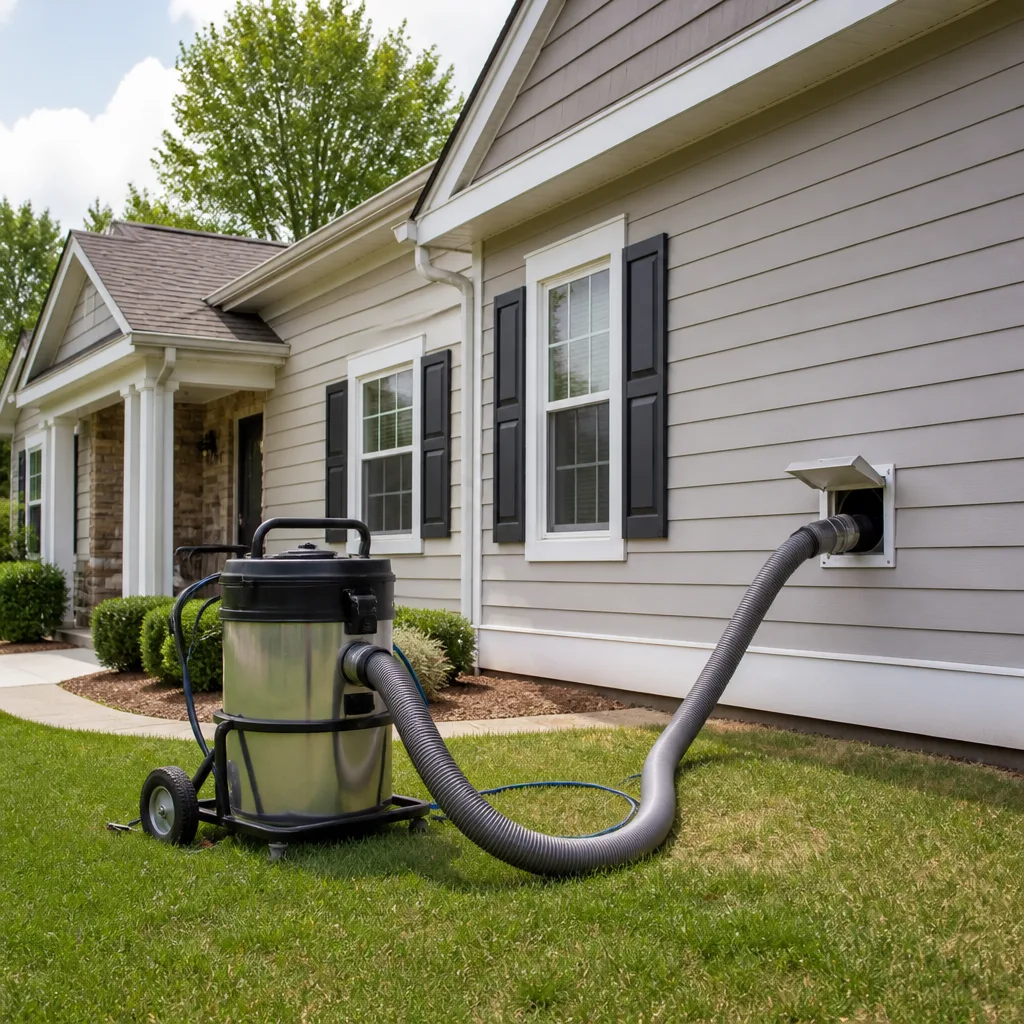 Whole-home duct cleaning
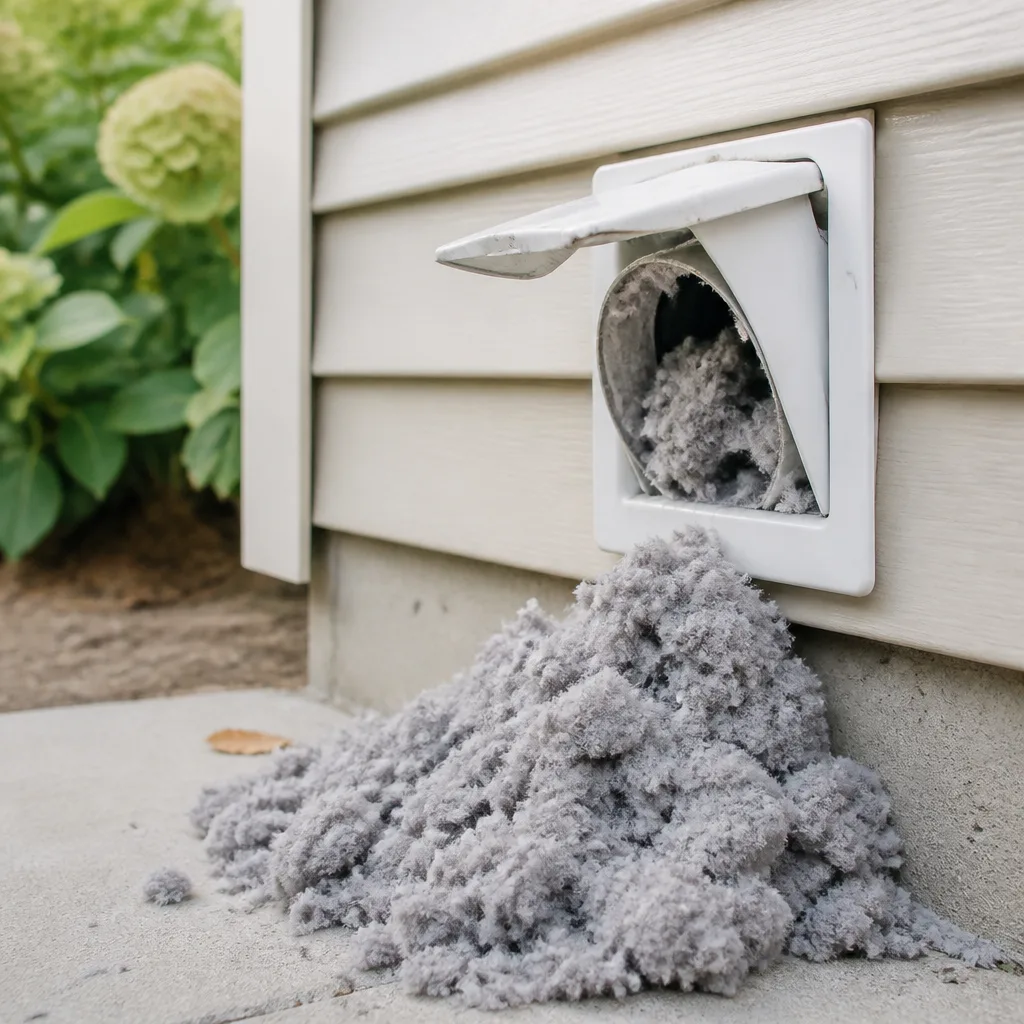 Dryer vent cleaning
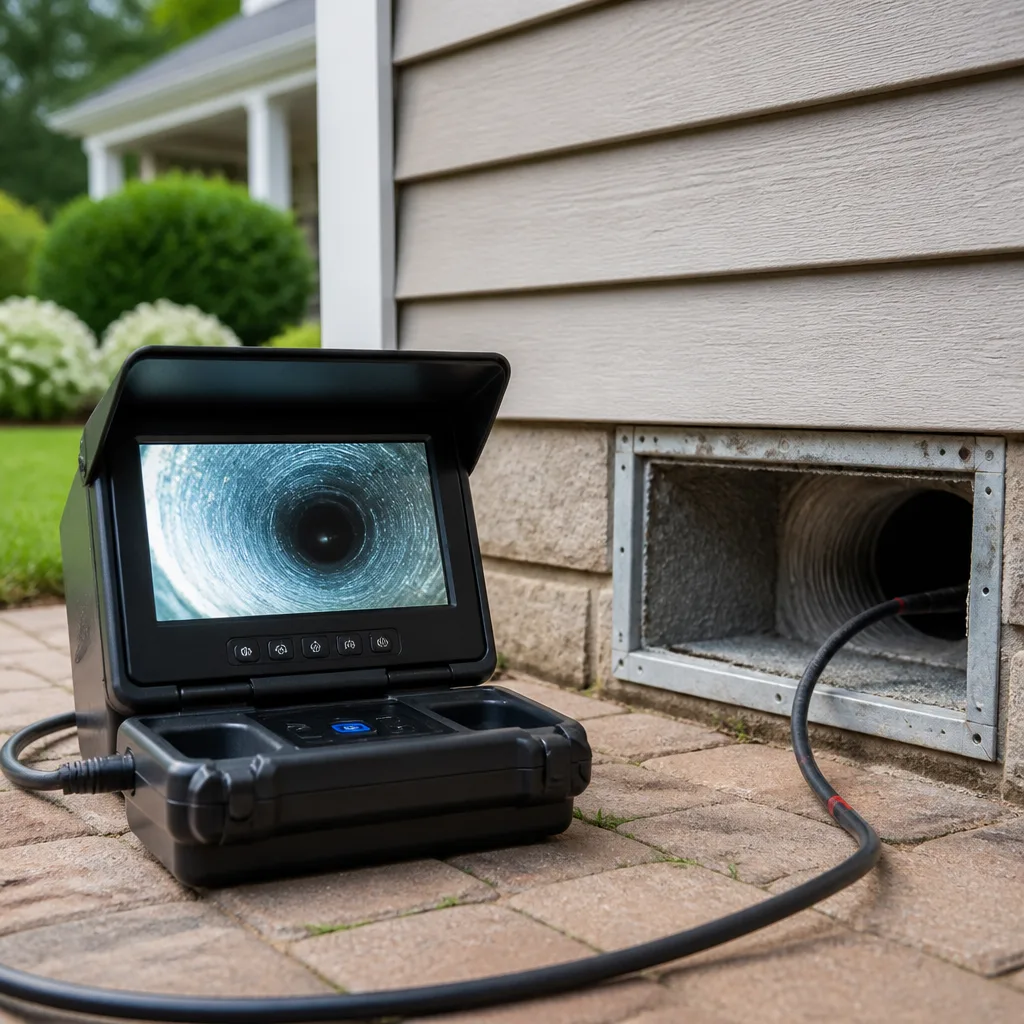 Camera inspection
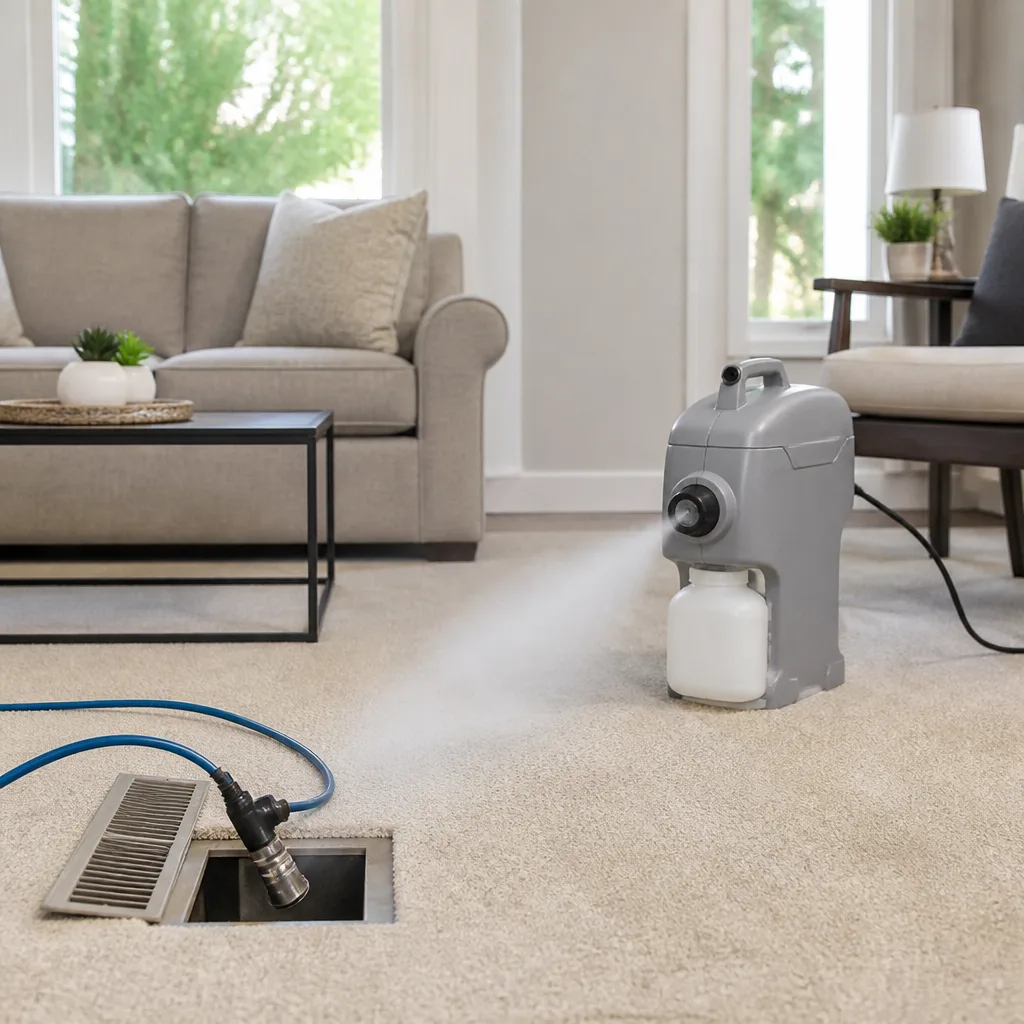 Sanitizing & deodorizing
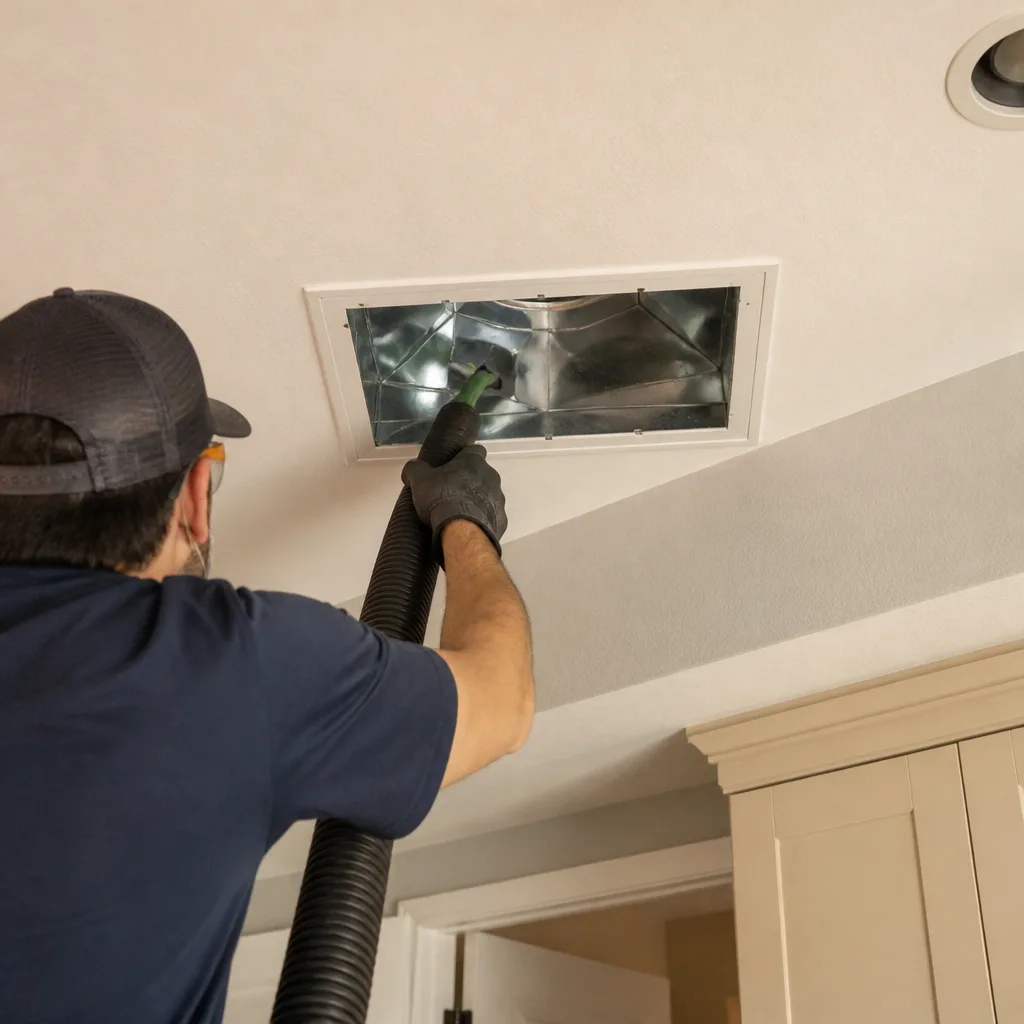
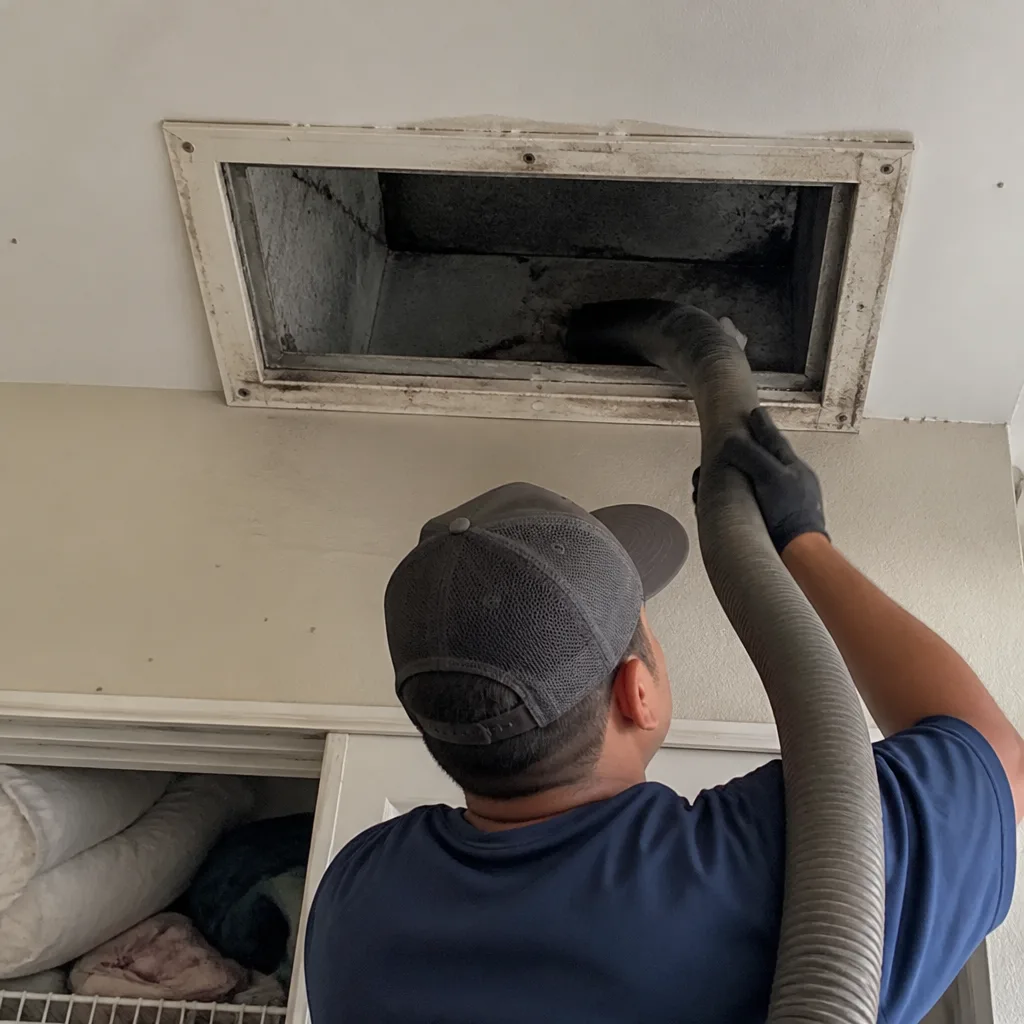
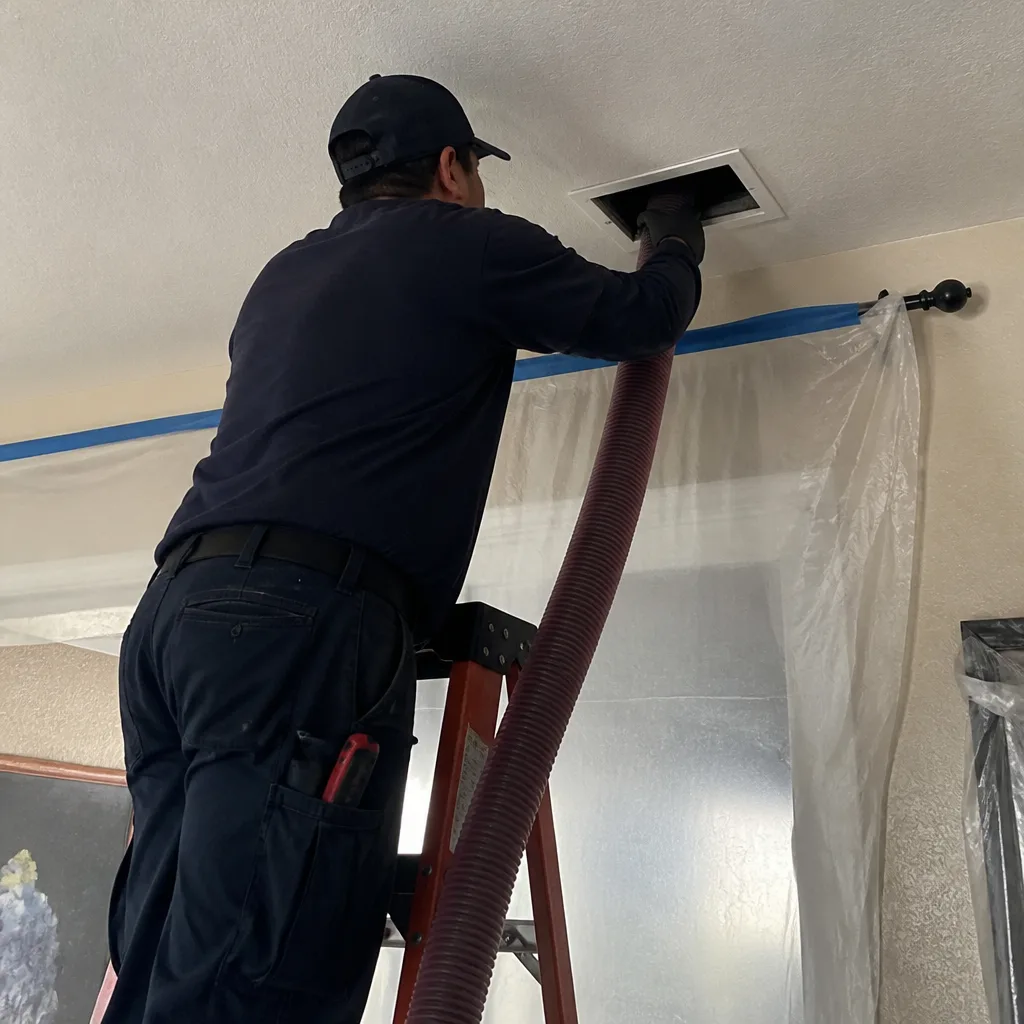
Whole-system duct and dryer vent check with before-and-after photos - you see exactly what came out of your vents
That "$99 whole-house special" is a bait ad - the real number appears once they are in your hallway, or the "clean" is a shop-vac at the register. We photograph the inside of your ducts before and after instead.
How to Hire an Air Duct Cleaning Contractor in Hemet: A Step-by-Step Guide
The most common duct cleaning scam in Southern California isn’t a fake company. It’s a real company with a residential shop-vac, a rotating brush attachment from a hardware store, and a marketing budget that buries legitimate specialists in Hemet search results. You’re not just hiring someone to wave a hose around your registers. You’re hiring someone to mechanically agitate years of accumulated dust, skin cells, pollen, and construction debris from the full length of your duct system and extract it under negative pressure. This guide gives you the exact questions to ask, the equipment requirements to demand, and the red flags that separate a real specialist from a crew treating our Air Duct Cleaning services as a side hustle. By the time you’re done reading, you’ll know more about vetting a duct cleaning contractor than most of the contractors you’ll call in Hemet.
Styles & brands we work with
- Whole-home duct cleaning
- Dryer vent cleaning
- Camera inspection
- Sanitizing & deodorizing
Quick Answer
To hire an air duct cleaning contractor in Hemet, verify three things before you book: they use truck-mounted or HEPA-rated portable vacuum equipment with at least 2,000 CFM of suction, they perform contact cleaning with rotary brushes or agitation tools rather than air-whip only, and they provide a written flat-rate quote based on a walkthrough of your system (not a per-vent price that inflates on arrival). Ask whether they hold NADCA membership, request proof of liability insurance, and confirm they will show you before-and-after photos of your actual ducts. The contractor should be able to name their equipment by brand.
Table of Contents
- The Equipment Questions That Separate Specialists From Generalists
- Credentials That Matter: NADCA, Insurance, and What Actually Counts
- How to Spot Bait-and-Switch Pricing Before the Van Arrives
- Red Flags Specific to the Hemet Market
- How to Structure a Walkthrough Before Signing Anything
- When Cleaning Isn’t Enough: The Duct Repair Question
- Why Dryer Vent Cleaning Is a Separate Fire-Safety Decision
- Common Mistakes to Avoid
- When to Call a Professional
- Frequently Asked Questions
- The Bottom Line
The Equipment Questions That Separate Specialists From Generalists
You can learn more about a duct cleaning contractor in sixty seconds of equipment questions than in an hour of reading reviews. Most homeowners never ask these questions, which is exactly why the low-bid crews get away with substandard work in Hemet year after year. Here’s what to ask and why the answers matter.
Is your vacuum truck-mounted or portable, and what’s the CFM rating? This is the single most revealing question you can ask. Truck-mounted systems pull 8,000 to 12,000 CFM (cubic feet per minute) of airflow, enough to create the negative pressure that pulls dislodged debris all the way from your registers to the collection tank outside. Portable units used by serious specialists should be HEPA-rated with at least 2,000 to 4,000 CFM. A residential shop-vac produces 100 to 150 CFM and cannot move debris through a 25-foot duct run, no matter what attachment is on the end. If the contractor hesitates or gives you a vague answer about “powerful suction,” that’s your cue to end the call.
Do you use contact cleaning tools or air-whip only? Air whips and skipper balls blast compressed air through ducts, knocking loose surface dust. That’s fine for light maintenance. But the film that builds up on duct walls over years in Hemet, where summer heat bakes dust into the metal and the Santa Ana winds keep new particulate coming in, often needs mechanical agitation. Rotary brush systems like the Rotobrush equipment we use make physical contact with duct walls, scrubbing the surface while the vacuum extracts simultaneously. For more on keeping your system maintained through the seasons, see our guide on Seasonal Air Duct Cleaning Care for Hemet: Year-Round Homeowner’s Guide. Ask directly: “Does your brush make contact with the duct walls, or do you rely on air pressure alone?” A contractor who can explain the difference is already ahead of most of the market.
What brand of equipment do you run? This question separates people who take duct cleaning seriously from people who bought a machine off a liquidation pallet. Professional systems come from companies like Nikro, whose HEPA-rated negative air machines are standard equipment in certified duct cleaning protocols, and Abatement Technologies, a name more commonly associated with remediation and contaminant control environments. If a contractor can’t name their equipment brand, they’re probably not running professional-grade gear. If you want more detail on how professional equipment differs from residential rigs, our Air Duct Cleaning in Hemet page covers it.
What’s your filtration standard? True HEPA filtration captures 99.97% of particles at 0.3 microns. That’s dust mite debris, pollen fragments, and mold spore size. If the vacuum exhausts into your home, anything smaller than its filter rating goes right back into your air. HEPA-rated filters on the vacuum exhaust are what separate a cleaning that improves your air quality from one that just relocates dust from your ducts to your furniture.
Credentials That Matter: NADCA, Insurance, and What Actually Counts
NADCA, the National Air Duct Cleaners Association, publishes the industry standard for duct cleaning methodology. Membership signals baseline professional commitment: the contractor has agreed to follow a written procedure, maintain specific equipment standards, and stay current on technical updates. It’s not a guarantee of quality, but it’s a useful floor. In Hemet, where dozens of HVAC companies list duct cleaning as a secondary service, NADCA membership is a reasonable first filter.
But credentials don’t end there. Ask these questions before you book:
- Liability insurance: Request a certificate of insurance naming you as the certificate holder. Any legitimate contractor will provide this in minutes. Uninsured crews operating in Hemet are a real risk; if they damage your ductwork or your home, you’re on your own.
- Before-and-after documentation: A legitimate specialist will photograph or video the inside of your ducts before and after cleaning. This is not a nice-to-have. It’s the only way you can verify the work was actually done. Ask upfront: “Will you provide before-and-after photos of my ducts?” If the answer is no, that should concern you.
- Written scope of work: The quote should specify exactly what’s included: number of supply runs, return drops, plenum cleaning, coil cleaning (if applicable), and filter replacement. Vague language like “full system cleaning” is an invitation for a shorter-than-promised job.
- Physical address and local presence: There are national lead-generation companies that sell “duct cleaning in Hemet” and then subcontract the job to whoever answers the phone. Ask where the company is physically located and whether the crew doing the work are their employees or subcontractors.
Beyond NADCA, look for familiarity with the broader air quality ecosystem. A contractor who understands how your ducts interact with filtration and humidity control is doing more than pushing air through tubes. Professionals who work with Honeywell and Aprilaire systems, for example, can tell you whether your current filtration setup is appropriate for your home, not just whether your ducts need brushing. That’s the difference between a technician and a specialist.
How to Spot Bait-and-Switch Pricing Before the Van Arrives
The bait-and-switch is the most common complaint in the duct cleaning industry, and Hemet is not immune. Here’s how the play works: a company advertises a low entry price, books the job, then discovers “additional returns,” “mold contamination,” or “a second system” once they arrive. The final invoice lands two to three times above the quoted figure. You can avoid this by understanding how legitimate pricing should be structured.
Flat-rate quoting for the whole system. A legitimate contractor quotes one price for the entire duct system: all supply runs, all returns, the plenums, and the main trunk line. They don’t price per vent with add-ons for each additional register. Per-vent pricing is the mechanism that enables bait-and-switch; the “discount” applies to the first several vents and the rest get charged at full rate. In Hemet, where single-story slab homes with attic duct runs are common, a whole-system price should be calculated from the home’s square footage, number of registers, and system configuration, not from a per-vent menu.
What a legitimate quote covers. Your written quote should itemize:
- Number of supply and return registers
- Main trunk line and branch runs
- Plenum cleaning on both supply and return sides
- Blower compartment inspection and cleaning (if accessible)
- Filter check and replacement recommendation
- Before-and-after photo documentation
- Total flat price, no hidden add-ons
What should raise a red flag. If the quote arrives over the phone without a home walkthrough, if it’s based on a per-vent price, if it’s dramatically lower than other quotes you’ve received, or if the contractor can’t explain what’s included in writing, walk away. Serious duct cleaning in Hemet typically runs between $350 and $600 for a standard single-family home, depending on system size and accessibility. For a detailed look at what drives these numbers, see our Air Duct Cleaning Cost Breakdown: The Hemet Homeowner’s Reference for 2026. Quotes below $200 for a “full system cleaning” are almost always bait and will balloon on arrival.
Red Flags Specific to the Hemet Market
Hemet has specific characteristics that scammers and low-effort operators exploit. The city’s mix of older homes with original ductwork, newer developments in the eastern sprawl, and a significant population of seniors on fixed incomes creates fertile ground for the bait-and-switch model. Here’s what to watch for in this market specifically.
No physical address in the Inland Empire. A surprising number of “Hemet duct cleaning” companies are shell operations run from Los Angeles or Orange County call centers. They list a Hemet PO box or a virtual office, then dispatch whichever contractor bid lowest on the job. Ask for the company’s physical street address and verify it on Google Maps. If it’s a UPS store or a residential apartment complex, that’s your answer.
Subcontracting without disclosure. Some companies sell the job and hand it to a third-party crew who may or may not be equipped, insured, or English-speaking. When you call to book, ask directly: “Are the technicians who will be at my home employees of your company?” If the answer is evasive, keep looking.
Refusing to show equipment before starting. This is a simple one. When the crew arrives, walk out with them to the truck or van. Legitimate equipment is substantial: a truck-mounted unit with large hoses, or a wheeled HEPA unit with a rotary brush system like the Nikro or Rotobrush gear we run. If the technician shows up with a handheld vacuum and a drill attachment, you’re looking at the scam in action. A professional with genuine gear will be proud to show it.
Door-to-door pressure tactics in senior neighborhoods. Reports of aggressive door-knocking campaigns targeting Hemet’s 55+ communities surface periodically. The pitch is a heavily discounted “neighborhood special” that requires immediate commitment. Legitimate duct cleaning companies in Hemet don’t need door-to-door sales to fill their schedules. If someone shows up unsolicited offering a duct cleaning deal, close the door.
The “mold found” emergency upsell. After a few minutes of cleaning, the technician announces they found mold in your ducts and recommends a $900 sanitization treatment. While microbial growth in ductwork is a real concern in Hemet’s high-heat climate, a legitimate contractor will photograph the finding, explain the scope, and give you time to evaluate options, not pressure you for an on-the-spot decision.
How to Structure a Walkthrough Before Signing Anything
A legitimate contractor does not quote a duct cleaning job over the phone without seeing the system. Here’s what a proper pre-quote walkthrough should look like, step by step, so you can evaluate whether the contractor you’re talking to is doing real due diligence.
- They ask about your home’s history. How old is the house? Have you done renovations? Pets? Water damage? Smoking? These factors affect what’s in your ducts and how intense the cleaning needs to be. A contractor who doesn’t ask about your home’s history is running a script, not evaluating a system.
- They inspect the return side first. The return side is where most contamination enters the system. A serious contractor will pull the main return grille or check the filter slot and look at the blower compartment. This tells them how much debris is in the system and what kind of filtration you have installed.
- They count registers and map the layout. How many supply drops? How many returns? Where are they located? This determines the scope of work and the flat-rate price. For Hemet’s common one-story ranch layouts with attic-mounted duct runs, this is straightforward, but it still needs to be done on site.
- They check the filter situation. What type of filter are you running? What size? When did you last change it? A contractor who doesn’t look at your filter isn’t thinking about your air quality holistically. We regularly see Hemet homes with a mix of filter sizes and types because previous contractors installed whatever was on the truck.
- They evaluate duct condition. Are the ducts leaking at the seams? Crushed in the attic? Disconnected at a boot? A cleaning contractor who notices these issues and mentions them is doing more than the minimum. Repair might be the higher priority than cleaning. If you’re dealing with obvious damage, our Air Duct Repair in Hemet service addresses ductwork that cleaning alone cannot fix.
- They give you a written quote with a flat price. Not a verbal estimate, not a per-vent menu, not a range with caveats. A specific number for a specific scope of work, valid for a defined period. This is the standard.
If a contractor skips several of these steps and still hands you a price, treat that price as meaningless. They haven’t done the work to know what the job actually requires.
When Cleaning Isn’t Enough: The Duct Repair Question
Here’s a distinction most Hemet homeowners never hear until it’s too late: cleaning a damaged duct system is like vacuuming a carpet with a hole in it. You can remove the dirt, but the system is still leaking conditioned air into the attic, pulling unfiltered air from the crawl space, and wasting the efficiency gains you paid for. A thorough contractor evaluates whether repair should accompany or precede cleaning.
Hemants with attics that reach 140 degrees in August put real stress on ductwork. Flex ducts dry out and crack. Mastic seals fail at the plenum connections. Rodents in attic spaces, a persistent issue in older Hemet neighborhoods, chew through insulation and duct walls. When we inspect before a cleaning, we look for these conditions because cleaning a compromised system is a partial fix.
The right contractor will tell you if your ducts need attention beyond cleaning. Here’s the honest version of that conversation: “Your ducts are caked with twenty years of dust, but you also have a 3-inch hole in the return plenum. If we clean without sealing that, you’ll have attic dust in your system within six months.” That’s the conversation a specialist has. We repair what others only clean around. That’s the approach our Air Duct Repair in Hemet team takes: diagnose the full system, not just the interior surfaces.
Be wary of the inverse, too. A contractor who insists on expensive “sealing” or “sanitization” services without showing you the photographic evidence is selling fear, not fixing problems.
Why Dryer Vent Cleaning Is a Separate Fire-Safety Decision
Dryer vent cleaning is not an add-on bundled at the end of a duct cleaning job. It’s a distinct service with its own safety implications, and you should evaluate it separately from your HVAC duct decision. The U.S. Fire Administration attributes thousands of residential fires annually to dryer vent failures, almost all of them preventable with proper cleaning.
In Hemet, where homes are configured with either short side-wall vents or long runs through attics to roof terminations, vent configuration determines cleaning frequency and difficulty. Short runs may go years between cleanings. Attic runs that exceed 15 feet, or with multiple elbows, should be checked every year. The restriction points are where lint accumulates, and a clogged vent forces your dryer to work harder, overheat, and potentially ignite the accumulated lint. It’s a slow-burn hazard, not a dramatic one, which is why people ignore it.
If you’re already scheduling duct cleaning, a dryer vent evaluation makes sense: the same contractor can run a camera or brush through the vent and tell you whether it’s restricted. But hold the service to the same standard: professional equipment, photographic documentation, and a flat-rate price. Our Dryer Vent Cleaning in Hemet service operates on the same model as our duct cleaning work: named equipment, transparent pricing, and before-and-after documentation.
Common Mistakes to Avoid
- Hiring based on the lowest phone quote. A contractor who quotes $99 over the phone without seeing your system is either running a bait-and-switch or cutting corners so aggressively the job won’t accomplish anything. You get the cleaning you pay for in Hemet, and the cheap version isn’t a cleaning, it’s a dust relocation.
- Not asking about equipment brands before booking. If you don’t know whether the crew is bringing a truck-mounted system with 8,000 CFM or a shop-vac with a brush attachment, you’re outsourcing the most important quality variable to whoever answers the phone. Ask. The answer tells you everything.
- Assuming NADCA membership alone means quality. NADCA sets a methodology standard, but enforcement is peer-driven and not every member operates to the same level. Use it as a filter, then ask about equipment, documentation, and scope of work anyway.
- Skipping the walkthrough. A contractor who quotes without walking your home hasn’t seen your duct layout, your filter situation, or your system’s condition. The quote is fiction. Insist on an in-person evaluation before you sign.
- Falling for the per-vent pricing trap. Any price quoted per vent is built to inflate. Legitimate contractors price the whole system: a flat rate based on home size and system configuration. If you hear a per-vent number, hang up.
- Ignoring your dryer vent because “it’s been fine for years.” Lint accumulation is gradual, invisible, and dangerous. The first sign of a problem is often a dryer that takes two cycles to dry a load or a burning smell during operation. By that point you’re playing catch-up with a fire hazard.
- Not verifying before-and-after documentation is included. If the contractor doesn’t photograph the inside of your ducts before and after, you have no way to know the work was done. Ever. For the money duct cleaning costs in Hemet, documentation is not optional.
When to Call a Professional
If you’ve lived in your Hemet home for five years or more and have never had the ducts inspected, you’re overdue for at least an evaluation. Visible dust blowing from registers when the system runs, rooms that never reach the temperature of the rest of the house, unexplained allergy symptoms that improve when you leave home, or a layer of fine dust that returns within days of cleaning are all signals that your duct system needs attention. Renovation projects, especially drywall work or flooring removal, deposit construction particulate throughout the system and warrant a cleaning afterward.
If you’re seeing signs of physical damage, disconnected ducts in the attic, crushed flex runs, or visible gaps at the plenum, call before the problem compounds. Heating and cooling a Hemet attic in July is expensive enough without a third of your conditioned air leaking into it. Duct Cleaning Hemet offers free estimates in Hemet, call (877) 752-8890 to schedule a walkthrough.
Frequently Asked Questions
For a standard single-family home in Hemet, professional duct cleaning typically runs between $350 and $600 for the complete system, including all supply runs, returns, plenums, and the main trunk line. The price varies by home size, number of registers, system accessibility, and the condition of the ductwork. If a quote comes in under $200 for a “full system cleaning,” treat it as a bait price that will likely inflate once the crew arrives. Call (877) 752-8890 for an exact quote, estimates are free.
Cheaper quotes usually mean inferior equipment, skipped steps, or a bait-and-switch pricing model. A company running a residential shop-vac instead of a truck-mounted or HEPA-rated portable system has almost no equipment overhead, but they also cannot generate the suction needed to actually clean a duct system. Companies quoting per-vent prices are often hiding the true cost in add-ons. You can’t clean a duct system properly for $99; you can only market that price.
Ask for before-and-after photographs or video of the inside of your ducts. A legitimate contractor will document the work as standard practice. You can also request to see the collection tank or filter bag after the job, which should contain the debris removed from your system. If a contractor cannot provide photographic evidence of the cleaning, you have no way to verify they did anything other than run a noisy machine in your driveway.
Every three to five years is the realistic interval for most Hemet homes, assuming no unusual circumstances. Homes with multiple pets, smokers, recent renovation work, or occupants with significant respiratory conditions may warrant more frequent cleaning, every two to three years. The Hemet climate contributes to the need: summer temperatures bake dust into duct walls, and the Santa Ana winds keep outdoor particulate cycling through your HVAC system. If you’ve never had your ducts cleaned and the home is over a decade old, you’re a candidate for an initial cleaning.
Yes, and you should treat it as a separate service with its own evaluation, not as a free add-on. Dryer vent cleaning addresses a documented fire hazard, lint accumulation that restricts airflow and causes dryer overheating. If your dryer vent runs through the attic, a common configuration in Hemet, check it annually. Short side-wall runs can go longer between cleanings. Ask for photographic documentation of the vent before and after, just as you would with ducts.
NADCA certification means the contractor has agreed to follow the industry-standard methodology for duct cleaning and maintain specific equipment requirements. It’s a useful baseline credential that filters out the most casual operators. However, NADCA membership alone doesn’t guarantee quality work. Ask about equipment brands, CFM ratings, contact cleaning tools, and before-and-after documentation regardless of membership status. A NADCA member with a shop-vac is still running a shop-vac.
The Bottom Line
Hiring a duct cleaning contractor in Hemet comes down to asking the questions most people never ask. What equipment are they running? What’s the CFM rating? Do they use contact cleaning tools? Will they document the work with photos? Will they give you a flat-rate written quote after walking your actual system? The answers to those questions separate legitimate specialists from the generalist crews and marketing companies that dominate search results. If you remember one thing from this guide, make it this: the cheapest quote is almost never the cheapest job. A proper duct cleaning, done with professional equipment and documented honestly, pays for itself in system efficiency, air quality, and the knowledge that the work was actually performed. For a free estimate, call (877) 752-8890 or visit our Duct Cleaning Hemet home page to learn more about our approach.
Written by the team at Duct Cleaning Hemet, serving Hemet since 2013. Explore more guides & resources on keeping your home’s air clean.
See the difference
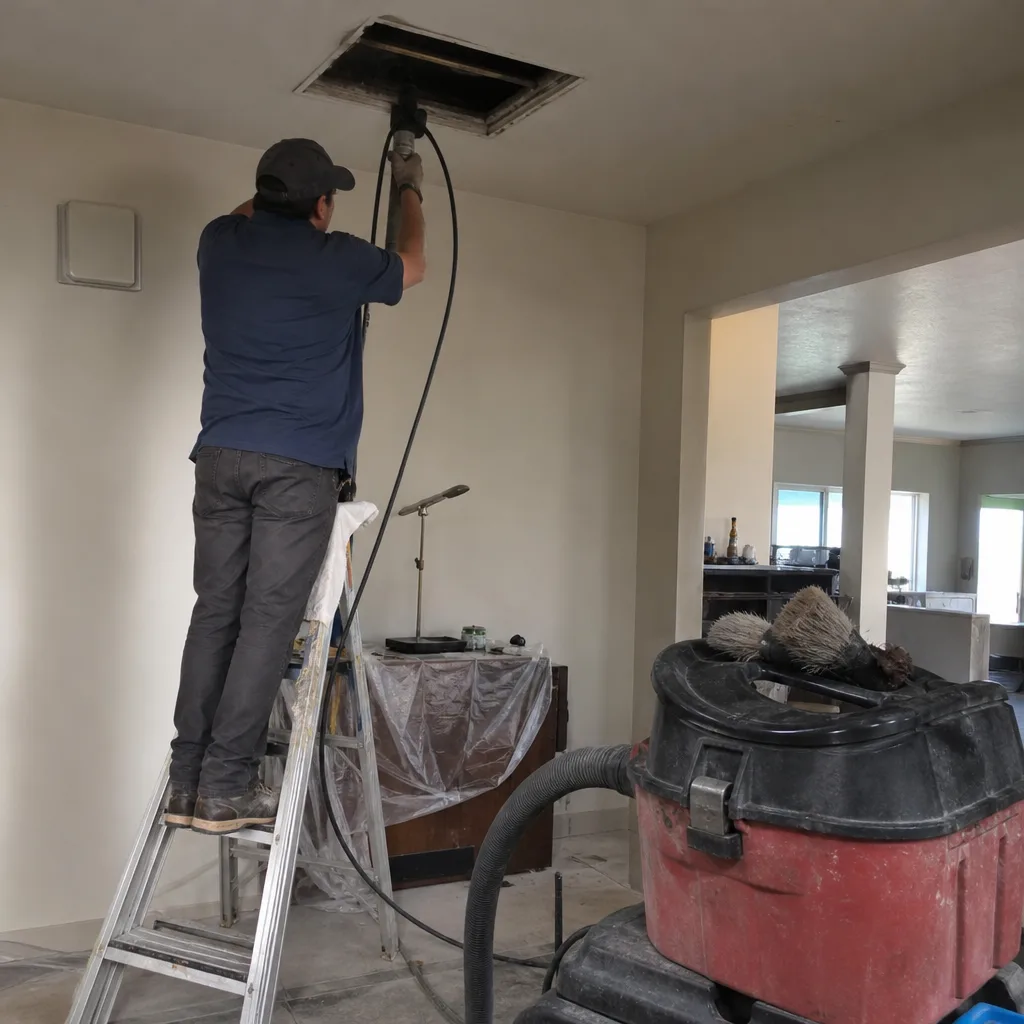 Before
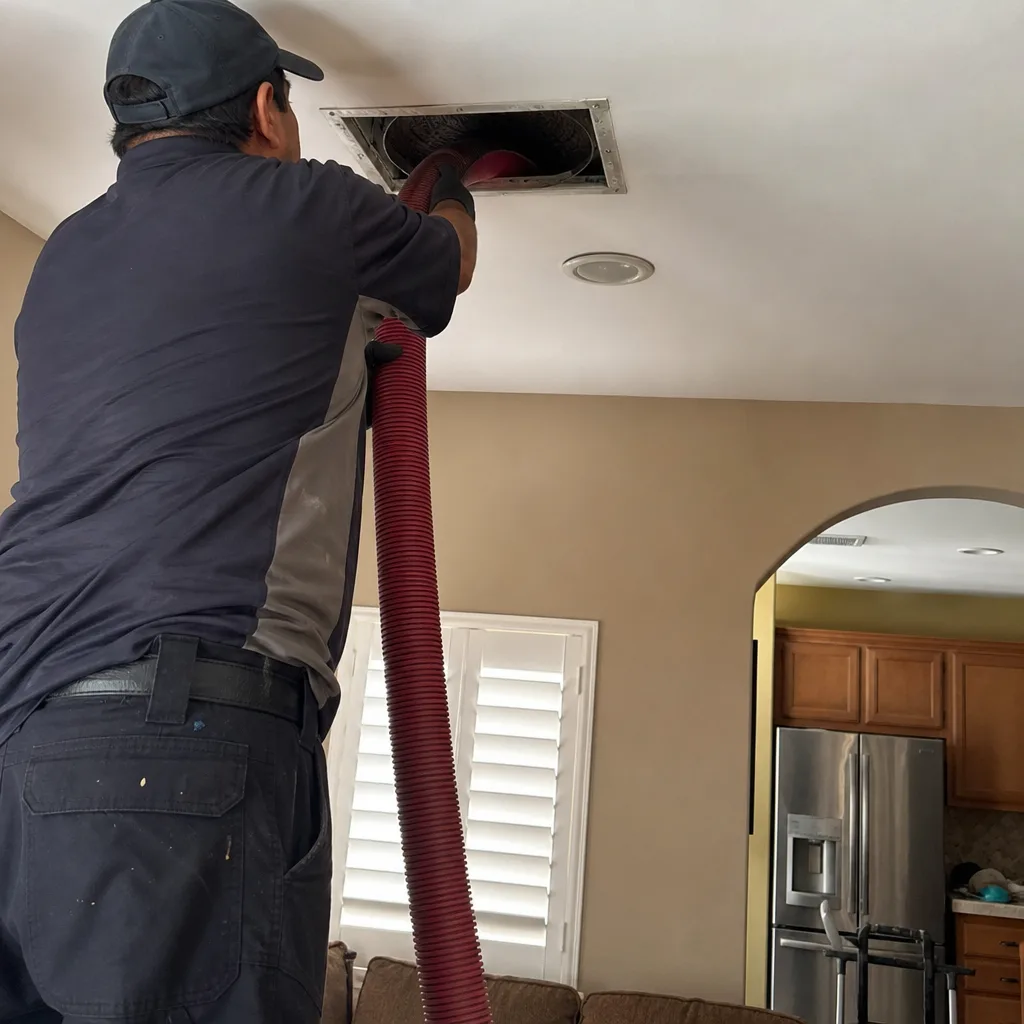 After
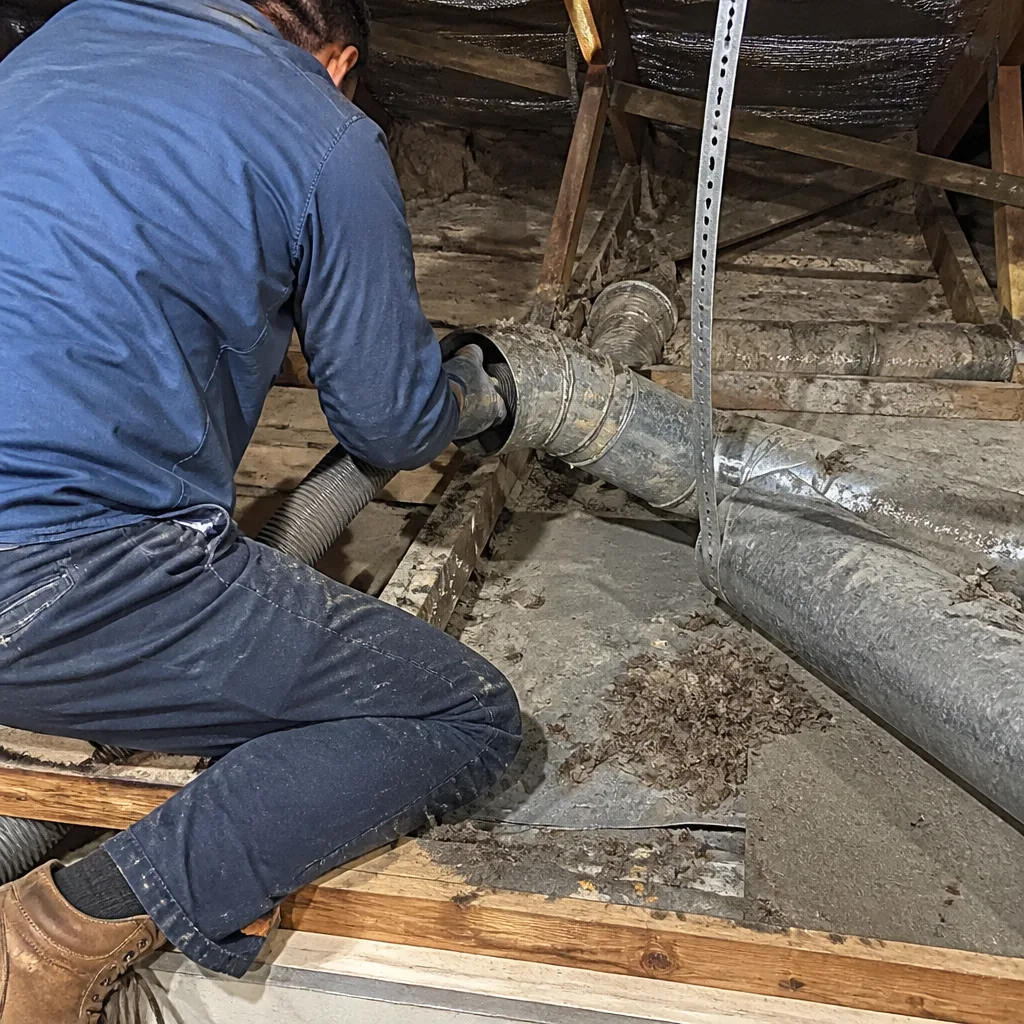 Before
 After
 Before
 After