
Last updated November 3, 2026
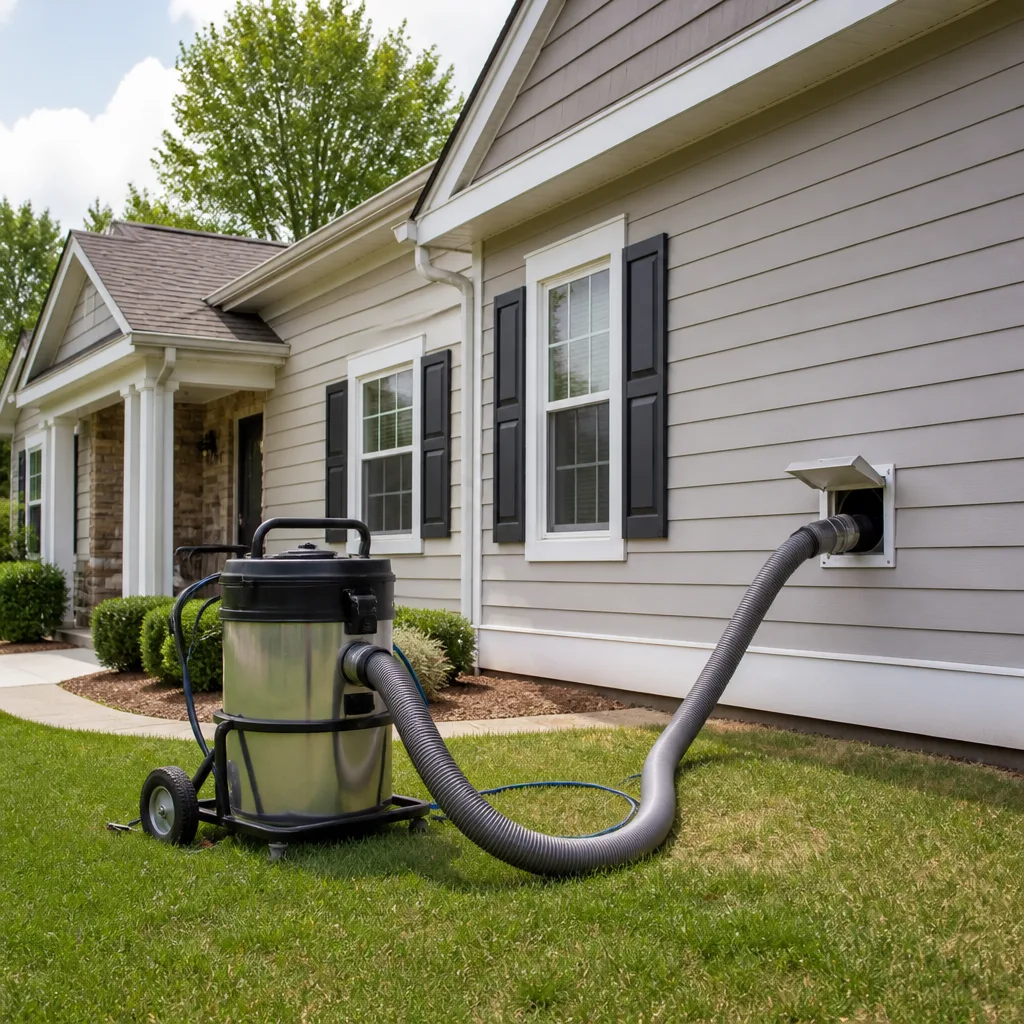 Whole-home duct cleaning
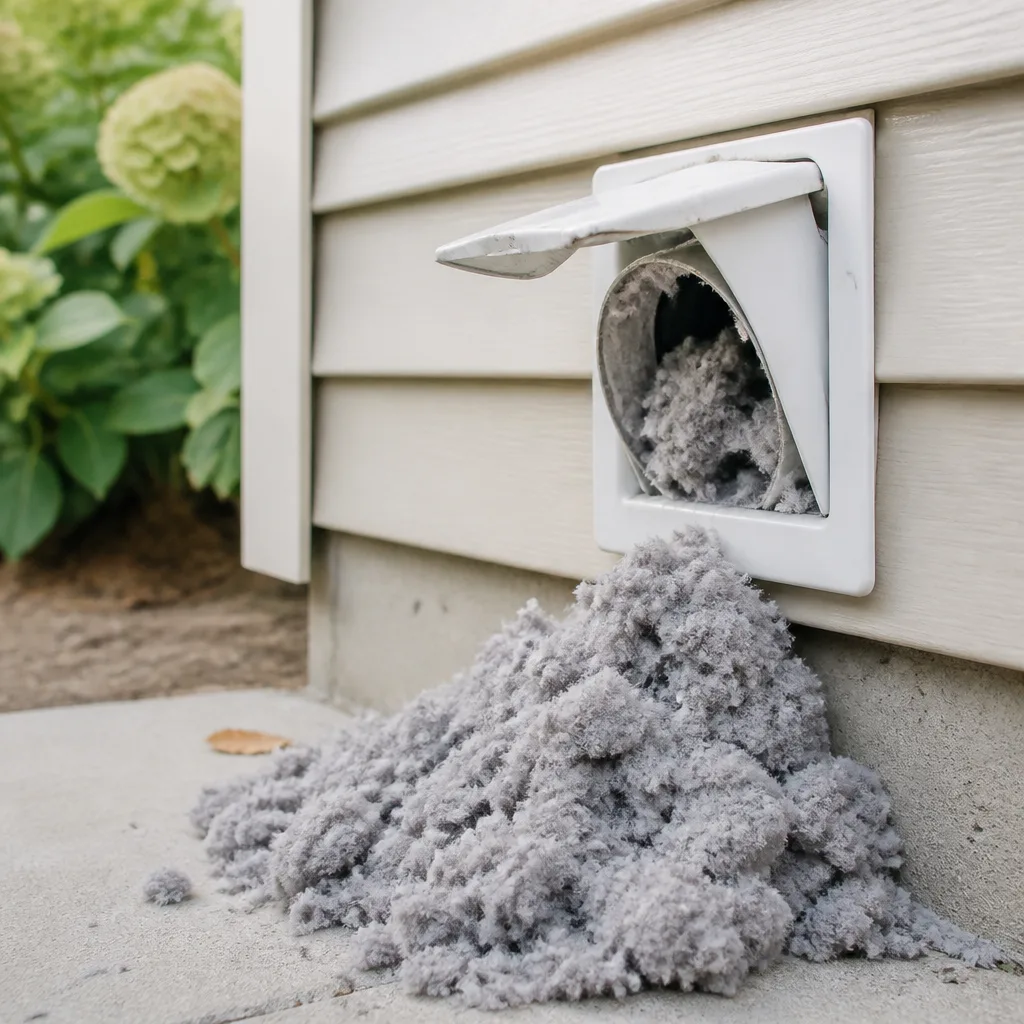 Dryer vent cleaning
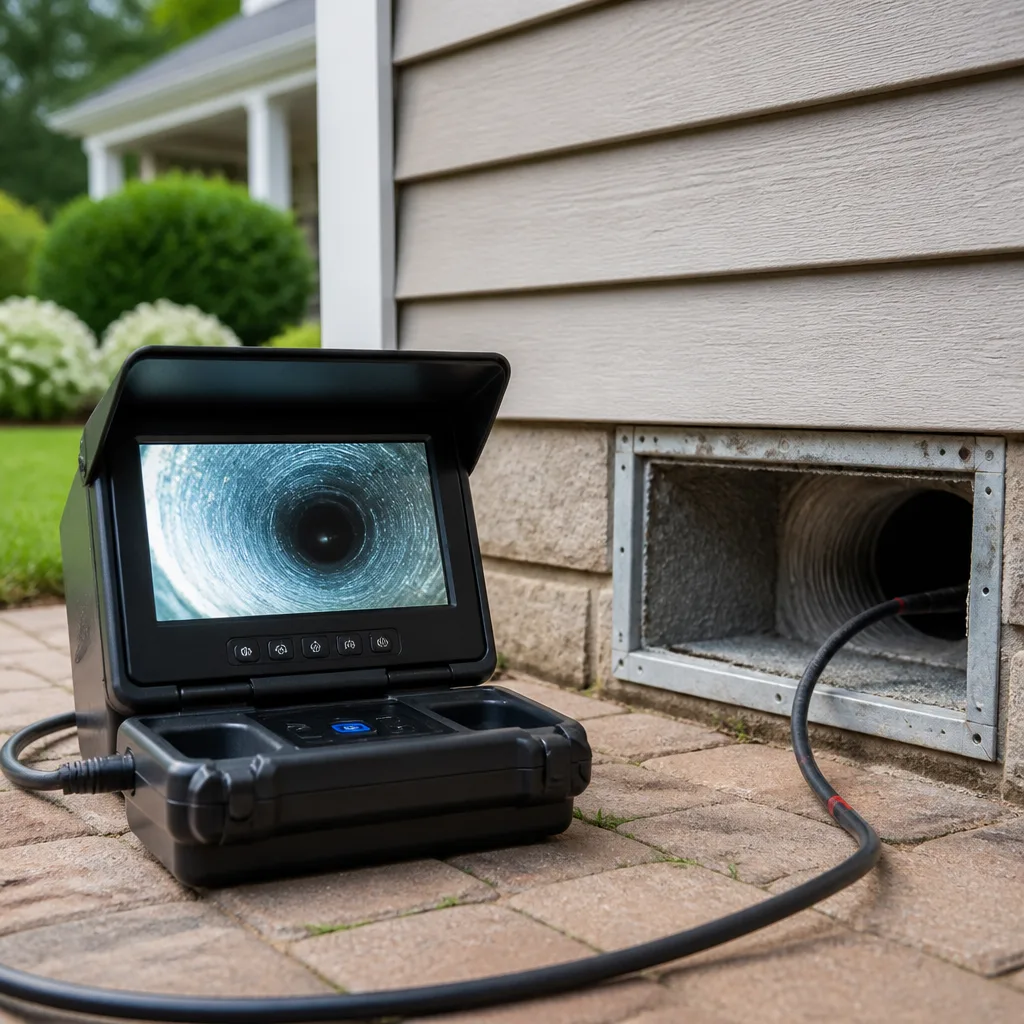 Camera inspection
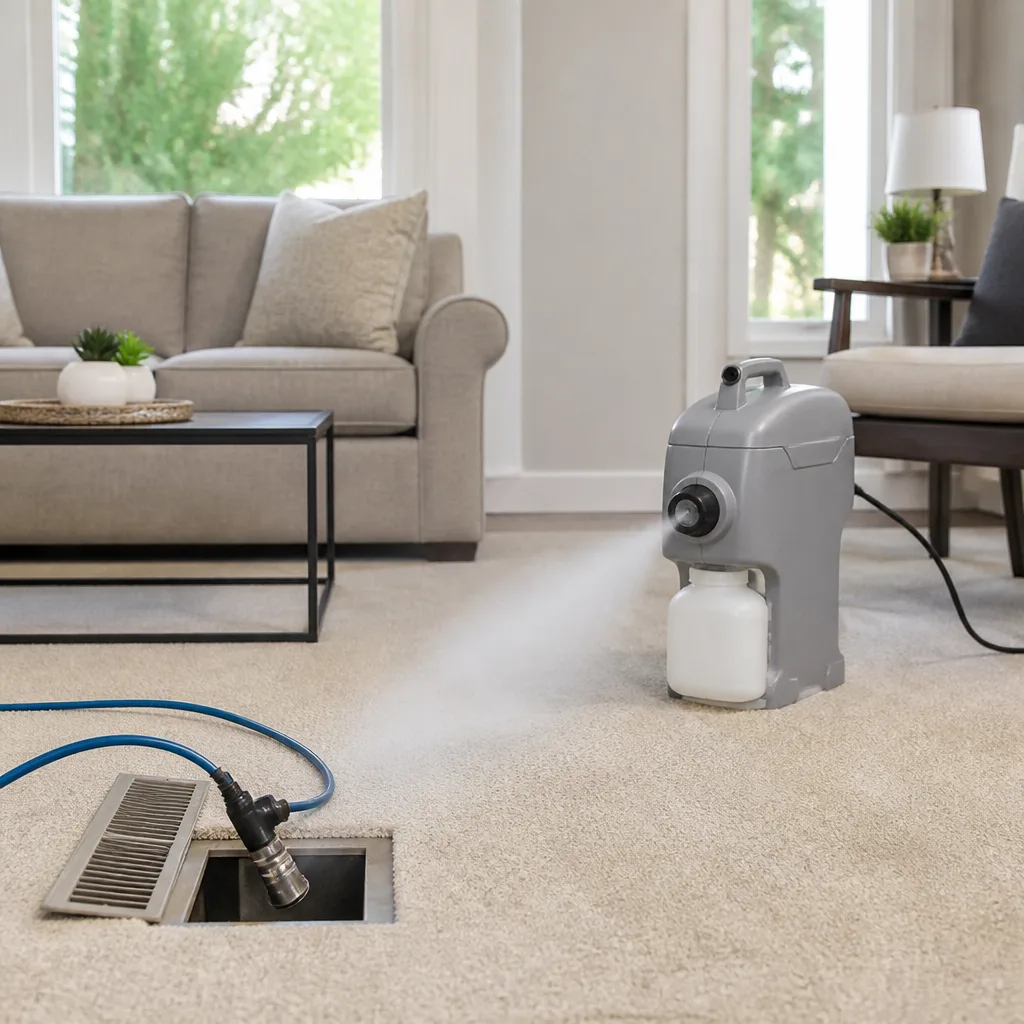 Sanitizing & deodorizing
Whole-system duct and dryer vent check with before-and-after photos - you see exactly what came out of your vents
That "$99 whole-house special" is a bait ad - the real number appears once they are in your hallway, or the "clean" is a shop-vac at the register. We photograph the inside of your ducts before and after instead.
The Complete Air Duct Cleaning Guide for Hemet Homeowners
Hemet’s summer attic temperatures routinely exceed 150°F, and that single fact changes everything about how your home’s air ducts should be maintained. When flex duct liners bake in that heat year after year, they degrade and shed particulate directly into the airstream you breathe. Most national air duct cleaning guides ignore this entirely, treating a Hemet tract home the same as a coastal condo in Carlsbad. This guide explains what actually happens to ductwork in the Inland Valley climate, what a legitimate Air Duct Cleaning service looks like, and how to avoid paying for a service that doesn’t address the real problem.
Quick Answer
Air duct cleaning in Hemet typically costs $350 to $750 for a full single-family home, takes 3 to 6 hours, and should include mechanical agitation with a rotary brush system paired with HEPA-filtered negative air collection. Because Hemet’s extreme attic heat degrades flex duct liners faster than coastal climates, homeowners should also ask for a camera inspection to check for liner deterioration that cleaning alone cannot fix. For a deeper look at the process, see our Complete Guide to Air Duct Cleaning in Hemet.
Styles & brands we work with
- Whole-home duct cleaning
- Dryer vent cleaning
- Camera inspection
- Sanitizing & deodorizing
Table of Contents
- Why Hemet’s Climate Changes Duct Cleaning Math
- How Ducts Actually Get Dirty in Hemet Homes
- Equipment Matters: What Professional Gear Actually Does
- What a Legitimate Inspection Looks Like Before Cleaning
- The Cleaning Process, Step by Step
- Why Cleaning Alone Sometimes Isn’t Enough
- Sequencing: Filters, Repairs, and the Long-Term Play
- Dryer Vent Cleaning: The Separate Fire Hazard
Why Hemet’s Climate Changes Duct Cleaning Math
A duct system in Hemet does not age the same way a duct system in San Diego does. The difference comes down to three specific conditions that define the San Jacinto Valley: sustained summer heat, Santa Ana wind events, and the valley’s position as a collection basin for wildfire smoke drifting from the San Bernardino National Forest and surrounding foothills.
First, the heat. When outside temperatures cross 100°F during Hemet’s July and August stretches, attic temperatures in a typical single-story tract home climb to 140°F to 160°F. Most residential flex duct is rated for continuous exposure up to 150°F, but aging ductwork rarely performs to its original rating. The inner liner, typically made of polyethylene or similar polymer, becomes brittle over repeated heat cycles. Brittle liners crack. Cracked liners release fine particulate into the airstream and create pathways where attic insulation dust can enter the duct system. This is not a gradual, uniform process. It accelerates once the liner integrity is compromised even slightly.
Second, Santa Ana winds. Between September and February, Hemet experiences the same downslope wind events that affect the rest of the Inland Empire. These winds push fine dust from the dry hills east of the city into residential neighborhoods. Homes with even small duct leaks draw that dust into the return side of the HVAC system when the blower runs. Over a season or two, that fine particulate accumulates on blower motor blades, evaporator coils, and the inner walls of supply ducts.
Third, wildfire smoke. Hemet sits downwind of fire-prone terrain, and smoke events have become an annual occurrence rather than an anomaly. Smoke particulate is exceptionally fine, in the 0.1 to 2.5 micron range, which means it penetrates past standard 1-inch filters and settles throughout the duct system. Once settled, it lingers until mechanically removed. Running the HVAC system stirs it back into circulation. This is one reason we recommend duct cleaning after significant smoke seasons in Hemet, even for homes that appear clean at the registers.
How Ducts Actually Get Dirty in Hemet Homes
The common mental image of duct contamination, thick gray fuzz coating every surface, is only part of the story. In most Hemet homes we inspect, contamination follows predictable patterns tied to the home’s construction and the HVAC system’s design.
Hemet’s housing stock is dominated by slab-on-grade construction, meaning the concrete foundation slab sits directly on the ground with no crawlspace beneath. This affects duct design in a specific way: supply ducts typically run through the attic while return air travels through wall cavities or dedicated return ducts that drop through the slab. When return ducts run through the slab, any crack or separation in the duct allows soil gases, moisture, and fine dust from beneath the slab to enter the system. We’ve inspected Hemet homes where return duct joints under the slab had separated so completely that the HVAC system was pulling more air from the slab cavity than from the living space.
Here is what accumulates in a typical Hemet duct system, and where:
- Attic supply ducts: fine particulate from degraded flex duct liner, blown-in attic insulation that enters through small tears, and fine dust pulled in during Santa Ana wind events through register boots that were never properly sealed.
- Return ducts and wall cavities: household dust, pet dander, carpet fiber, and in some cases construction debris left behind from the original build or from renovations. Hemet homes built during the 1980s and 1990s construction boom frequently contain drywall dust and framing debris in wall cavities used as returns.
- Evaporator coil and blower wheel: these components sit in the airstream 100 percent of the time. When the filter is undersized or not changed regularly, they act as the system’s primary dust collectors. A heavily loaded blower wheel can lose 10 to 15 percent of its airflow capacity, which translates directly to higher runtimes and higher energy bills during Hemet’s punishing cooling season.
- Register boots and diffusers: visible dust at registers is usually the tip of the iceberg, but it matters. It is also where pest intrusion evidence shows up. Hemet’s dry climate drives rodents into attic spaces seeking shelter, and droppings or nesting material in register boots are a genuine health concern requiring professional removal, not just vacuuming.
The pattern matters because it determines the cleaning approach. A home with heavy return-side contamination needs a different focus than a home with degraded supply ducts in the attic. Generic cleaning packages that treat every duct the same way leave much of the actual problem untouched.
Equipment Matters: What Professional Gear Actually Does
Walk through any hardware store and you’ll see rental carpet cleaners and wet vacuums marketed as duct cleaning solutions. These are not the same thing as professional equipment, and the difference is not cosmetic, as we explain in our DIY vs Professional Air Duct Cleaning guide. It determines whether the cleaning actually removes contamination or simply loosens it and blows it into your living space.
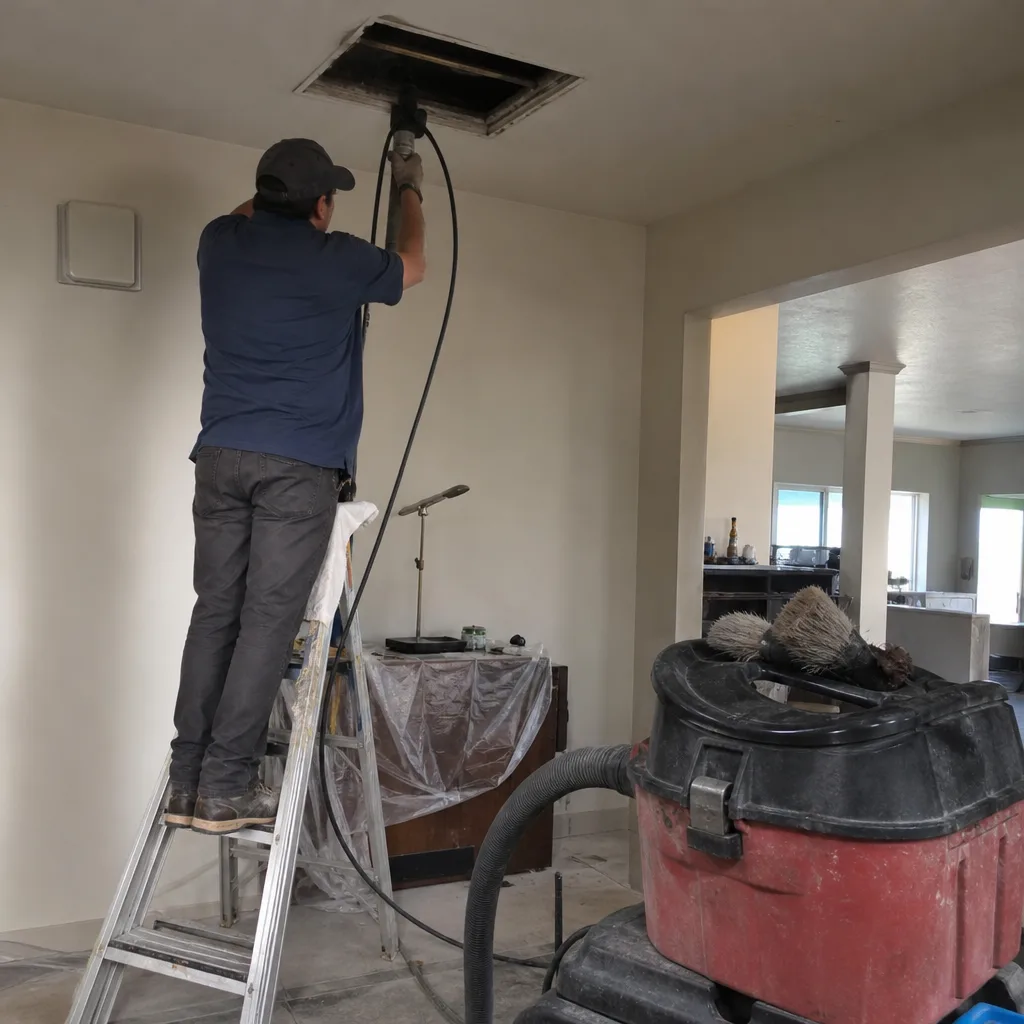
Professional duct cleaning relies on two distinct systems working together. The first is mechanical agitation. A rotary brush system, the type used in commercial and remediation settings, spins stiff bristles against duct walls to dislodge adhered particulate. Our crews use Rotobrush equipment for this job. The brush contacts the duct surface physically, breaking the mechanical bond that holds dust, pollen, and debris in place. Without this step, a vacuum alone removes only the loosest surface dust and leaves the majority behind.
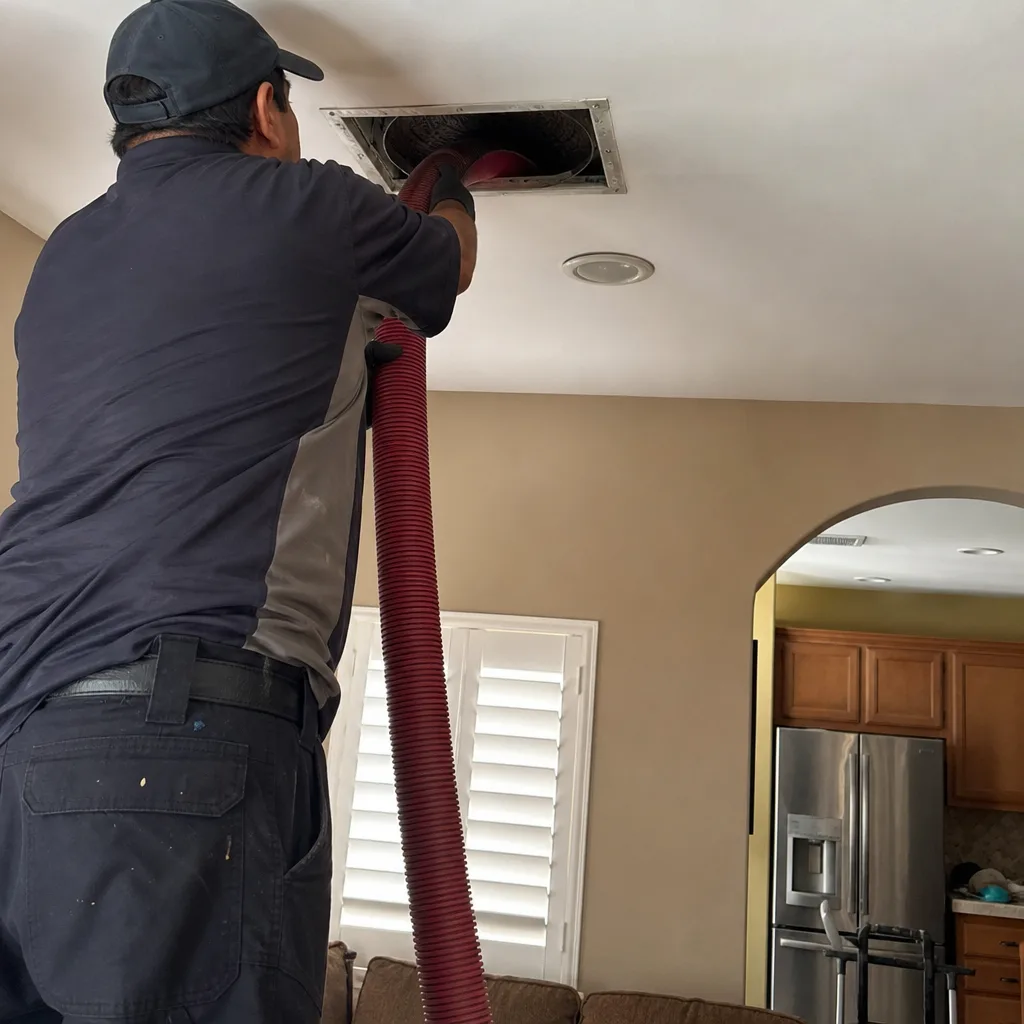
The second system is negative air collection. Professional duct cleaning equipment connects a powerful vacuum to the duct system, placing it under negative pressure while agitation occurs. This ensures that any particulate dislodged by the brush is pulled immediately into the vacuum rather than entering the living space. The vacuum exhaust passes through HEPA filtration, capturing 99.97 percent of particles down to 0.3 microns. Equipment from Nikro, which builds HEPA-rated vacuum systems for certified duct cleaning protocols, represents the standard we work to.
Compare this to a portable shop vacuum connected to a hose. It generates a fraction of the airflow, typically 200 to 400 cubic feet per minute at best, versus 2,000 to 4,000 CFM from a truck-mounted or purpose-built negative air machine. It cannot place the entire duct system under negative pressure. It cannot capture fine particulate through HEPA filtration at the volume required. And it cannot agitate duct walls effectively while containing the debris it dislodges. The result is a surface-level cleaning that often releases more particulate into the home than it removes.
Beyond the vacuum and brush system, professional air quality work in Hemet should include air filtration equipment from Abatement Technologies, the same brand used in professional remediation environments. These units scrub the indoor air during and after cleaning, capturing any particulate that escapes the negative pressure envelope. For homes dealing with post-wildfire smoke residue or significant allergen loads, this step makes a measurable difference.
What a Legitimate Inspection Looks Like Before Cleaning
No legitimate duct cleaning company should quote a price without looking at the system. And looking means more than peering at a register with a flashlight. In Hemet, where slab-construction return issues and attic duct degradation are common, a real inspection requires seeing the inside of the ductwork.
Here is what a legitimate pre-cleaning inspection includes:
- Camera scope documentation: a technician should insert a small camera into the main supply trunk, main return, and representative branch ducts. This documents the actual condition of the duct interior: dust accumulation levels, liner condition, presence of pest intrusion, and any visible separations or damage. The homeowner should be shown these images. If a company quotes a price without camera documentation, walk away.
- Filter inspection and airflow check: the filter condition tells a story about what has been passing through the system. A collapsed filter, a filter with visible gaps around the frame, or a filter coated in fine gray dust all indicate specific problems. Airflow at registers should be checked with an anemometer to identify restrictions.
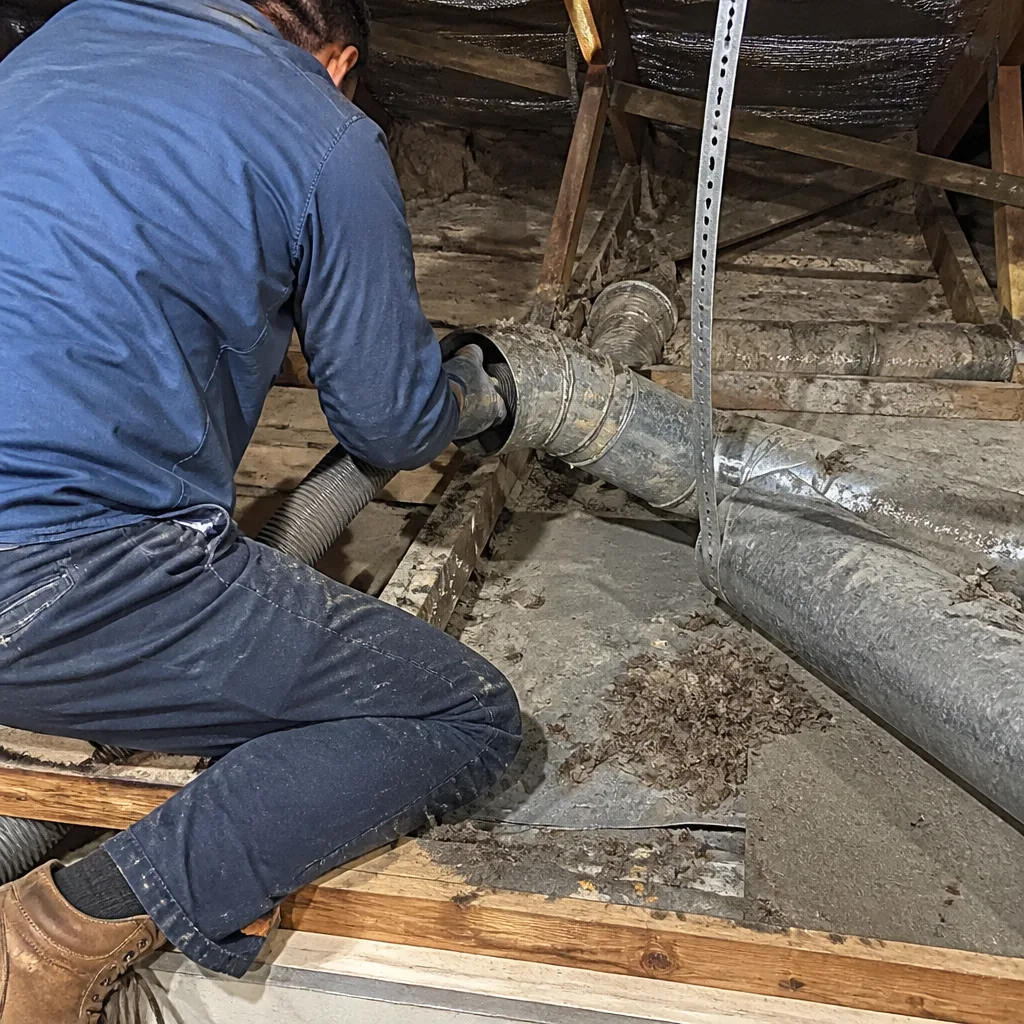
- Attic walk-through for accessible ducts: in Hemet homes with attic-mounted supply ducts, the technician should visually inspect the accessible duct runs. Look for crushed flex duct, disconnected joints, tears in the outer jacket, and evidence of rodent activity. These conditions matter because they determine whether the duct can be cleaned safely or must be repaired first.
- Return duct assessment: for slab-on-grade homes in Hemet, the return pathway deserves special attention. A technician should check for signs of slab moisture intrusion, visible gaps in wall cavity returns, and evidence that the return is drawing air from unintended spaces.
This inspection takes 30 to 45 minutes for a typical single-family home. A company that skips it and quotes a flat price over the phone is not doing professional work, regardless of what equipment they claim to use. The inspection also sets expectations. Some duct systems are too degraded to clean safely, and the honest answer is that they need repair or replacement before cleaning makes sense. We’d rather tell a Hemet homeowner that before the job than after.
The Cleaning Process, Step by Step
Understanding what happens during a professional duct cleaning helps homeowners evaluate whether they are getting what they paid for. The process below describes a full-system cleaning using professional-grade equipment on a typical Hemet single-story home.
- System setup and containment: the HVAC system is turned off. The supply registers and return grilles are sealed with covers. Floor protection is placed beneath work areas. If the system includes a furnace or air handler in an interior closet, containment is set up around the access point.
- Negative air connection: the vacuum unit is connected to the main supply trunk near the air handler. This places the entire supply side under negative pressure. The connection point is sealed with an access collar, not simply taped to a register opening.
- Mechanical agitation of supply ducts: the rotary brush is introduced into each supply branch and the main trunk. The brush travels the full length of each run, dislodging adhered debris. The negative pressure simultaneously pulls all dislodged material into the HEPA-filtered vacuum. This step is where Rotobrush and Nikro equipment earn their cost: proper agitation reaches debris that surface vacuuming cannot touch.
- Return side cleaning: the negative air connection is moved to the return side, and the process repeats for return ductwork. For Hemet homes with wall cavity returns, the technician cleans these channels thoroughly, as they are frequently the dirtiest part of the system.
- Blower, coil, and component cleaning: the blower wheel and housing are removed and cleaned if accessible. The evaporator coil, when accessible, is cleaned with appropriate coil cleaning products. These components are in the airstream continuously and hold a meaningful share of system contamination.
- Sanitizing and deodorizing: an EPA-registered duct sanitizer or anti-microbial agent is fogged into the system if the homeowner requests it and it is appropriate for the system. This is a separate service from cleaning and should be quoted as such.
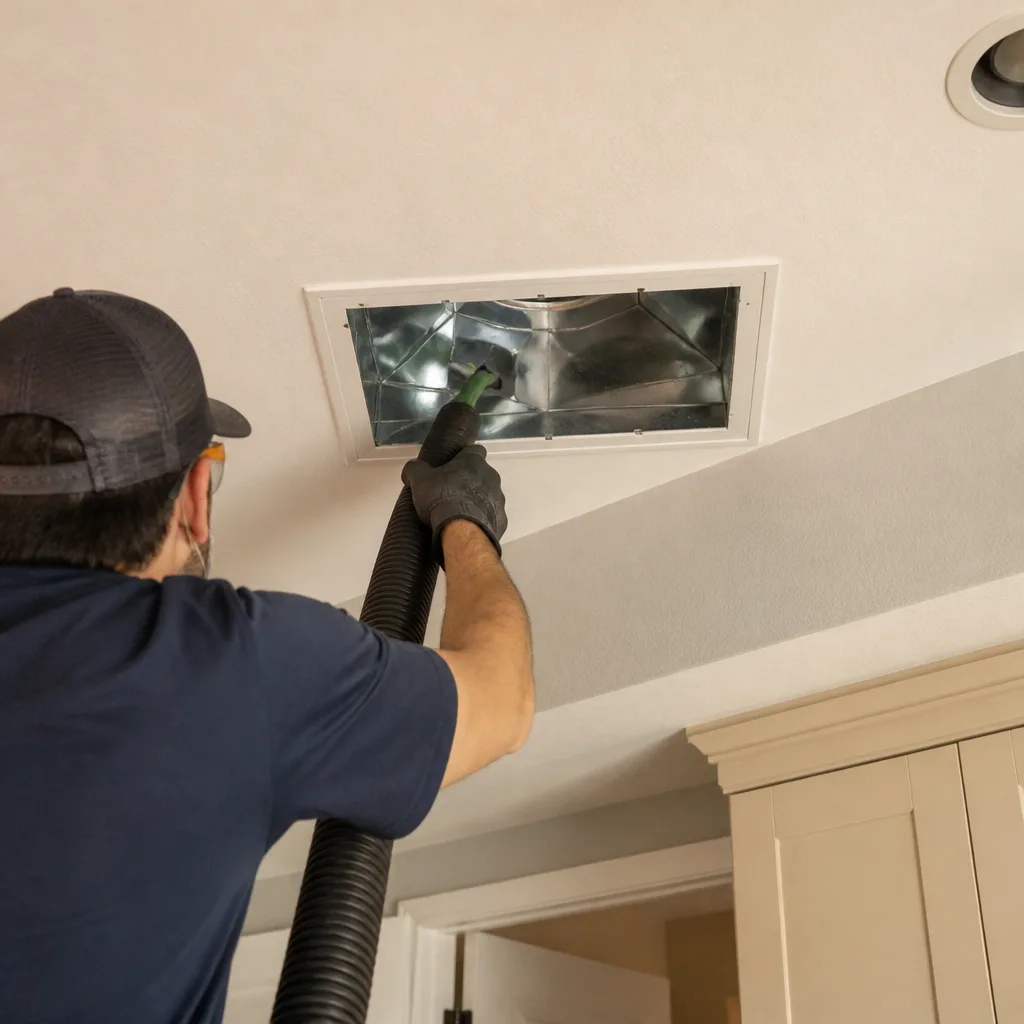
- Final verification: before the registers are reattached, the camera scope is reintroduced to document the results. The homeowner should see before and after images. Register covers are cleaned and reinstalled. The system is turned on and airflow is verified at each register.
A complete cleaning on a typical 1,500 to 2,500 square foot Hemet home takes 3 to 6 hours. If someone quotes a two-hour duct cleaning, they are skipping steps.
Why Cleaning Alone Sometimes Isn’t Enough
Here is an uncomfortable truth we share with Hemet homeowners regularly: some duct systems cannot be meaningfully cleaned because they are damaged beyond what cleaning can address. In a city where attic heat degrades flex duct liners and slab returns develop separations, cleaning a damaged duct is like shampooing a carpet with a hole in the floor.
The most common damage we find in Hemet homes includes separated duct joints in attics, crushed or kinked flex duct runs from careless attic work, tears in duct jackets from rodent activity, and return duct separations beneath slabs. In these cases, Air Duct Repair in Hemet must happen either before or immediately after cleaning for the work to hold. We repair what others only clean around, because cleaning around a separation means the system will simply re-contaminate itself within months.
A full air quality solution starts with an honest assessment of duct condition. If a camera inspection reveals liner degradation in multiple supply runs, the homeowner needs to understand that cleaning will remove the loose particulate but will not stop the liner from continuing to shed. In that situation, the correct order of operations is: repair or replace damaged duct runs, then clean the entire system to remove residual contamination, then upgrade filtration to prevent recurrence. That sequence is the only way to get out of the cycle of cleaning every two years and seeing dust at the registers again within weeks.
Sequencing: Filters, Repairs, and the Long-Term Play
Hemet homeowners who want lasting results from duct cleaning should think in terms of sequence, not one-off service. The cleaning removes what has accumulated. The surrounding upgrades determine how quickly it returns.
The most common sequence we recommend looks like this:
- Step 1: Repair what is broken. Any separated joints, crushed runs, or damaged returns get fixed first. Cleaning a damaged system wastes money.
- Step 2: Clean the entire system. Supply ducts, return ducts, blower, coil, and register boots. Full mechanical agitation with negative air collection.
- Step 3: Upgrade filtration. A media filter cabinet with a MERV 11 or MERV 13 filter captures the fine particulate that a standard 1-inch fiberglass filter lets pass. We work with Honeywell media cabinets regularly because they fit most existing systems without modification. An Aprilaire whole-home air cleaner is a step up for homes with serious allergy or respiratory conditions in the household.
- Step 4: Seal what can leak. Register boots sealed at the ceiling plane, return plenum seams checked, and accessible duct joints mastic-sealed where appropriate. Leaks pull dirty attic air into the system and undo the work of cleaning.
This sequence turns duct cleaning from a recurring expense into a multi-year improvement. Homes that receive the full sequence in Hemet typically show visibly cleaner registers and reduced dust accumulation for three to five years, adjusted for household factors like pets, occupancy, and whether the home is in a neighborhood with significant construction activity.
For homeowners just starting this process, the starting point is always the same: a proper inspection with camera documentation. Everything else follows from what the inspection reveals. You can see our full approach on the Duct Cleaning Hemet home page or dive into the specifics of air duct cleaning in Hemet.
Dryer Vent Cleaning: The Separate Fire Hazard
While duct cleaning addresses air quality and HVAC efficiency, dryer vent cleaning addresses something more urgent: fire risk. The U.S. Fire Administration documents approximately 2,900 dryer fires annually in residential buildings, and the leading cause is failure to clean dryer vents. Lint accumulation in the vent line reduces airflow, which increases dryer running temperatures, which increases the temperature of the lint itself. Lint is exceptionally flammable, and a hot, restricted vent line is a recipe for ignition.
Hemet’s dry climate actually makes this condition more common than in humid coastal areas, because dry air produces drier lint and drier conditions inside the vent. A dryer vent that has not been cleaned in three to five years in a Hemet home can easily be 50 to 70 percent restricted. The homeowner notices clothes taking longer to dry, a hot dryer exterior, or a musty odor in the laundry room. The deeper problem: the vent line itself is packed with combustible material.
Dryer Vent Cleaning in Hemet is a discrete, safety-focused service, not an upsell afterthought. It involves brushing the entire vent run from the dryer connection to the exterior termination point, removing all accumulated lint, verifying the termination damper operates correctly, and documenting the before and after with camera images. For homes where the vent run is long, includes multiple bends, or terminates on a roof, professional cleaning is especially important, because those configurations are the most prone to restriction and the most difficult for homeowners to access safely.
Common Mistakes to Avoid
- Choosing a company based on a low per-vent price. Duct cleaning priced per vent encourages companies to rush and skip the component cleaning that matters most. Whole-system pricing with a defined scope of work protects the homeowner. Hemet homes with slab returns and attic supply ducts need full-system cleaning, not a register vacuuming.
- Cleaning without a camera inspection first. If the ducts are damaged, cleaning is wasted money. The camera tells you whether the system is cleanable before anyone starts agitating.
- Skipping the blower wheel and evaporator coil. These components live in the airstream full-time. A duct cleaning that does not address them leaves a major contamination source untouched.
- Waiting for visible dust at the registers. By the time dust is visible at supply registers, the system has significant accumulation throughout. Hemet’s heat cycle and wind season make annual inspection a reasonable maintenance standard, even if cleaning is not needed every year.
- Assuming a new home has clean ducts. Hemet tract homes built during construction booms frequently contain drywall dust, framing debris, and general construction waste in wall cavities and duct systems. A post-construction cleaning is frequently needed before move-in, not after years of occupancy.
- Ignoring the dryer vent because it is “a different system.” It is a different system with a different purpose, but the fire hazard is real. Dryer vent cleaning and air duct cleaning are separate services and should both be on a Hemet homeowner’s maintenance radar.
- Replacing filters as the only response to dust. Filters capture some particulate, but they do nothing for what has already accumulated in the ducts. Once ducts are dirty, the filter cannot undo that.
See the difference
 Before
 After
 Before
 After
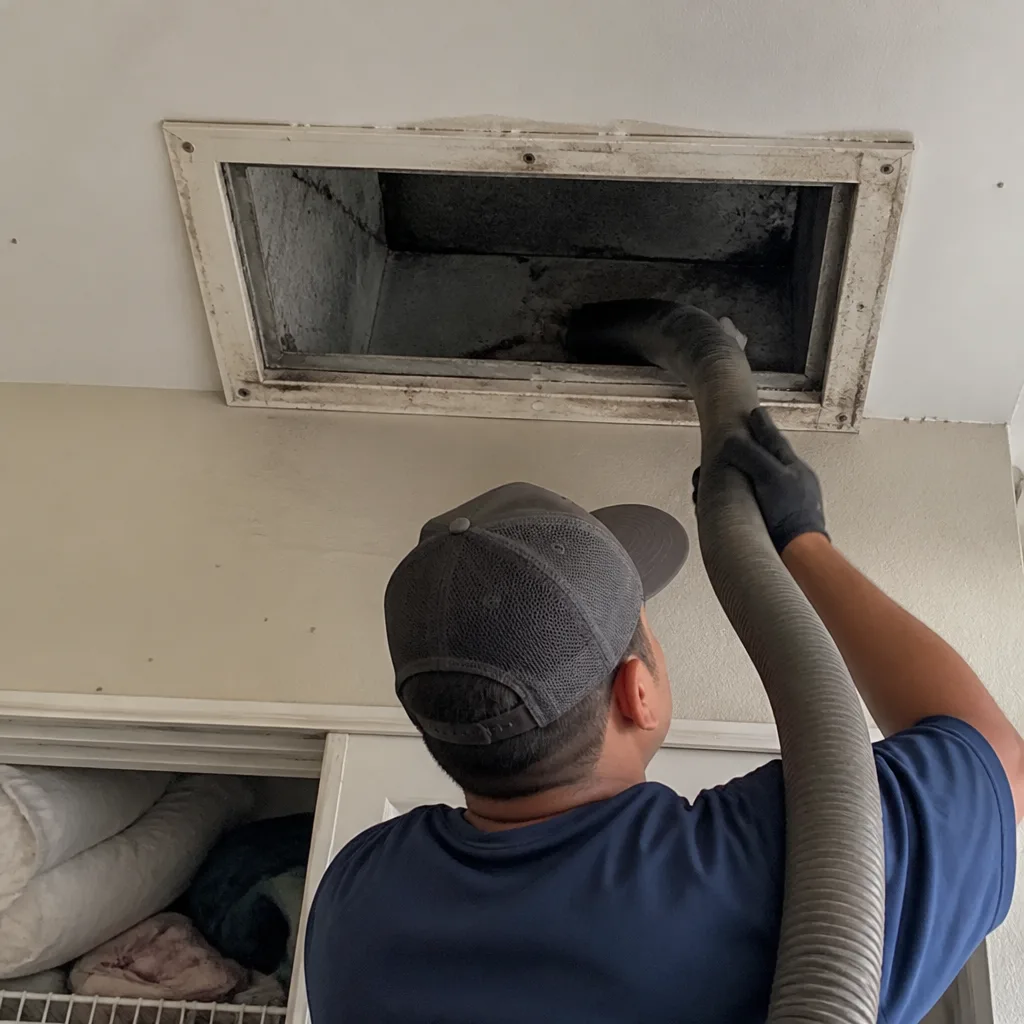 Before
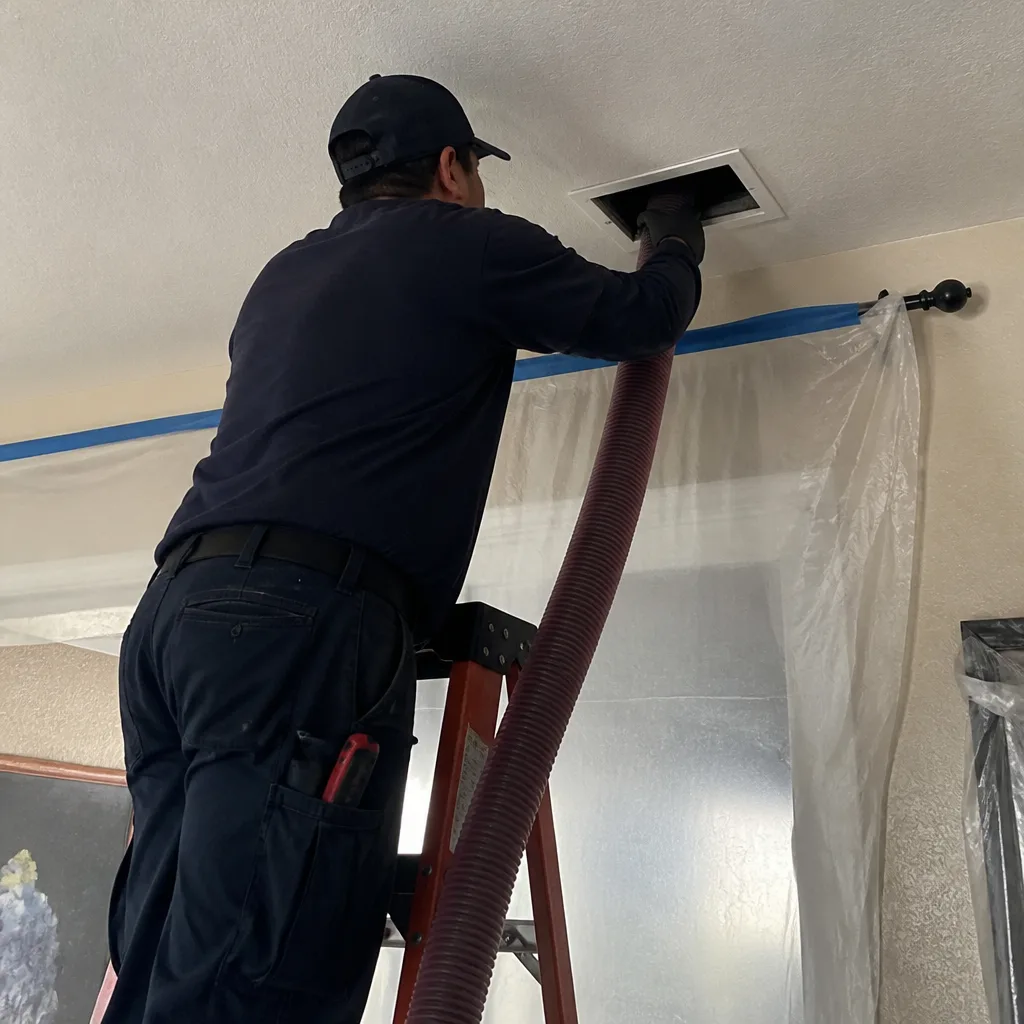 After
When to Call a Professional
Call a professional duct cleaning company when you see visible dust buildup at registers after changing the filter, when a camera inspection reveals significant accumulation, when you have completed a renovation that generated drywall or construction dust, or when allergy symptoms worsen indoors and improve away from home. Call a professional for dryer vent cleaning if clothes take longer than one cycle to dry, if the dryer exterior runs hot, or if it has been more than two years since the last vent cleaning. Call a professional for duct repair if you feel weak airflow from multiple registers, hear whistling or rattling in the ductwork, or see evidence of pest intrusion in the attic. Duct Cleaning Hemet offers free estimates in Hemet, call (877) 752-8890 to schedule an inspection with camera documentation.
Frequently Asked Questions
Full-system air duct cleaning for a typical Hemet single-family home of 1,500 to 2,500 square feet costs between $350 and $750. The range reflects system size, number of returns, accessibility of the air handler and blower, and whether component cleaning is included. Beware of quotes below $200 for a whole home. At that price, the company is almost certainly not using professional negative air equipment or cleaning the blower and coil. Call (877) 752-8890 for an exact quote after a camera inspection.
Most Hemet homes benefit from air duct cleaning every 3 to 5 years, but the city’s specific conditions can compress that timeline. Homes with pets, smokers, or residents with allergies may need cleaning every 2 to 3 years. Homes that experienced significant wildfire smoke exposure in the San Jacinto Valley should consider cleaning within 6 to 12 months of the smoke season, even if no other maintenance is due.
Cheaper duct cleaning quotes in Hemet typically come from companies using portable vacuums rather than professional negative air machines, skipping blower and coil cleaning, or quoting a low price to get a technician in the door and then upselling aggressively. Professional equipment from manufacturers like Rotobrush and Nikro is expensive, and the labor to properly clean a system takes hours. A $99 whole-home duct cleaning cannot cover those costs honestly. The price difference reflects scope and equipment, not markup.
Demand before-and-after camera documentation of the main supply trunk, main return, and representative branches. A professional company should show you the video or images before you pay. If a company cannot provide this documentation, you have no way to verify the work. This is standard practice for legitimate duct cleaning companies and should be part of every job.
No. A shop vacuum cannot generate the airflow needed to place a duct system under negative pressure, cannot reach beyond the first few feet of a duct run, and cannot agitate duct walls to dislodge adhered debris. Attempting to clean ducts with a shop vacuum typically loosens particulate that then enters the living space when the system runs. Professional cleaning requires purpose-built equipment operated by trained technicians. This is not a DIY job.
No. Upgrading to a MERV 11 or MERV 13 filter, perhaps with a Honeywell media cabinet, reduces what enters the ducts going forward. It does nothing to remove contamination that has already accumulated in the ducts, on the blower wheel, or on the evaporator coil. The filter is a prevention tool, not a corrective one. Cleaning and filtration upgrades work together as part of a sequence, not as alternatives to each other.
Air duct cleaning addresses the HVAC system’s supply and return ductwork to improve indoor air quality and system efficiency. Dryer vent cleaning addresses a completely separate vent line that exhausts from the clothes dryer to the exterior, and its primary purpose is fire prevention. Both are important for Hemet homeowners, but they are different services with different equipment, different access points, and different reasons for existing.
The Bottom Line
Hemet’s heat, winds, and smoke seasons make duct maintenance more important here than in most of California. The city’s slab-on-grade construction creates return duct vulnerabilities that generic duct cleaning guides overlook. The solution starts with a proper camera inspection, continues with professional-grade cleaning using real agitation equipment and HEPA negative air collection, and holds long-term only when repairs are completed and filtration is upgraded on the right sequence. If you live in Hemet and have never had your ducts inspected, the cost of the inspection is the cheapest part of the entire process. Air Duct Cleaning in Hemet starts with that inspection, and the work follows from what we find.
Call Duct Cleaning Hemet at (877) 752-8890 to schedule an inspection with camera documentation and get a free estimate for the work your system actually needs.
Written by the team at Duct Cleaning Hemet, serving Hemet since 2013.