
Last updated November 2, 2026
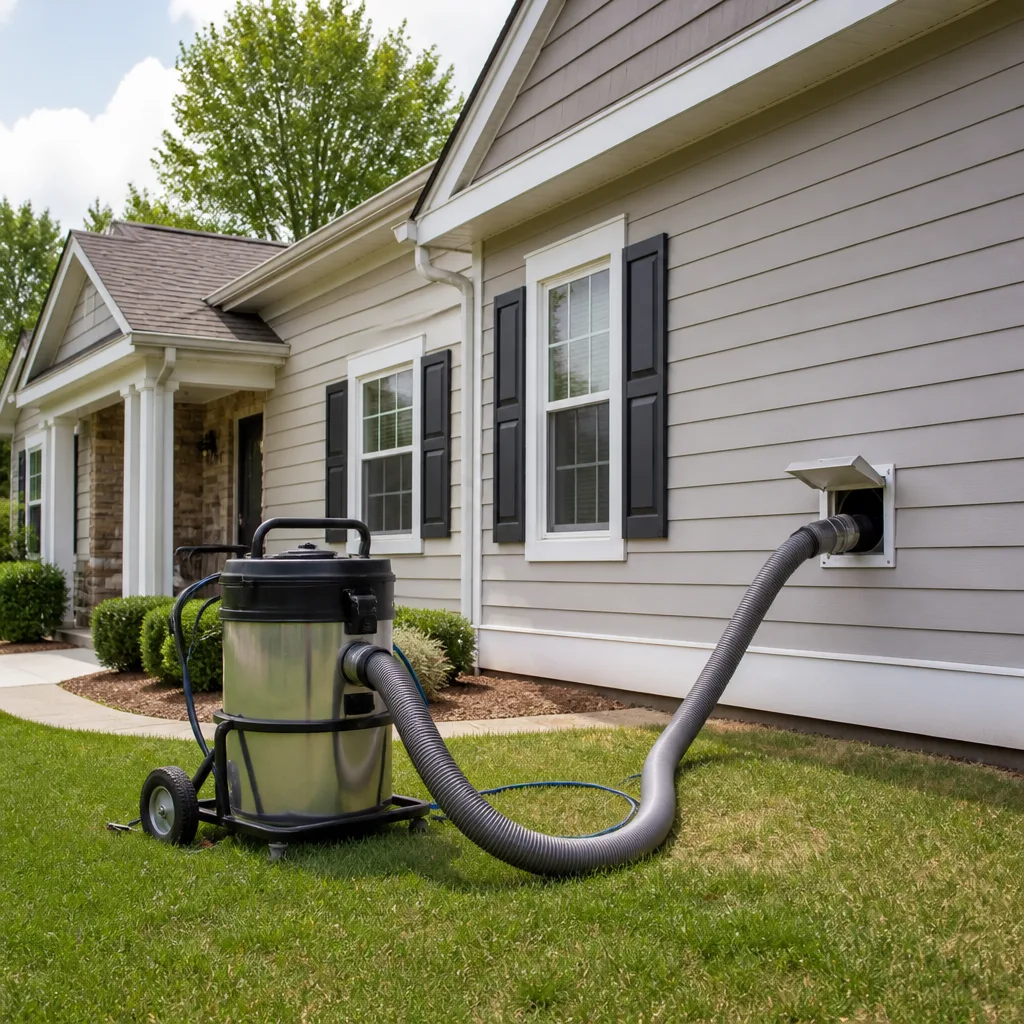 Whole-home duct cleaning
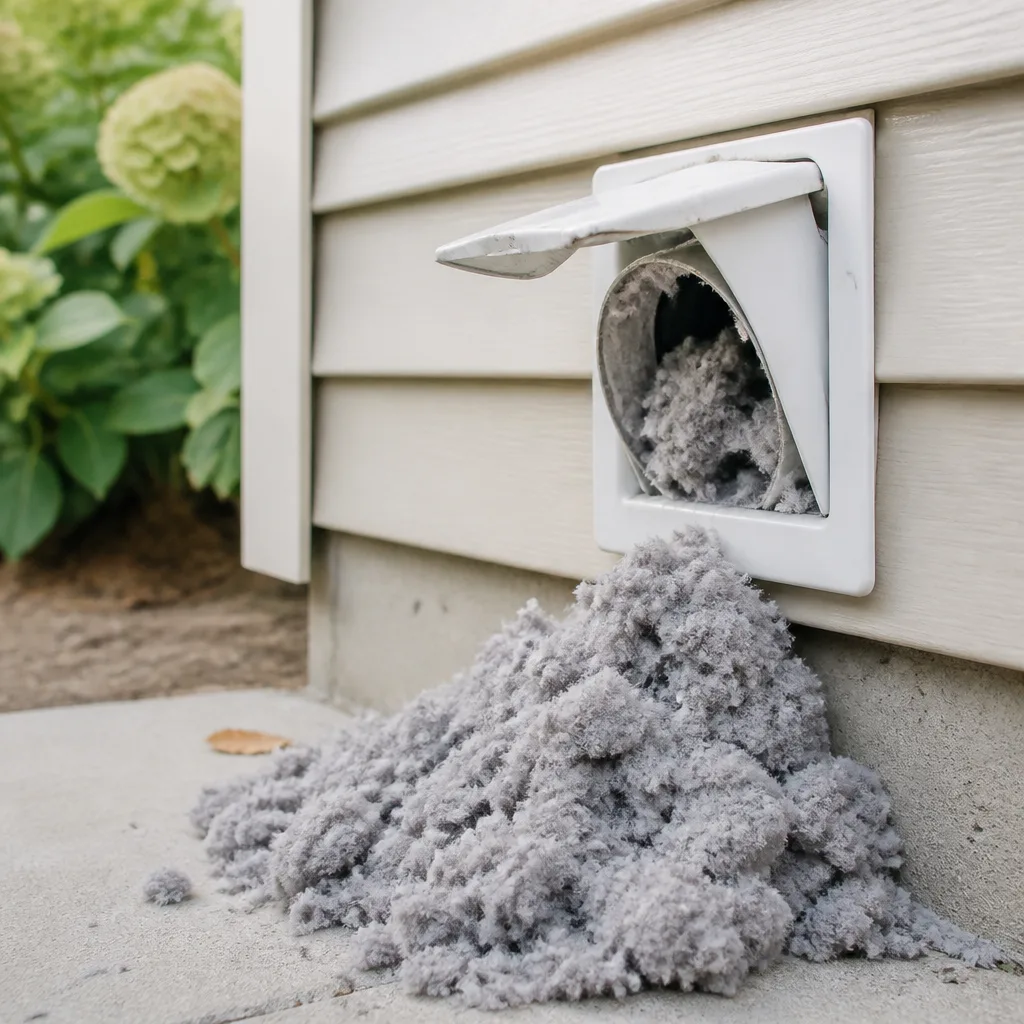 Dryer vent cleaning
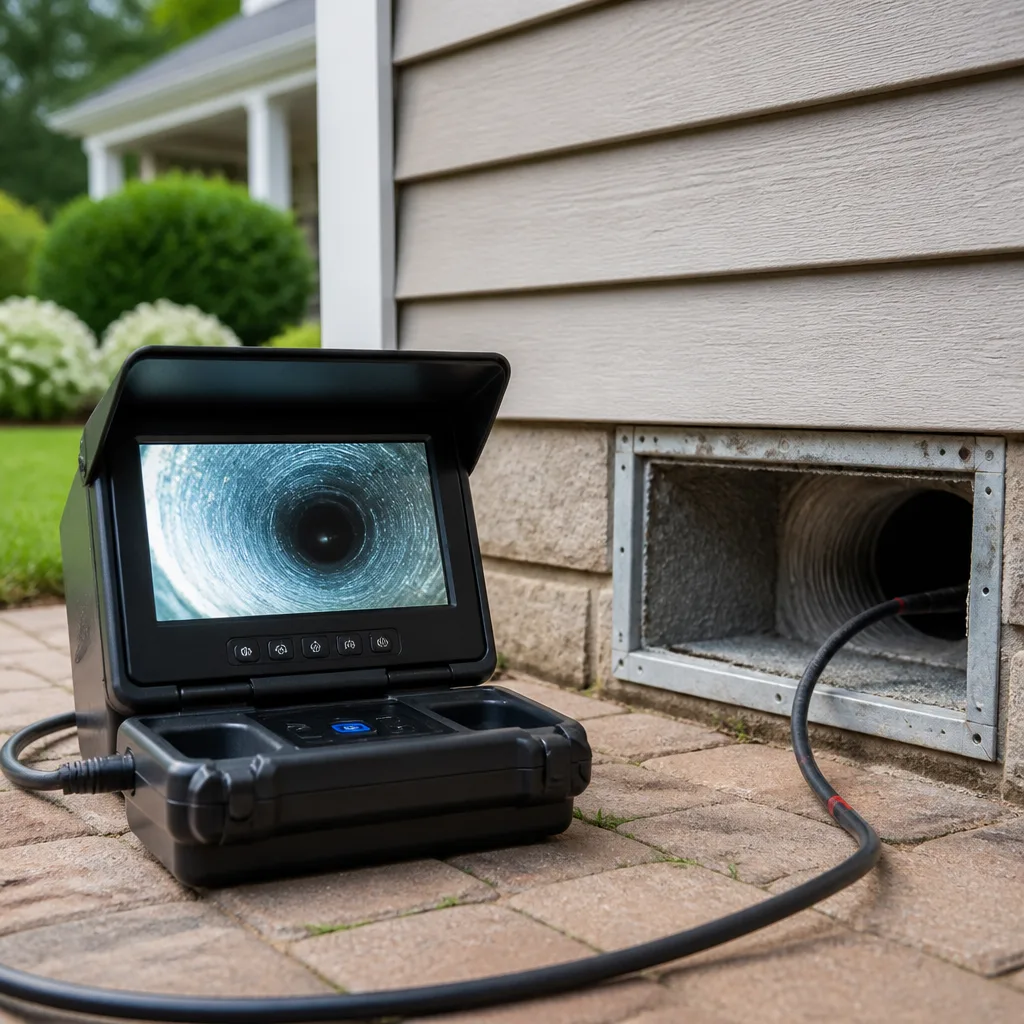 Camera inspection
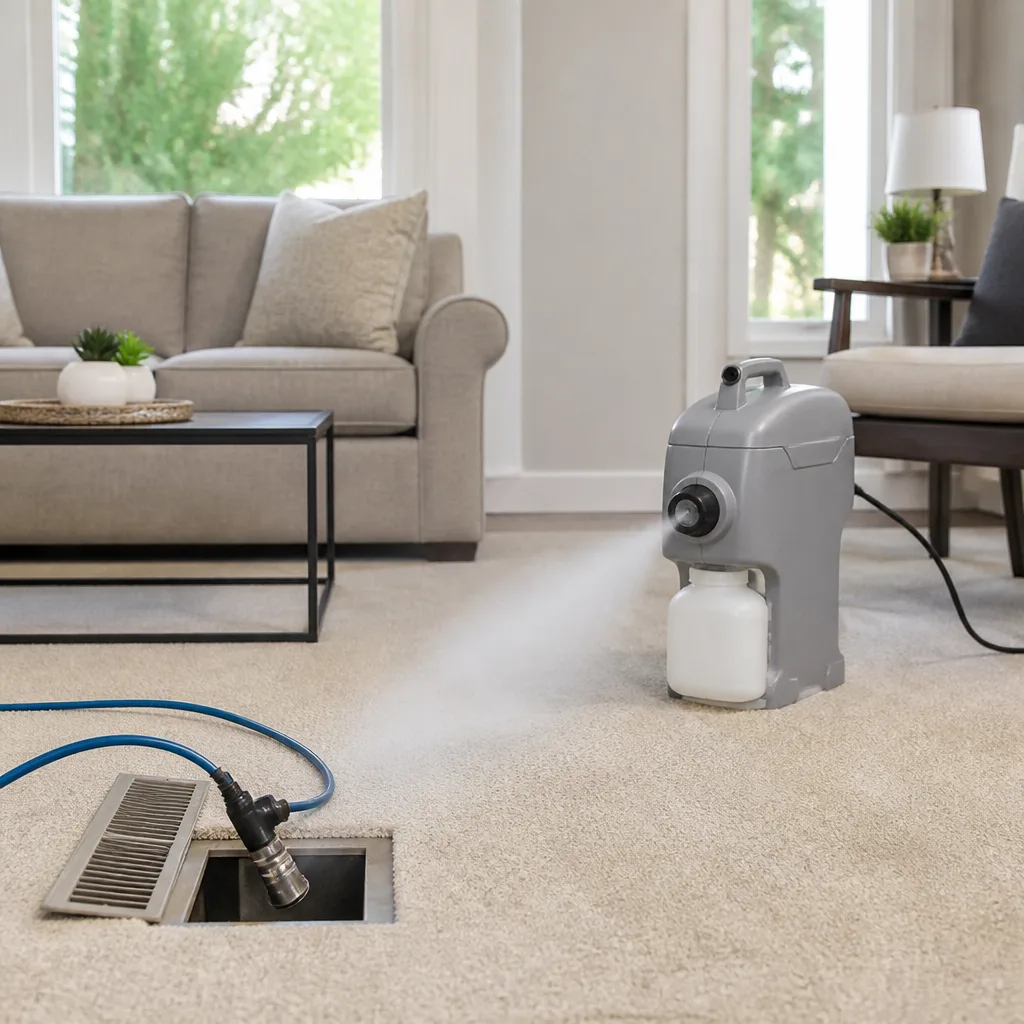 Sanitizing & deodorizing
Whole-system duct and dryer vent check with before-and-after photos - you see exactly what came out of your vents
That "$99 whole-house special" is a bait ad - the real number appears once they are in your hallway, or the "clean" is a shop-vac at the register. We photograph the inside of your ducts before and after instead.
Air Duct Cleaning Emergency Preparedness Guide for Hemet Homes
After a wildfire moves through the hills east of Hemet, the smoke clears in a few days, but what it left inside your ductwork doesn’t. A running HVAC system can pull PM2.5 particulate into every branch line, return chase, and supply register within hours of the first smoke reaching your neighborhood. Those particles sit there, recirculating every time the blower kicks on, until someone removes them with extraction equipment built for the job. This guide walks through the two emergency scenarios Hemet homeowners actually face: wildfire smoke infiltration and water intrusion. You’ll learn what to do in the first hours, how to assess damage, what real remediation requires, and how to document everything for insurance.
Styles & brands we work with
- Whole-home duct cleaning
- Dryer vent cleaning
- Camera inspection
- Sanitizing & deodorizing
Quick Answer
After wildfire smoke reaches your Hemet home, shut the HVAC system off immediately, upgrade to a MERV 13 filter if you must run it, and block fresh air intake vents until the outdoor air clears. Schedule professional duct cleaning with HEPA-rated extraction equipment within two weeks of the event. For water intrusion into ducts, the timeline is shorter: get professional assessment within 24 to 72 hours before mold establishes, and document everything with photos and written scope-of-work records for your California insurance claim.
Table of Contents
- The Smoke Scenario: What Wildfire Does to Ductwork
- First Hours: Immediate Actions During a Smoke Emergency
- Post-Fire Assessment: Cleanable Soot vs. Embedded Particulate
- Water Intrusion: Monsoon Leaks, Condensate Overflows, and Swamp Cooler Failures
- Emergency Remediation vs. Routine Cleaning: The Equipment Difference
- Insurance Documentation: Building a Claim That Holds Up in California
- Why Equipment Standards Matter in an Emergency
- Hemet-Specific Emergency Calendar: Seasonal Triggers to Watch
- Common Mistakes to Avoid
- When to Call a Professional
- Frequently Asked Questions
- The Bottom Line
The Smoke Scenario: What Wildfire Does to Ductwork
Hemet sits in a valley ringed by chaparral and dry grass that burns on a regular cycle. When the Fairview Fire pushed smoke across Valle Vista and into town in 2022, homeowners saw ash on their cars for a week. What most didn’t see was what entered their return grilles. Smoke particles from burning brush and structures range from visible soot down to sub-micron particulate that passes through standard fiberglass filters without slowing down.
Here’s the sequence, because understanding it determines how you respond. Your HVAC system pulls return air through one or more central returns, sometimes pulling from the hallway, sometimes from multiple rooms in Hemet’s many 1970s and 1980s ranch-style homes. That air moves through the filter, across the blower, and into the supply plenum before splitting into branch ducts. During a smoke event, every cubic foot of air that moves through this path carries particulate. The blower wheel picks up a coating. The plenum walls hold a film. The branch ducts, especially horizontal runs in attics that can reach 140°F in a Hemet summer, bake that particulate onto surfaces where it bonds to the duct material.
Once bonded, normal airflow doesn’t remove it. It stays until mechanical agitation and extraction removes it. We’ve seen duct systems in Hemet homes tested weeks after a fire event that still carried combustion particulate in the supply stream. A standard duct cleaning with air duct cleaning in Hemet using professional-grade negative air extraction can address this, but only if the equipment is right for the particle size. Household vacuums and basic shop vacs don’t produce the airflow or filtration needed. This is why we run Rotobrush rotary brush systems paired with Nikro HEPA-rated vacuum units on smoke-contaminated systems, not residential carpet cleaning equipment retrofitted for ducts.
First Hours: Immediate Actions During a Smoke Emergency
When you can smell wildfire smoke inside your Hemet home, you’re already pulling particulate into the duct network. The first decisions you make affect how much remediation you’ll need later. Here’s the sequence we recommend, in order.
- Shut the HVAC system off at the thermostat. Not the fan switch set to “on,” but the entire system off. Every minute the blower runs during active smoke infiltration distributes particulate deeper into duct runs. If you have a variable-speed system, set it to off rather than “circulate.”
- Block fresh air intake vents. Many Hemet homes built after 2000 have a dedicated outdoor air intake connected to the return plenum for ventilation code compliance. During a smoke event, this is a direct injection point. Locate the intake, typically a small grille on an exterior wall near the HVAC closet, and cover it from the outside with a piece of cardboard taped in place. Remove it when air quality returns to normal.
- If temperatures force you to run air conditioning, upgrade the filter first. A standard MERV 8 fiberglass filter will not stop PM2.5. Install a MERV 13 or higher filter before running the system. Note that this increases static pressure, so run the fan on the lowest speed that maintains comfort. And understand this is a mitigation measure only, not a solution. The filter catches some particulate but the blower, plenum, and duct interior still get exposed.
- Close the fresh air damper if your system has one. Some newer Hemet homes have motorized dampers on the outdoor air intake controlled by the thermostat or a separate ventilation controller. Set it to closed or 0 percent outdoor air until smoke conditions pass.
- Don’t vacuum or sweep surfaces aggressively. It seems helpful but it resuspends settled particulate into the air, where the HVAC system can still pull it in through any leaks in the return path, even with the system off.
After the outdoor air clears, run the HVAC fan alone (not heating or cooling) for 20 minutes with a MERV 13 filter in place to help clear the living space. Then schedule a professional assessment of the ductwork. If you operate a swamp cooler in Hemet, shut it down before smoke arrives. Evaporative coolers pull unfiltered outdoor air directly through the pads and distribute it through the duct system, meaning they are the highest-risk equipment during a smoke event. We carry Guardsman equipment suited to these systems when they need attention after exposure.
Post-Fire Assessment: Cleanable Soot vs. Embedded Particulate
Not all duct contamination after a wildfire is equal. Understanding the difference determines whether cleaning resolves the problem or whether you need duct repair or replacement. This assessment is something we perform on every post-smoke duct system in Hemet, and it follows a clear diagnostic path.
Surface soot at registers and grilles is the most visible and the least alarming. You’ll see a gray or black film on the register face, sometimes on the wall above the register where the air stream deposits particles. This is cleanable. The extraction process removes it, and the register itself gets washed or replaced. This does not indicate the ducts are ruined.
Fine particulate embedded in the duct itself is the real concern. If your Hemet home has internally lined ductwork, which is common in homes built in the 1980s and 1990s, that liner is fiberglass insulation with a porous surface. Smoke particulate works into the liner fibers and will not come out with agitation and extraction. Once embedded, the liner off-gasses odor and releases particles into the air stream for years. The only correct fix is duct replacement for the affected runs. Cleaning cannot rehab embedded liner contamination.
So how do you know the difference? It comes down to inspection. A professional assessment looks at the plenum, accessible branch runs, and the blower cabinet with an inspection camera. We’re looking for whether the particulate sits on the surface or has penetrated the substrate. Metal ducts in good condition can almost always be cleaned. Flex ducts with a damaged inner liner or internally lined sheet metal may need replacement. This is precisely why air duct repair in Hemet matters as a service line. You can’t clean what’s structurally compromised, and a cleaning-only company will either ignore the problem or clean around it, leaving the contamination in place.
Water Intrusion: Monsoon Leaks, Condensate Overflows, and Swamp Cooler Failures
Hemet gets about 12 inches of rain a year, but it comes in short, violent bursts. Monsoon season from July through September brings sudden downpours that expose roof weaknesses fast. Water enters ductwork in three primary ways in this market, and each path presents different risks.
Roof leaks reaching attic duct runs. Many Hemet homes have horizontal flex duct or sheet metal duct in the attic. When a monsoon storm pushes water under a lifted shingle or through a failed roof jack, that water follows the duct exterior. If there are separations in the duct joints, punctures from dryer vent cleaning work done carelessly, or tears in the flex outer jacket, water enters the air stream. Once inside, it pools in low spots and soaks the duct liner. In the 90 to 100-degree attic heat of a Hemet summer, mold growth begins within 48 hours. Within 72 hours, it’s established.
HVAC condensate overflow. Your air conditioner produces gallons of condensate daily during Hemet’s July and August heat. The condensate drains through a primary drain line, with a secondary pan as backup. If the primary line clogs with the algae and sediment that thrives in our hard water, water backs up into the evaporator coil cabinet, sometimes overflowing into the supply plenum and ductwork below. This is a slow, continuous source of moisture during the exact season when attics are hottest. It’s also one of the most common water intrusion sources we find during air duct cleaning in Hemet, because homeowners only notice it when comfort or odor complaints begin.
Swamp cooler failures. Hemet still has thousands of homes with roof-mounted evaporative coolers. When the float valve fails or the overflow line clogs, water cascades into the supply duct connected to the cooler. Unlike an air conditioner, a swamp cooler sits directly on top of the duct drop, so a water failure floods the ductwork almost immediately. The water is untreated, has been sitting in the cooler pan, and may carry whatever growth was already established in the cooler. If this happens, the cooler, the duct drop, and likely the entire duct system need professional inspection.
For any water intrusion scenario, the 24 to 72-hour mold window applies. This is the timeline where drying and cleaning can prevent established microbial growth. After that window passes, and especially in Hemet’s warm season, mold colonies become embedded and cleaning becomes less effective than replacement for porous materials.
Emergency Remediation vs. Routine Cleaning: The Equipment Difference
Routine duct cleaning removes the normal accumulation of dust, dander, skin cells, and household debris that builds up in any home. Emergency remediation after smoke or water intrusion is a different task with different equipment requirements. If a company shows up to a post-fire Hemet home with the same setup they use for a maintenance cleaning on a clean house, they’re not equipped for the job.
Here’s what actual emergency remediation requires, and why each piece exists.
- HEPA-rated negative air extraction. This is the single biggest difference. Routine cleaning can use reasonable filtration. Smoke particulate at PM2.5 size cannot be captured by standard filtration. Nikro HEPA-rated vacuum units filter to 99.97 percent efficiency at 0.3 microns. That’s the standard we run because it’s the standard that matters when combustion particulate is involved.
- Mechanical agitation that reaches the duct surface. Surface smoke film bonds to duct interiors. A brush that only touches the middle of the duct removes dust but leaves the film. Rotobrush rotary brush systems provide contact agitation that breaks the bond between particulate and duct surface, allowing the air stream to carry it to extraction.
- Containment and pressure management. In severe smoke or water cases, opening duct access points can release contaminants into the living space. Remediation protocols call for sealing registers and running the extraction equipment to maintain negative pressure in the duct system, pulling contaminants out through the vacuum rather than allowing them to escape into the room.
- Air filtration during and after the work. Abatement Technologies filtration units scrub the ambient air during remediation. This is the same class of equipment used in professional mold and fire remediation environments, and it’s part of why we run it on Hemet emergency jobs. Once particulate is stirred up, you capture it or you breathe it.
The distinction matters because post-fire duct contamination in Hemet can linger for months or years if the extraction equipment isn’t up to the particle size. A system that was “cleaned” after a wildfire but still carries smoke odor or leaves dust on furniture within a week was not cleaned with appropriate equipment.
Insurance Documentation: Building a Claim That Holds Up in California
California homeowners insurance policies generally cover sudden and accidental smoke damage and water intrusion damage when the source is a covered peril, like a wildfire or a storm. But HVAC duct remediation claims get denied or underpaid regularly because homeowners don’t document the problem in a way the adjuster can process. The following documentation approach has helped Hemet homeowners get remediation approved, and it works because it speaks the insurer’s language.
- Photograph everything before anyone touches anything. Take photos of visible soot at registers, the filter you removed, the blower cabinet if you can access it, attic duct runs showing soot staining, and any water staining in the ducts or around the HVAC equipment. Use date and time stamps. Your phone does this automatically if location services are on.
- Save the filter. The filter you remove after a smoke event is evidence. Bag it, label it with the date, and keep it until the claim is resolved. It demonstrates what entered the system.
- Get written air quality or particulate readings if available. Some remediation contractors can provide before-and-after particle count readings using calibrated instruments. Not every claim requires this, but when available, it strengthens the claim significantly because it converts a visual observation into a numeric data point an adjuster can file.
- Insist on a detailed written scope of work from the contractor. “Duct cleaning” as a line item covers a lot of ground, and adjusters know it. A proper scope lists the extraction equipment used, the filtration standard, the number of supply runs, the plenum work, the blower cleaning, and any liner replacement or duct repair. Service reports need to show the full extent of the work.
- Document the chain of events. Write down when the smoke first arrived, when you shut the system off, what you did with the fresh air intake, and when the outdoor air cleared. This timeline matters for establishing that the contamination was sudden and accidental, not gradual lack of maintenance.
- Keep the post-remediation documentation. After work is done, keep the service report, any post-remediation photos, and the filter replacement records. If the claim gets reopened or questions arise later, you have the full file.
One note specific to California: insurers in this state have occasionally denied HVAC remediation claims by arguing that the duct system needed replacement anyway due to age or poor maintenance. The documentation above, particularly the before-photos and the timeline, is what counters that argument. If you’re filing a claim after a wildfire or monsoon event in Hemet, treat the documentation process as seriously as the remediation itself.
Why Equipment Standards Matter in an Emergency
In an emergency, the instinct is to call the first available company and get it handled. But the equipment a duct cleaning company brings to your Hemet home determines whether the job actually resolves the contamination or just moves air around for an hour and hands you an invoice.
Here’s the reality of what’s on trucks in this market. Some companies run portable vacuum units adapted from carpet cleaning equipment. These systems produce enough airflow to pull loose dust from duct interiors under ideal conditions. What they cannot do is maintain the airflow and filtration needed to capture sub-micron smoke particulate, and they rarely have the power to run negative air containment on a whole duct system.
Professional-grade extraction runs differently. Nikro units are built for the duct cleaning industry specifically, with filtration stages that step down from large particulate collection to HEPA final filtration. This means what goes into the machine stays in the machine. Rotobrush systems provide the agitation component. A Rotobrush rotates against the duct walls, breaking off bonded particulate so the air stream can carry it to the vacuum. Without this mechanical action, surface film stays put.
And then there’s the ambient air. During remediation on a smoke-contaminated system, particulate enters the room air whenever duct access points are opened. Running Abatement Technologies air filtration during the job captures that escaped particulate instead of letting it settle onto your furniture and floors. This is why we treat emergency remediation as a containment operation, not just a cleaning job. The equipment choices reflect that approach, and it’s a difference you can see in the results, not just the sales pitch.
Hemet-Specific Emergency Calendar: Seasonal Triggers to Watch
Hemet’s climate creates a predictable pattern for duct emergencies. Different months bring different risks, and knowing the calendar helps you respond faster when something happens. Here’s what we see across the year in this valley.
June through November: Wildfire smoke season. The hills around Hemet, from Diamond Valley to the foothills east of town, dry out completely by June. Fire activity peaks from August through October, and wind events push smoke into the valley. During these months, keep a MERV 13 filter on hand, even if you normally run something less restrictive. When smoke arrives, the filter is already in your garage, not at the hardware store that just sold out.
July through September: Monsoon water intrusion. The North American Monsoon brings moisture up from the Gulf of California into the Hemet area. Storms arrive fast and drop intense rain over short periods. Duct runs in attics get tested by roof leaks during these weeks. Watch for ceiling stains, water dripping from register grilles, and any change in HVAC sound that suggests water in the system.
June through August: Condensate overflows. The same heat that makes Hemet’s summer demanding on cooling equipment also drives AC systems to produce maximum condensate. It’s the season for clogged drain lines and overflowing condensate pans. If you hear water sloshing inside your HVAC unit, or the unit shuts off on a float switch trip, investigate the drain system immediately before water reaches the ductwork.
October through December: Santa Ana wind dust events. Hemet sits at the western edge of the San Jacinto Valley, and Santa Ana winds from the northeast can carry fine dust from the dry lake beds and open terrain east of the city. This dust isn’t as hazardous as wildfire smoke, but it loads duct systems with fine particulate that recirculates when the heat comes back on for winter. This is a common season for routine air duct cleaning in Hemet as homeowners notice dust on furniture within days of cleaning.
Having this calendar in mind means you’re not caught off guard. When a neighbor’s post is spreading about smoke in Valle Vista, you already know to check your system status and prepare.
Common Mistakes to Avoid
- Running the HVAC fan to “clear out” smoke. This is the most damaging mistake we see. The fan pulls smoke-laden air through the return, contaminating the entire duct network. Shut the system off, not on.
- Waiting to replace the filter until things feel normal. The filter is your first line of defense, and Hemet hardware stores sell out fast during smoke events. Keep a MERV 13 on hand before fire season starts.
- Cleaning registers but skipping the ducts. Wiping soot off register faces makes the house look better but does nothing for the duct interior. The contamination you can’t see is the problem.
- Hiring based on price during an emergency. Companies that do post-fire duct cleaning for a fraction of the professional rate are typically running equipment that can’t capture PM2.5. You pay for the job twice: once for the cheap cleaning, once for the real one.
- Ignoring a water stain near a register. That stain means water reached the duct. In Hemet summer temperatures, mold develops fast. A stain is a call for inspection, not a paint job.
- Not documenting before cleanup begins. Once you start wiping and cleaning, you’ve destroyed the evidence your insurance adjuster needs. Photos first, cleanup second.
- Running the swamp cooler during smoke season. Evaporative coolers pull outdoor air directly into the duct system with no meaningful filtration. If you have a swamp cooler, it needs to be off during smoke events, period.
When to Call a Professional
You should call a professional duct specialist in Hemet when any of these situations apply: your HVAC system ran during a wildfire smoke event and now disperses a smoke odor when the blower runs; you see soot staining at registers or on the filter after a fire nearby; you’ve had water intrusion into ductwork from a roof leak, condensate overflow, or swamp cooler failure; you’ve noticed dust accumulating on furniture unusually quickly after the duct system was exposed to a dust event. In any of these cases, the duct system needs inspection with equipment the homeowner doesn’t have: inspection cameras that reach into plenums, airflow measurement tools, and extraction equipment rated for the contamination involved.
Duct Cleaning Hemet home offers free estimates in Hemet for emergency duct assessment and remediation. If you’ve had smoke or water in your duct system, call (877) 752-8890 and describe the situation. We’ll tell you what to do next, even if that doesn’t mean booking a job today.
Frequently Asked Questions
Within two weeks if your HVAC system ran during the smoke event or if visible soot is present at registers. Fire particulate bonds to duct surfaces over time with heat and humidity, especially in attic runs, making removal harder as weeks pass. Schedule the assessment as soon as outdoor air quality allows. Call (877) 752-8890 for a professional evaluation and a free estimate.
No, not effectively, and not without risk. Reaching all duct surfaces requires professional access points through the plenum and branch runs, plus extraction with HEPA filtration to prevent particulate release into your living space. A homeowner with a shop vac and good intentions moves the problem around rather than removing it. For smoke contamination, professional equipment is not optional.
Look for water stains on ceilings or walls near registers, dripping or gurgling sounds from the HVAC system, musty odors that start when the blower runs, and visible moisture at the evaporator coil cabinet. Any of these indicate water reached the duct system. In Hemet’s warm months, this needs professional inspection within 24 to 72 hours because mold establishes quickly in warm, dark duct interiors.
In many California policies, yes, when the damage is sudden and accidental, such as smoke infiltration from a covered wildfire event. Coverage depends on the specific policy language and the deductible. Strong documentation is what gets claims approved: photos before cleanup, the removed filter, a contractor’s written scope of work, and a timeline of the event. Do not discard anything until the claim is resolved.
If the liner is internally insulated fiberglass and smoke particulate has embedded into the liner material, yes, replacement is the correct fix. Cleaning cannot extract particulate that has penetrated porous liner fibers. A professional assessment determines whether the contamination is surface-level (cleanable) or embedded (requires liner replacement or duct replacement). This is a key difference we assess on every Hemet smoke remediation visit.
Emergency remediation uses HEPA-rated negative air extraction, mechanical agitation, and often containment protocols to capture and remove sub-micron particulate. Routine cleaning is designed for household dust levels. The equipment we run on Hemet post-fire and water intrusion jobs, including Rotobrush rotary brush systems and Nikro HEPA-rated vacuum units, is different from what a routine maintenance cleaning requires. Emergency work also includes documentation for your insurance claim, which standard cleanings don’t provide. Call (877) 752-8890 to discuss what your specific situation needs.
The Bottom Line
Duct emergencies in Hemet follow a pattern. Wildfire smoke season brings particulate contamination that requires HEPA-rated extraction and mechanical agitation. Monsoon and summer cooling season bring water intrusion that demands fast response before mold establishes. The homeowner’s role is to shut the system down at the first sign of contamination, document everything, and call a specialist with equipment built for remediation, not routine cleaning.
We’ve covered what those equipment standards mean, why they matter when particle sizes drop below what standard filtration captures, and how to build an insurance file that survives adjuster scrutiny. Keep a MERV 13 filter on hand before fire season. Know where your fresh air intake is. Take pictures before you clean anything. And if you’ve had smoke or water in your Hemet ductwork, get it assessed by someone who can see what’s actually in there. Call (877) 752-8890 for a free estimate, and we’ll inspect the system, explain what we find, and give you a straight answer about what it needs.
Written by the team at Duct Cleaning Hemet, serving Hemet since 2013.
See the difference
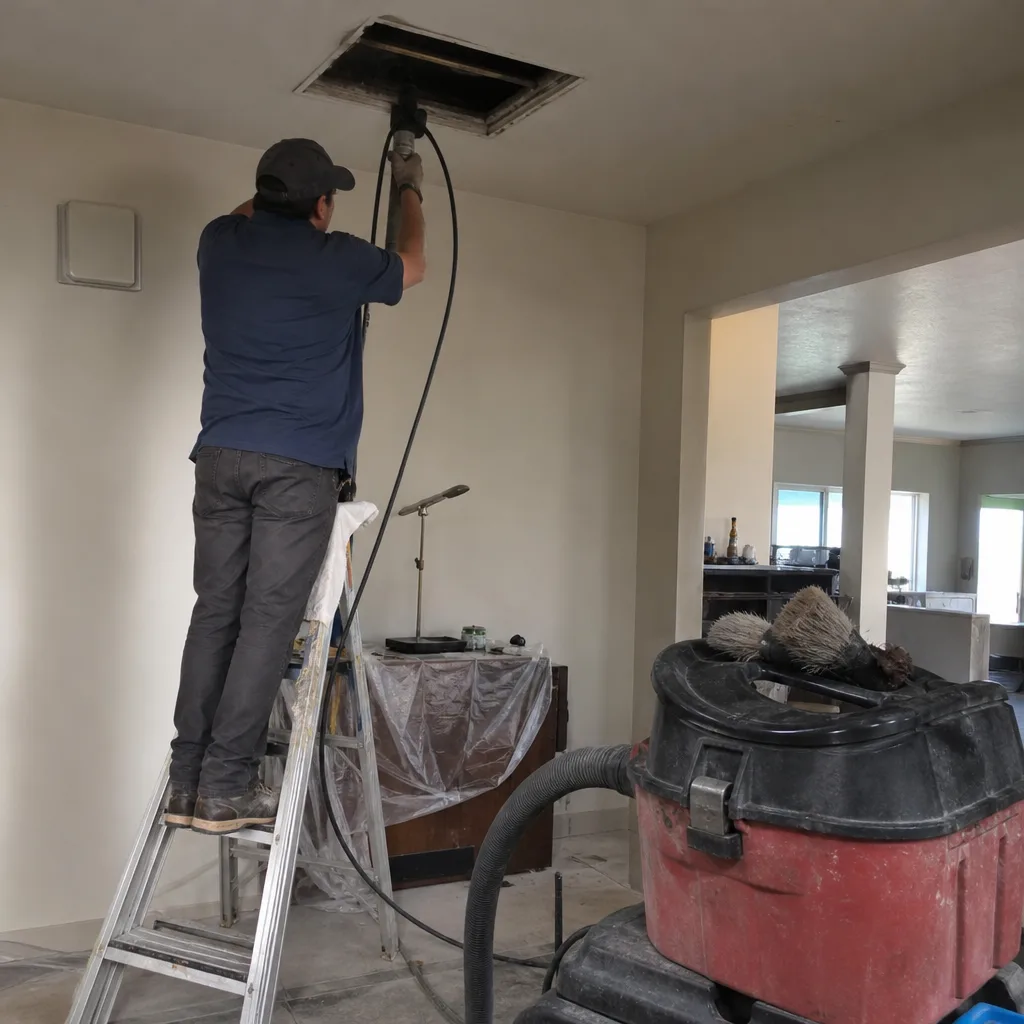 Before
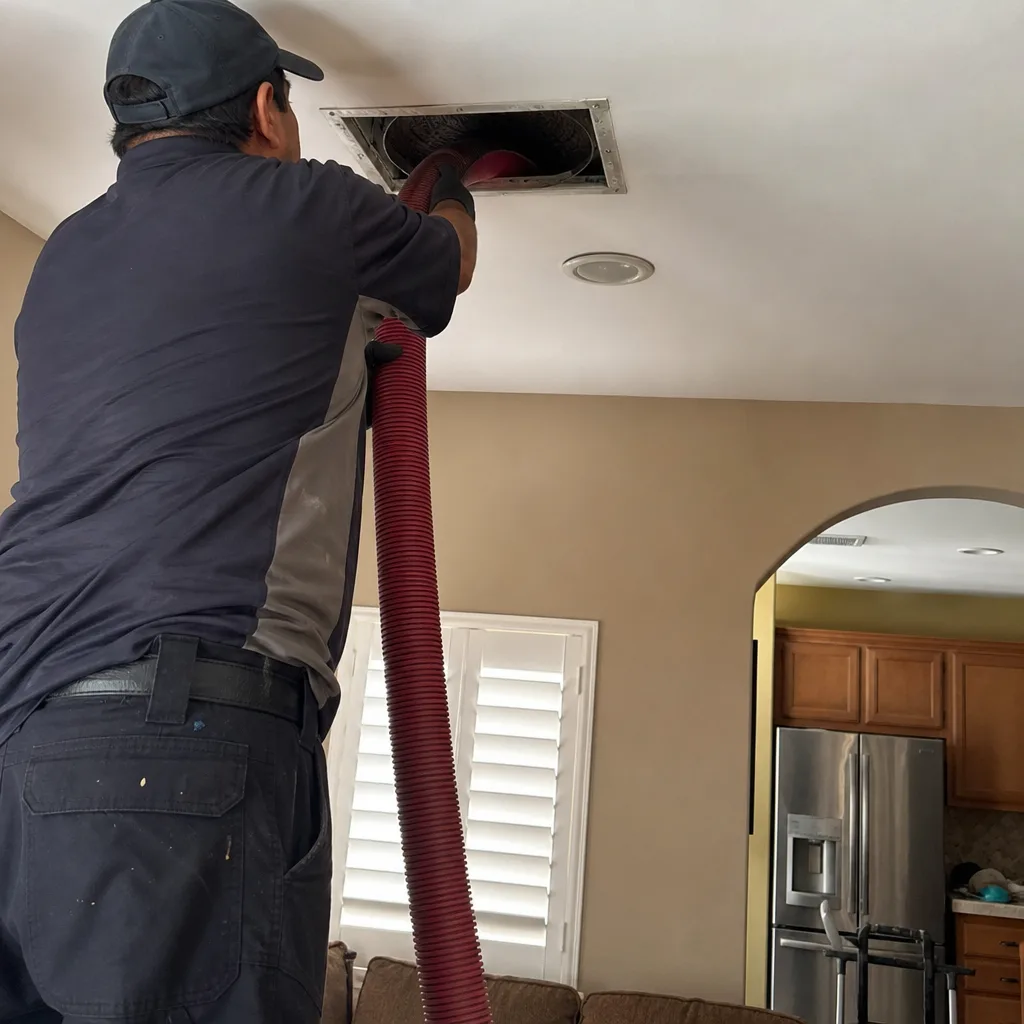 After
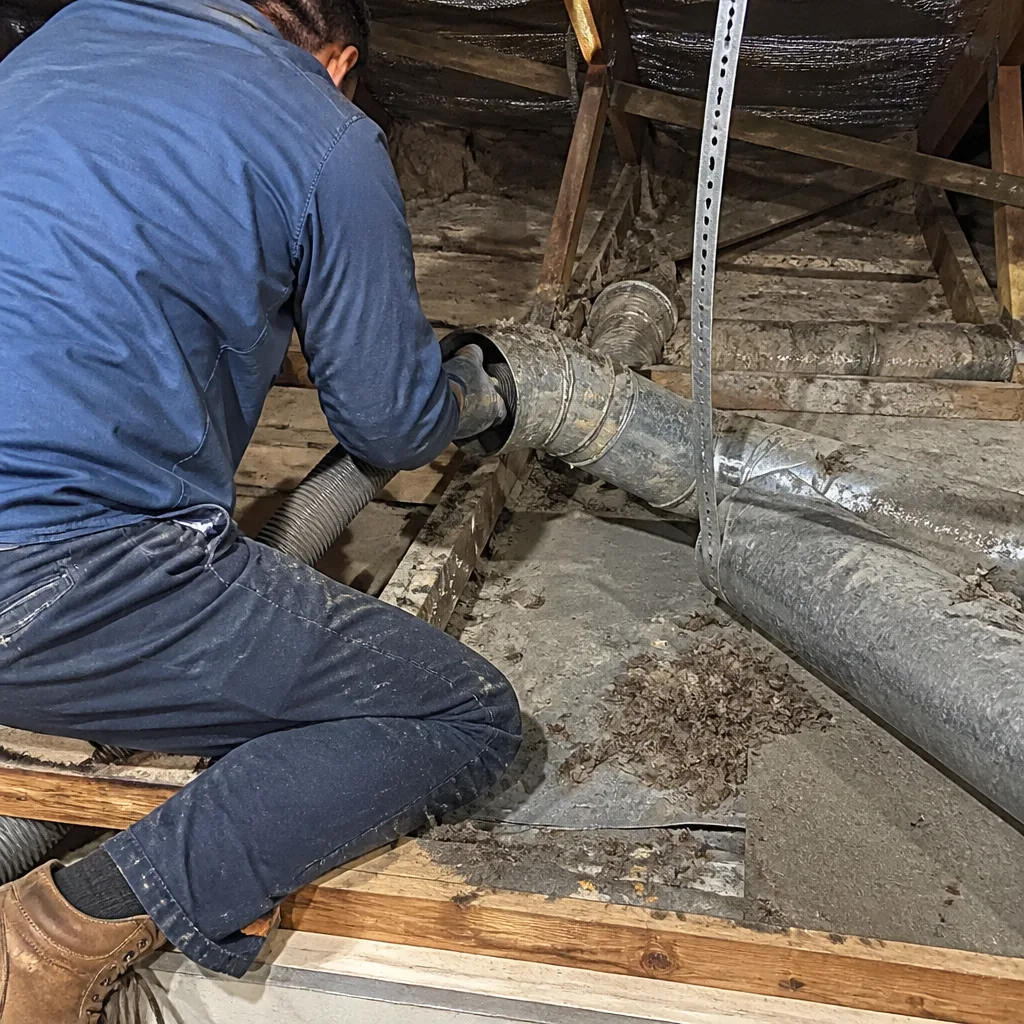 Before
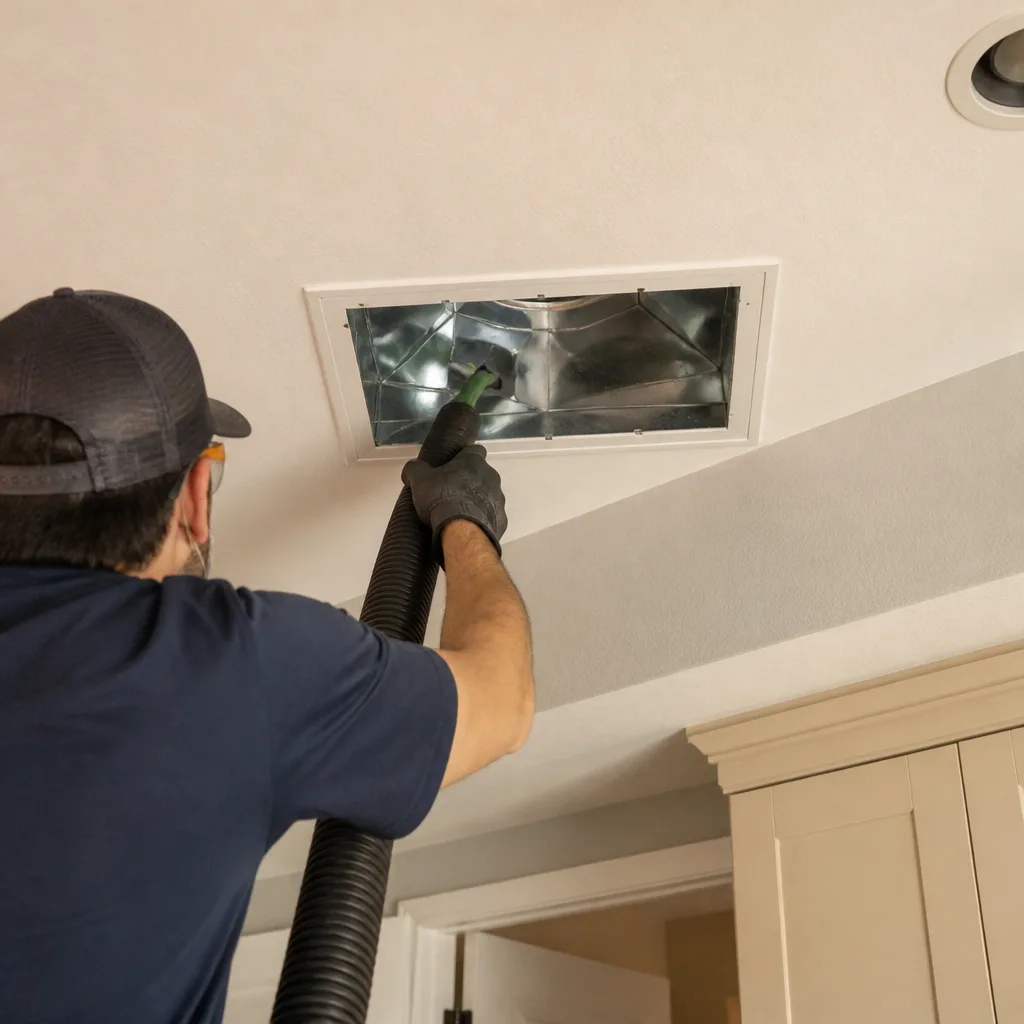 After
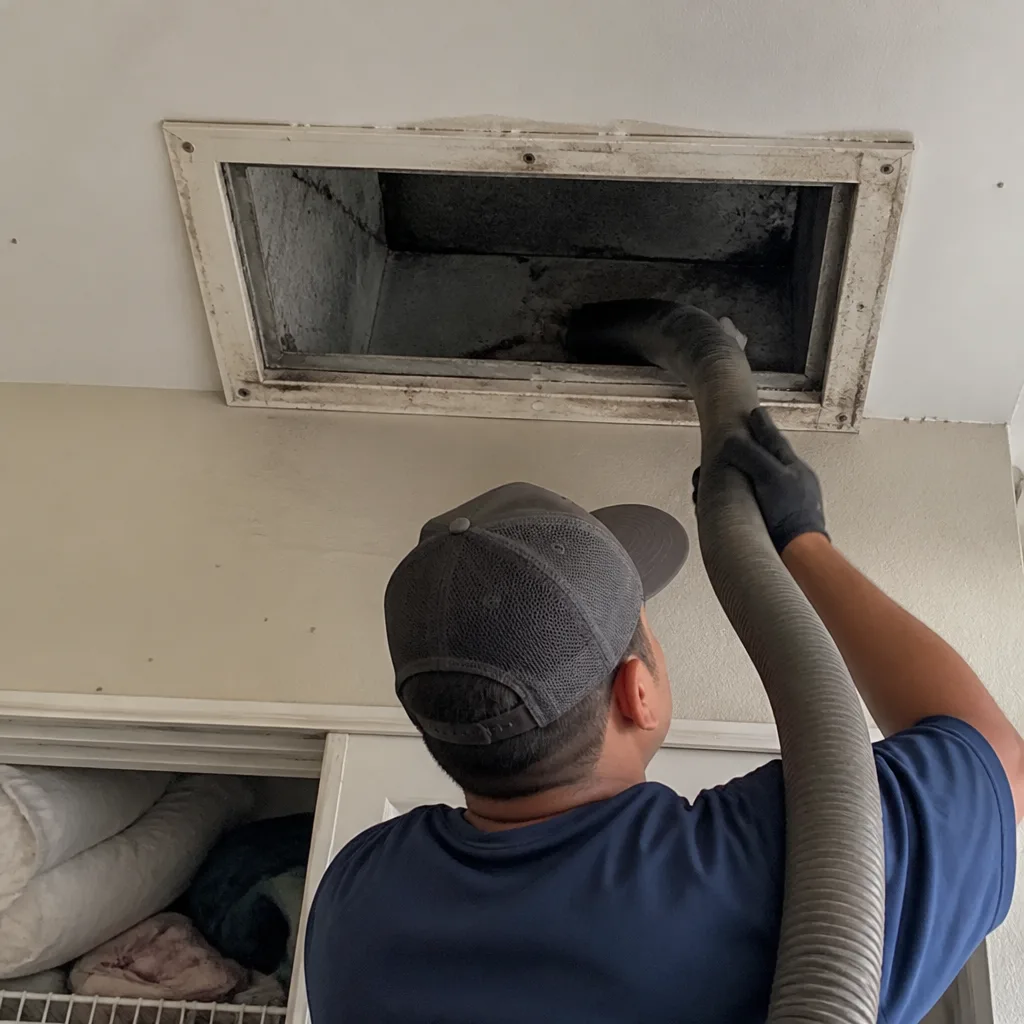 Before
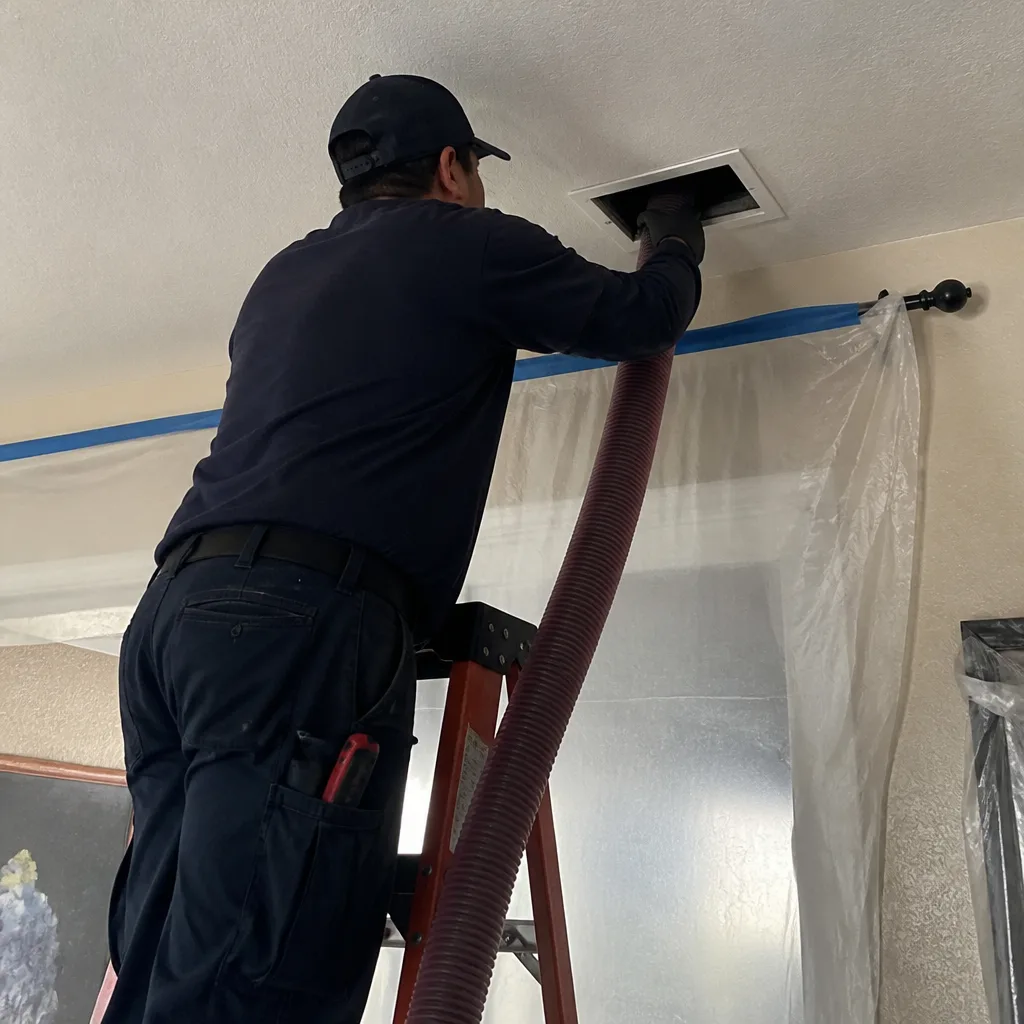 After