
Last updated November 2, 2026
 Whole-home duct cleaning
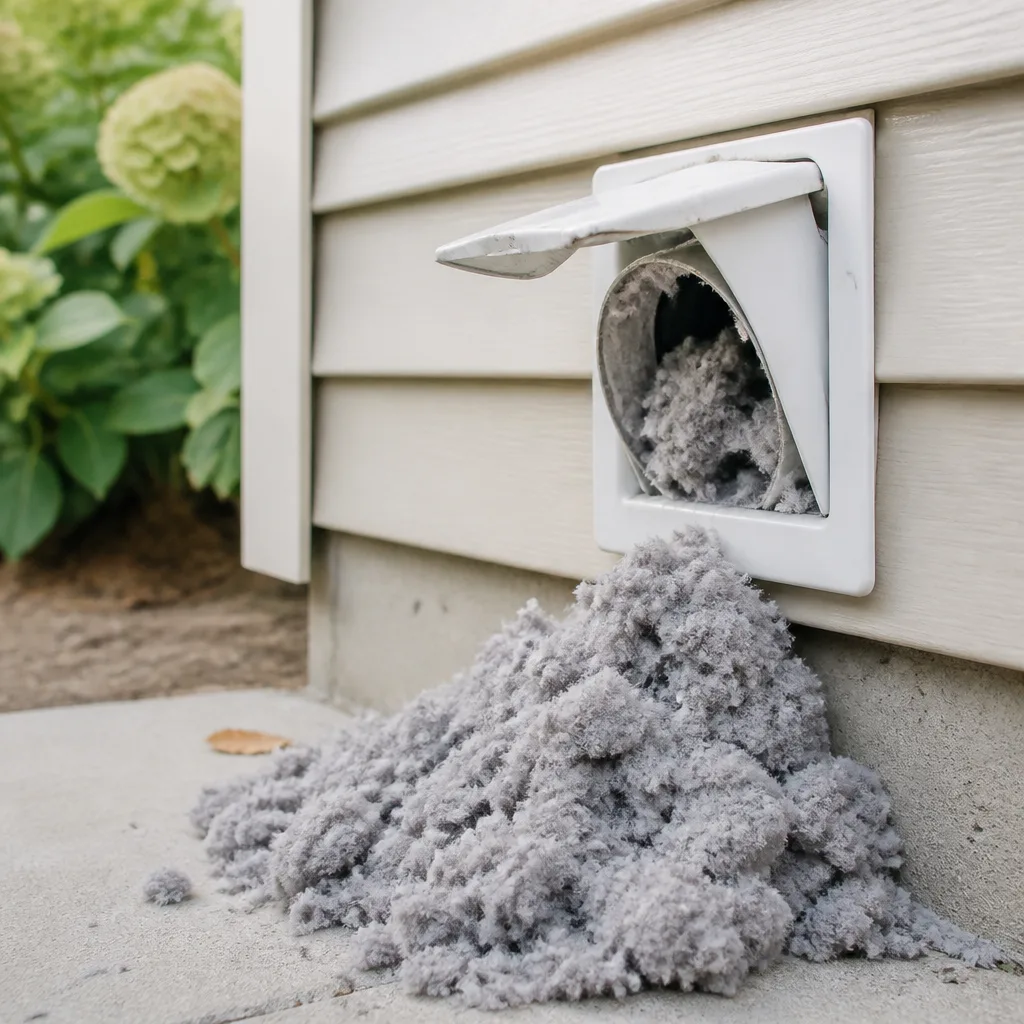 Dryer vent cleaning
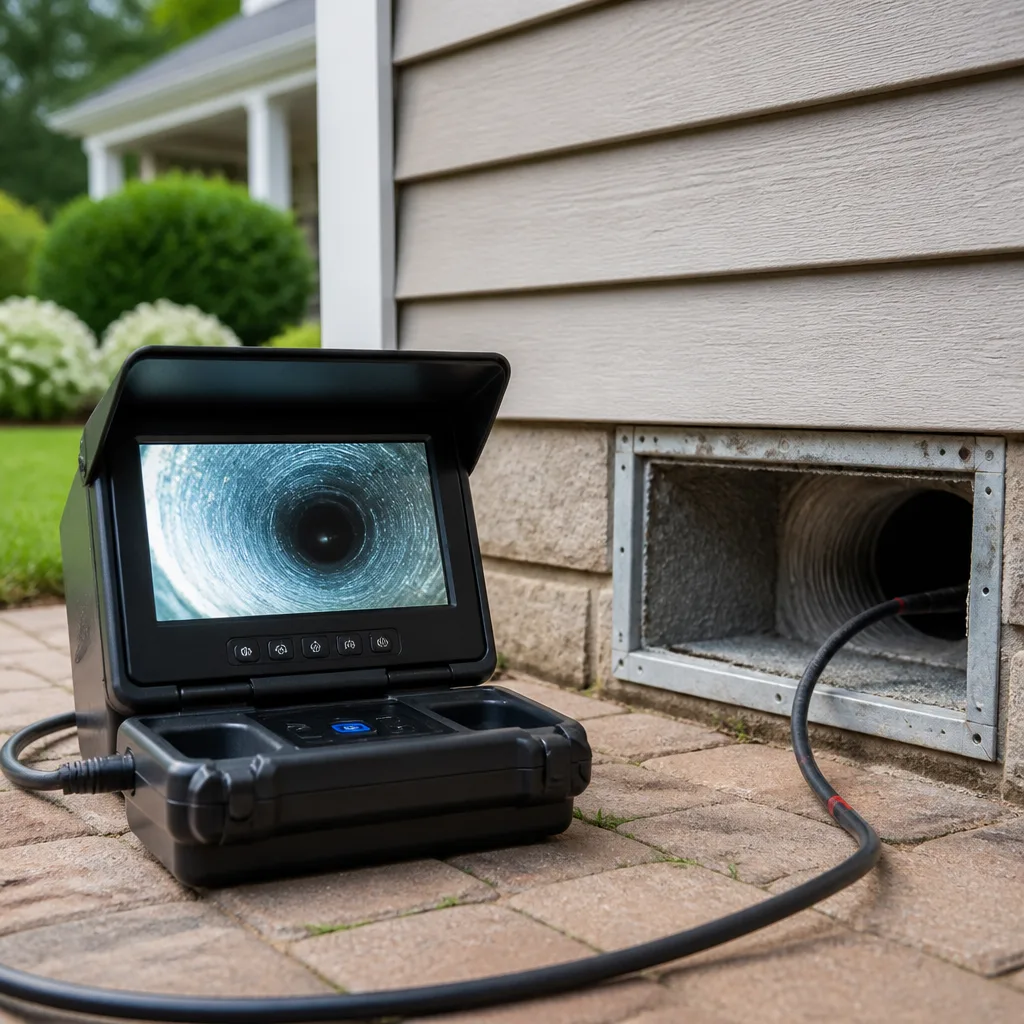 Camera inspection
 Sanitizing & deodorizing
Whole-system duct and dryer vent check with before-and-after photos - you see exactly what came out of your vents
That "$99 whole-house special" is a bait ad - the real number appears once they are in your hallway, or the "clean" is a shop-vac at the register. We photograph the inside of your ducts before and after instead.
Air Duct Cleaning Warning Signs: A Hemet Homeowner’s Reference Guide
A duct system failing in a Hemet home rarely announces itself with a breakdown. It degrades slowly, showing up as a slightly higher power bill, one room that never cools right, and dust that reappears two days after you clean. By the time most homeowners notice, the system has been underperforming for months. This guide walks through the specific warning signs that show up first, how to test for them yourself, and what each signal actually means about the condition of your ducts. For a deeper dive, see our The Complete Air Duct Cleaning Guide for Hemet Homeowners.
Quick Answer
Air duct cleaning warning signs in Hemet include visible dust accumulation around supply registers within days of cleaning, rooms that consistently run 3 – 5 degrees warmer than the rest of the house, a musty or “dirty sock” odor from vents when the system runs, and cooling bills that jump 15 – 20% without a matching increase in outdoor temperatures. Any one of these signals is worth investigating. Two or more together usually mean the ducts need our Air Duct Cleaning services.
Styles & brands we work with
- Whole-home duct cleaning
- Dryer vent cleaning
- Camera inspection
- Sanitizing & deodorizing
Table of Contents
- Three Airflow Tests You Can Perform Without Equipment
- What Dust at Supply Registers vs. Return Grilles Actually Means
- Musty Odor vs. Burned-Dust Smell: How to Tell the Difference
- The Visual Inspection Checklist for Attics and Crawlspaces
- Using Utility Bills as a Diagnostic Tool
- Why Hemet’s Climate Accelerates Duct Problems
- Common Mistakes to Avoid
- When to Call a Professional
- Frequently Asked Questions
Three Airflow Tests You Can Perform Without Equipment
Weak airflow is the earliest and most reliable indicator of duct problems, but most Hemet homeowners never measure it. They notice a room feels stuffy and move on. The fix is to test airflow directly. These three tests take less than ten minutes total and require nothing more than a tissue and a thermometer.
Test 1: The Tissue Test at Registers
Turn your system fan on (not the heat or cool mode, just the fan). Hold a single-ply tissue about six inches from a supply register in the room you suspect is underperforming. The tissue should lift to at least a 45-degree angle. Now do the same at a register in a room that cools or heats well. If the tissue barely moves at the problem register but lifts strongly at the comparison register, you have an airflow restriction or a duct leak somewhere in that branch line. This is not a subtle difference. Well-functioning registers move obvious air; failing branches feel like a whisper.
Test 2: Temperature Differential Between Rooms
On a warm afternoon when the air conditioning is running, place a thermometer in the room you suspect and one in a room that feels comfortable. Wait twenty minutes. If the difference is more than 3 degrees, and the thermostat is centrally located in a hallway or living area, the problem is rarely the AC unit itself. It is almost always delivery: a duct that is leaking conditioned air into the attic, a collapsed branch, or a damper that has shifted closed. Hemet’s summer temperatures routinely exceed 100 degrees, and a 3-degree differential in July means one branch line is losing a meaningful portion of its cooled air before it reaches the room.
Test 3: Runtime Comparison to Prior Seasons
This test requires no immediate measurement at all. Compare your AC runtime this summer to the same period last year. You can estimate runtime from your smart thermostat’s usage history or your utility bill’s daily kilowatt-hour graph. If your system is running 20 – 30% longer to hold the same indoor temperature, and outdoor temperatures are comparable to last year, the likely culprits are duct leakage, a dirty evaporator coil, or a restricted filter that is starving the system of return air. A duct system that was adequate two years ago does not become inadequate on its own. Something changed, and that something is usually accessible ductwork degrading in the attic heat.
We have seen all three of these tests flag the same house in Hemet. A homeowner in the Valle Vista area called us after noticing her master bedroom ran 6 degrees warmer than the hallway every afternoon. The tissue test confirmed weak flow, the temperature differential was 6 degrees, and her runtime had jumped 22% year over year. The cause turned out to be a disconnected duct joint in the attic that had pulled apart. No amount of filter changes would have fixed it. That is Air Duct Repair in Hemet territory, and it is exactly why airflow testing matters before cleaning gets scheduled.
What Dust at Supply Registers vs. Return Grilles Actually Means
Dust in a house is normal. Dust blowing from a register is not. The location of visible dust tells you where the problem originates, and most homeowners have the two major sources backwards.
Dust at supply registers (the vents that blow conditioned air into rooms) indicates one of two specific problems. The first is a dirty evaporator coil. The coil sits in the air handler and gets coated with dust and debris over years. When the coil is dirty, condensation mixed with that debris creates a breeding ground that sheds particles every time the fan runs. You see this as fine gray or black dust accumulating on the wall or ceiling around the register itself. The second is a filter bypass: a filter that does not seal correctly in its slot, allowing unfiltered air to move around it and carry dust directly from the return side into the supply side. Both problems require access to the equipment and ductwork, not just a longer duster.
Dust at return grilles (the larger vents where air is pulled into the system) is a different signal entirely. Dust accumulation at a return grille means the ductwork behind that grille has a leak on the return side. The system is pulling air from the attic or crawlspace through a gap or disconnected joint, and that air carries whatever is in that space: insulation fibers, dust, rodent droppings, or construction debris. The grille itself acts as a filter screen, catching the larger particles and making the problem visible. If you wipe a return grille clean and it re-coats with dust within two weeks, you have active leakage on that return line.
Hemet homes built in the 1980s and 1990s are especially prone to this. Flexible duct runs in attics degrade over two or three decades of 100-degree summers. The outer jacket cracks, the inner liner tears, and the duct begins pulling attic air. We see this regularly in the McSweeny Farms and East Hemet neighborhoods where the original ductwork is now 25 to 30 years old.
Musty Odor vs. Burned-Dust Smell: How to Tell the Difference
Odors from vents follow predictable patterns, and distinguishing between them prevents both unnecessary worry and missed problems.
The burned-dust smell at startup is normal. When a furnace or heat pump first fires up after sitting idle, dust that settled on the heat exchanger or heating elements burns off. This produces a brief dusty or slightly acrid smell that lasts five to fifteen minutes and then disappears. It happens once at the beginning of the heating season and occasionally after long idle periods. This is not a cleaning issue. It is a normal function of cycling equipment.
The musty or “dirty sock” odor is never normal. This smell, which many homeowners describe as resembling a gym bag or damp laundry left in the washer too long, indicates microbial growth on the evaporator coil or inside ductwork where moisture and organic debris accumulate. The odor is usually strongest when the system first starts cooling, when moisture condenses on the coil and releases the volatile compounds. It fades as the coil dries but returns on the next cooling cycle. In Hemet’s climate, this is especially common in homes where the AC runs constantly during summer. The coil rarely dries fully, and the cycle amplifies.
A musty odor is distinct from a burned-dust smell in three specific ways. First, the musty smell persists for the entire cooling cycle rather than fading after startup. Second, it returns every time the AC runs, not just the first firing of the season. Third, it is most noticeable at the supply registers, where conditioned air enters the room, rather than at the return grilles where air is pulled in.
If you smell musty air from your vents, the fix is rarely a spray or a filter change. The source needs to be found and removed. In most cases, that means cleaning the coil and the supply-side ductwork with equipment designed for the task. We run Nikro HEPA-rated vacuum systems and Rotobrush rotary brush heads on Air Duct Cleaning in Hemet projects because surface-level wiping does not reach what is living inside the duct liner.
The Visual Inspection Checklist for Attics and Crawlspaces
You do not need to be an HVAC technician to spot serious duct problems. You need a flashlight, a willingness to enter your attic or crawlspace, and an eye for four specific failure patterns. Most Hemet homes have accessible duct runs in the attic, and a fifteen-minute inspection reveals more than any single symptom inside the living space.
- Disconnected joints. Walk the main trunk line and look at every connection point where a branch duct meets the trunk. A disconnected joint shows a visible gap, often with a flap of insulation or foil tape hanging loose. You may see dust streaking around the gap where conditioned air has been blasting into the attic. This is the single most common finding in our repair work: a joint that has pulled apart from thermal expansion and contraction over years of Hemet summers.
- Insulation damage. Look for torn outer jackets, exposed fiberglass insulation, or sections where the silver jacket has turned brittle and cracked. UV exposure, rodent activity, and simple age all cause this. When the jacket fails, the duct loses R-value and the air inside loses temperature before it reaches the room. It also allows condensation to form on the duct exterior, which then drips onto ceiling drywall. Water stains on ceilings are often duct jacket failures, not roof leaks.
- Pest intrusion evidence. Look for droppings, chewed duct sections, nesting material, or entry holes where ducts penetrate walls or the roofline. Rats and mice in Hemet attics chew through flexible duct to reach the conditioned air inside, creating both leaks and contamination. A duct that has been breached by rodents is not a cleaning project alone: the damaged section needs replacement before any cleaning makes sense.
- Kinked or crushed sections. Flexible duct should run in smooth curves. If you see a sharp 90-degree bend where the inner liner has collapsed, or a section flattened under stored boxes or attic debris, that branch is delivering a fraction of its designed airflow. Kinks are cheap to fix and expensive to ignore. We have found branches so badly crushed that the connected room received almost no conditioned air at all.
One caution: if your ducts run through a crawlspace rather than an attic, do not enter the crawlspace without proper protective equipment. Duct inspection in tight, dark spaces under a home carries real risks from pests, exposed fasteners, and poor ventilation. Call a professional for crawlspace work unless you have the proper gear and experience.
Using Utility Bills as a Diagnostic Tool
Your electricity bill is a diagnostic instrument. Reading it correctly separates duct problems from equipment problems and helps you decide when professional attention is justified.
Start by pulling the last three summers of bills. Look at the kilowatt-hour (kWh) usage for the cooling months: June, July, August, and September in Hemet. Compare July of this year to July of last year and the year before. The key is to compare kWh against cooling degree days for the same period, not against your own memory of how hot it felt. The National Weather Service publishes cooling degree day data for Hemet, and while you do not need the exact figure, a rough comparison matters: if last July averaged 95 degrees and this July averaged 94 degrees, your usage should be roughly flat.
A 15 – 20% increase in cooling costs during a comparable weather period suggests one of three things, in order of likelihood:
- Duct leakage. Conditioned air is escaping into the attic or crawlspace before it reaches the rooms. The system runs longer to hold temperature, and every extra hour of runtime is direct electricity cost. Duct leakage is the most common cause of unexplained bill increases in Hemet homes with original ductwork from the 1990s or earlier.
- A dirty evaporator coil. A coil caked with dust and pet hair cannot transfer heat efficiently. The compressor works harder, runs longer, and consumes more power to produce the same cooling output. Coil cleaning is standard work on a thorough duct cleaning project, not a separate add-on.
- A refrigerant undercharge. This is an equipment problem, not a duct problem, but it presents with the same symptom: longer runtime, higher bills, weaker cooling. A competent technician can test refrigerant pressures and rule this in or out quickly.
One useful diagnostic distinction: if your bills have risen but your airflow at registers feels strong and the temperature in every room is roughly consistent, the problem is likely at the equipment level rather than the duct level. If some rooms are comfortable and others are not, and the bill is up, the problem is delivery. That distinction alone saves Hemet homeowners from paying for equipment work when the real issue is leaking ducts under the attic insulation.
Why Hemet’s Climate Accelerates Duct Problems
Hemet sits in the San Jacinto Valley, and its climate punishes ductwork in ways coastal communities never experience. Summer temperatures routinely exceed 100 degrees, and attic temperatures run 30 to 40 degrees hotter than outdoor air. That means ducts in a Hemet attic operate in 140-degree heat for months at a time. The combination of extreme heat and thermal cycling creates specific failure patterns:
- Adhesive failure at taped joints. The adhesive on duct tape and foil tape degrades rapidly at attic temperatures above 120 degrees. Joints that held for years eventually separate, and the system begins leaking.
- Flexible duct jacket embrittlement. The outer plastic jacket on flexible duct becomes brittle with prolonged heat exposure. It cracks, then the fiberglass insulation underneath settles or falls away, and the duct loses its thermal barrier.
- Condensation problems during shoulder seasons. Hemet’s swing seasons bring cool nights and warm days. When the AC runs in the afternoon and the attic cools dramatically overnight, condensation can form inside ductwork that has lost insulation. That moisture combines with dust to create the conditions for microbial growth.
- Extended runtime throughout the season. Hemet’s cooling season is long. Systems run hard from May through October, and the accumulated runtime means ducts accumulate more dust, more debris, and more wear in a single season than a coastal system sees in three years.
These are not vague observations. They are mechanical realities of operating HVAC systems in a desert valley climate, and they explain why duct problems in Hemet appear earlier and progress faster than elsewhere. A home in Hemet with original 25-year-old ductwork is not overdue for inspection. It is overdue for action.
Common Mistakes to Avoid
- Replacing the filter and expecting the problem to resolve. A new filter addresses filter bypass, nothing else. If ducts leak, a new filter makes no difference. If the coil is dirty, a new filter changes nothing. Filters are maintenance, not repair.
- Closing registers in unused rooms to “save energy.” This raises static pressure in the duct system, forces air through existing leaks at higher velocity, and can damage the blower motor over time. Duct systems in Hemet homes were designed with specific airflow balances. Closing registers disrupts that balance.
- Assuming the AC unit is the problem when one room is hot. A compressor does not cool one room and ignore another. If airflow is uneven, the problem is almost always in the duct system, not the equipment. Equipment problems affect the whole house uniformly.
- Ignoring dust that reappears quickly. If you dust your furniture and it re-coats within days, something is actively blowing particles into the living space. That something is usually a leaking return duct pulling attic air or a supply duct shedding insulation fibers. This will not improve on its own.
- Treating musty odors with air fresheners or spray deodorizers. Masking a microbial odor does nothing about the source, which continues growing. Worse, some deodorizing sprays add residue to the coil that attracts more dust. The source has to be removed, not covered.
- Postponing duct inspection because “it has always worked fine.” Duct systems degrade gradually. The fact that the system worked fine last summer says nothing about this summer. Duct failure is cumulative, and the moment you notice a symptom, the underlying issue has usually been developing for months or years.
When to Call a Professional
Some duct problems are visible and diagnosable without training. Fixing them is another matter. Call a professional when you have confirmed a disconnected duct joint, visible insulation damage, active pest contamination, consistent musty odor from multiple registers, a room temperature differential above 5 degrees, or a utility bill increase of 15% or more against comparable weather. These are not scenarios where cleaning alone will resolve the problem. They require inspection, cleaning, and in many cases repair of the duct system itself.
Duct Cleaning Hemet offers free estimates in Hemet. Call (877) 752-8890 to schedule an inspection. We run Rotobrush rotary brush systems, Nikro HEPA-rated vacuums, and Abatement Technologies filtration units: the same professional-grade equipment used in commercial and remediation settings, not improvised or underpowered setups. When equipment matters, the difference is visible in the work. Homeowners who are cautious buyers and want specifics rather than promises can start with a conversation about what they are seeing. That is what the phone number is for.
Frequently Asked Questions
You need air duct cleaning if you see dust accumulating around supply registers within days of wiping them, smell a musty or “dirty sock” odor when the AC runs, find visible dust streaks or debris at return grilles, or notice that some rooms stay consistently 3 – 5 degrees warmer than others despite the system running properly. Any two of these together is a strong signal. Call Duct Cleaning Hemet home at (877) 752-8890 for an inspection if you are seeing multiple symptoms.
In Hemet’s climate, most homes benefit from professional air duct cleaning every 3 to 5 years. Homes with pets, smokers, recent remodeling, or residents with significant allergies or respiratory conditions may need cleaning more often. The desert environment produces fine dust that settles in ductwork and combines with condensation during cooling season, creating buildup faster than coastal areas experience. The specific answer for your home depends on your system configuration and household conditions.
A single room that stays warmer than the rest of the house almost always indicates a duct-specific problem: a disconnected joint, a kinked branch line, a failed damper, or a duct run that is too long or too small for the room. It is rarely an equipment problem because equipment problems affect the entire house. This is one of the most common calls we receive in Hemet, and the cause is usually identifiable with a visual inspection and airflow testing rather than guesswork. Air Duct Repair in Hemet resolves what cleaning alone cannot.
No, that specific smell is normal. When a furnace or heat pump fires up after sitting idle, dust that accumulated on the heat exchanger burns off, producing a brief dusty or slightly acrid odor that clears within ten to fifteen minutes. It happens once at the start of heating season and is not a sign of duct contamination. A musty or “dirty sock” smell that persists during cooling cycles is a different story and does warrant attention.
Cheap air duct cleaning quotes usually reflect improvised equipment and abbreviated work. A low price often means a shop vacuum connected to a register rather than a professional negative-air system, no mechanical agitation of duct walls, and no HEPA filtration. The work may be done in under an hour and may leave most of the system untouched. Professional cleaning in Hemet involves Rotobrush mechanical agitation, Nikro HEPA-rated vacuum systems, and Abatement Technologies filtration, and the time and equipment required are simply not available at bargain prices. The price reflects what is actually done inside the ducts. Call (877) 752-8890 for an estimate that explains exactly what is included.
Yes, they can. Ducts that contain accumulated dust, pet dander, pollen, mold spores, and pest debris recirculate those allergens through the living space every time the system runs. In Hemet, where residents already deal with high pollen counts from the surrounding hills and the Salton Sea basin, contaminated ducts add an indoor allergen load on top of what is already outdoors. Cleaning the ducts removes the reservoir where these particles have built up, which can reduce the allergen concentration in the air you breathe at home. Dryer Vent Cleaning in Hemet is a related service that addresses a different kind of indoor air problem: the lint buildup that creates a fire hazard in dryer exhaust lines.
The Bottom Line
Duct problems in Hemet homes announce themselves early through measurable, testable signals: weak airflow at specific registers, dust that reappears days after cleaning, musty odors during cooling cycles, room-to-room temperature gaps, and utility bills climbing against flat weather data. None of these requires specialized equipment to detect. All of them require specialized equipment to fix properly. The homeowner’s job is to notice the signal and act before the degradation worsens. The specialist’s job is to find the source and correct it. When inspection, cleaning, and repair are all available from one provider using professional-grade equipment, the path from symptom to solution is shorter and more direct. If you are seeing any of the warning signs described here, start with a phone call. Estimates are free, and knowing what you are dealing with beats guessing.
Written by the team at Duct Cleaning Hemet, serving Hemet since 2013.
See the difference
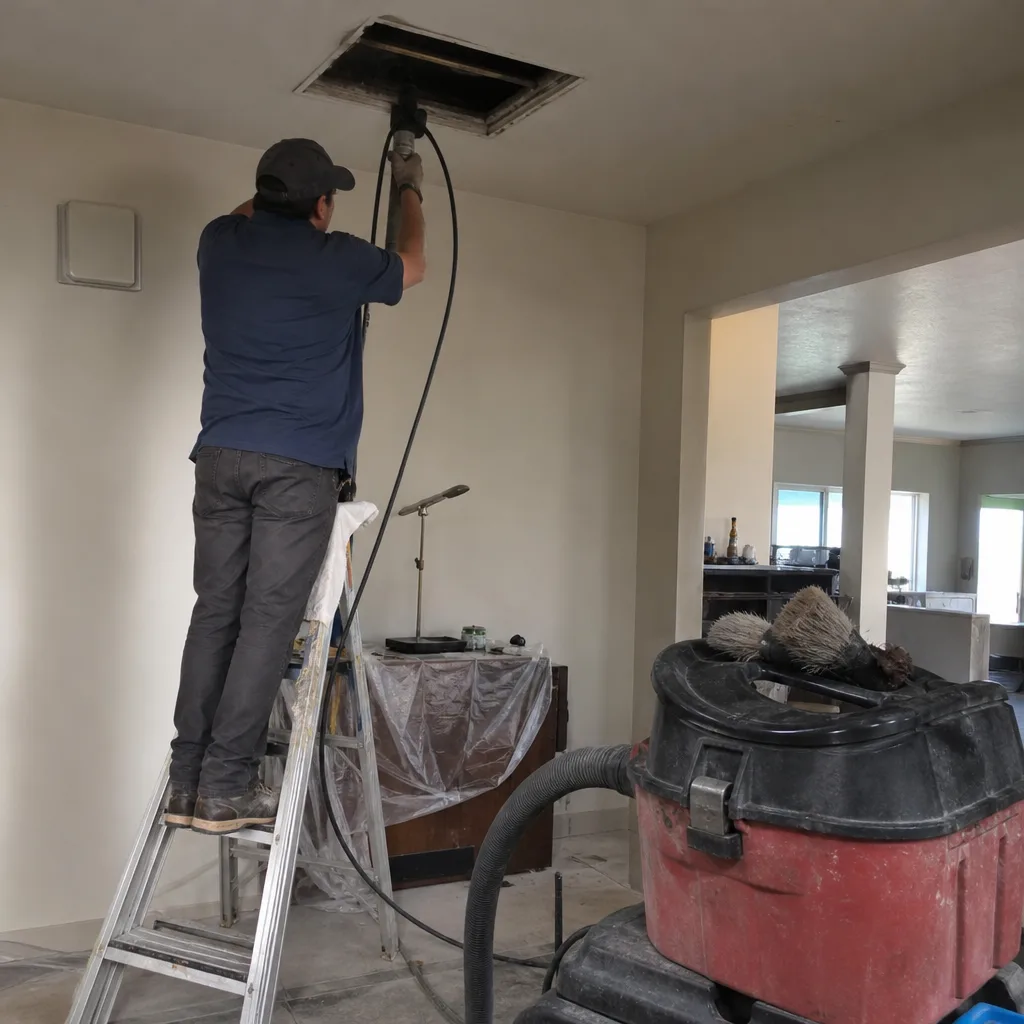 Before
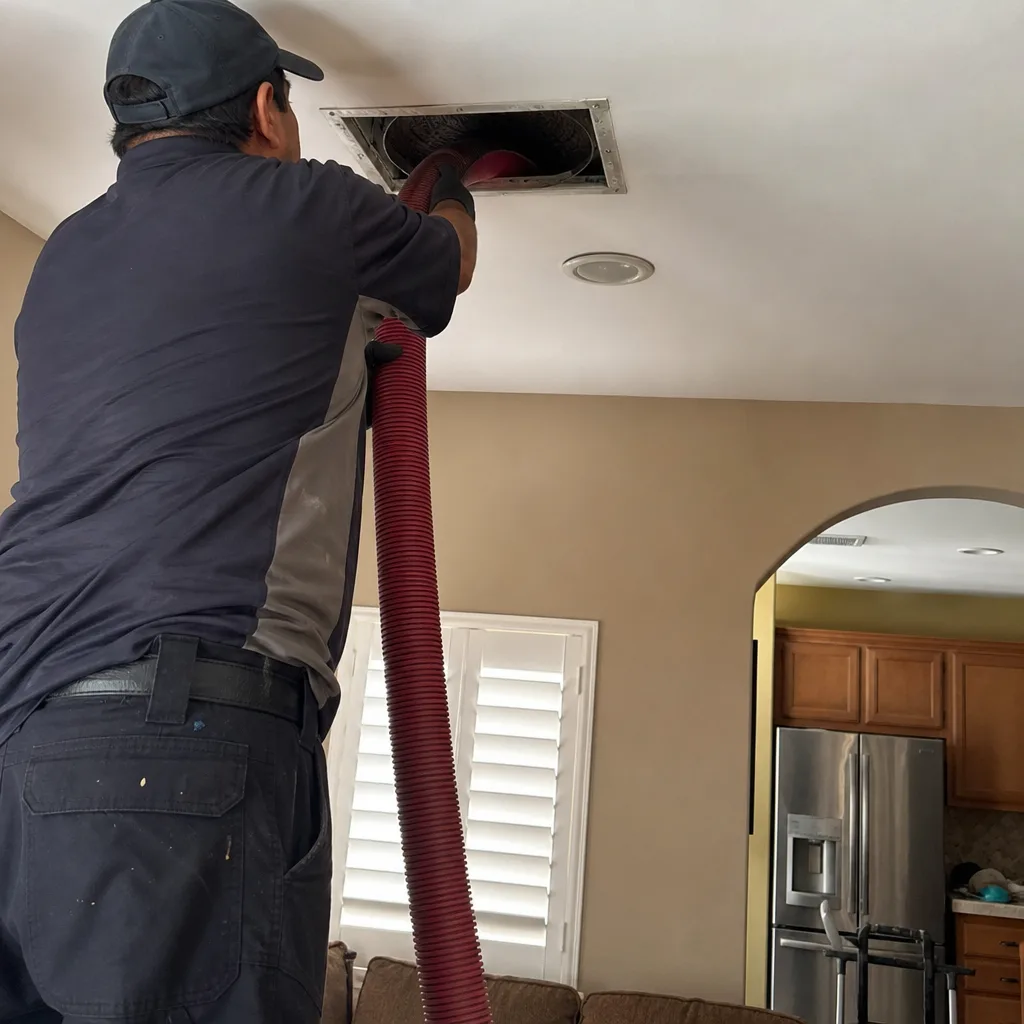 After
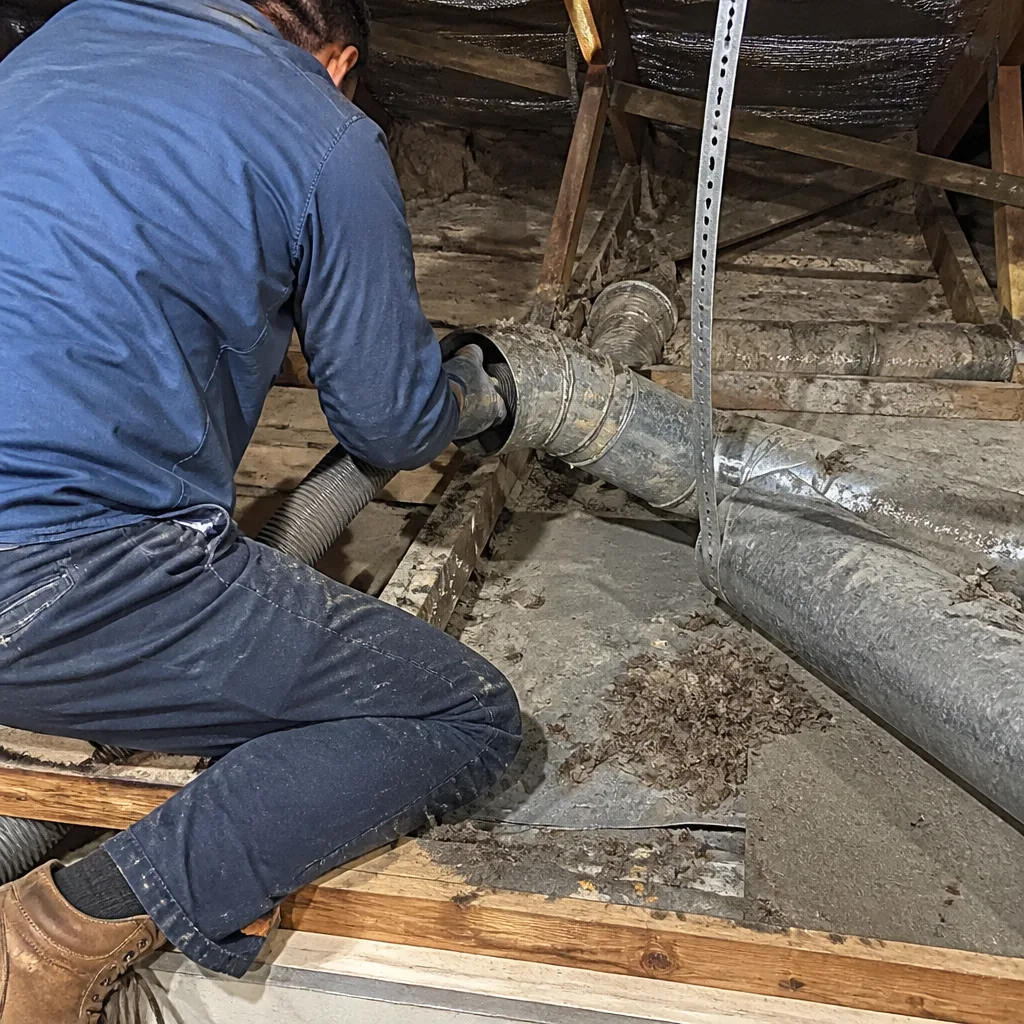 Before
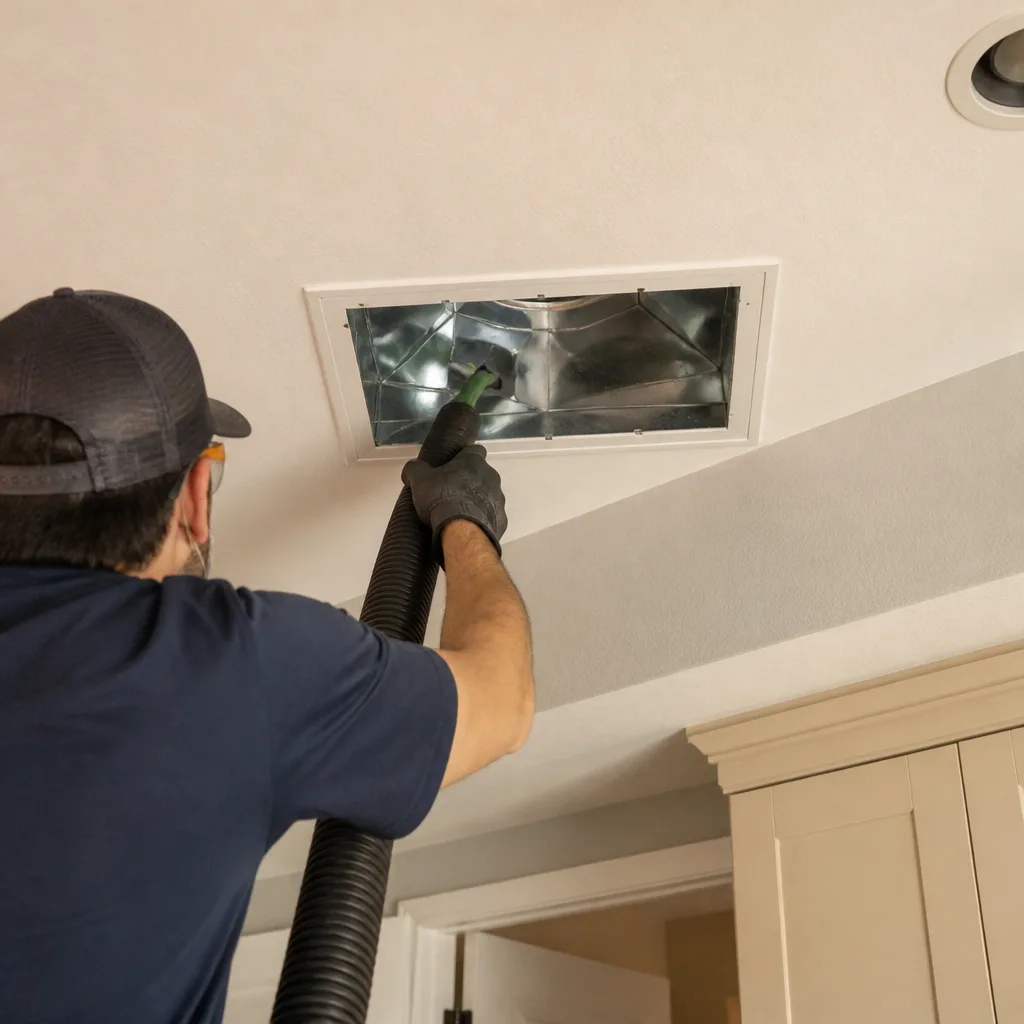 After
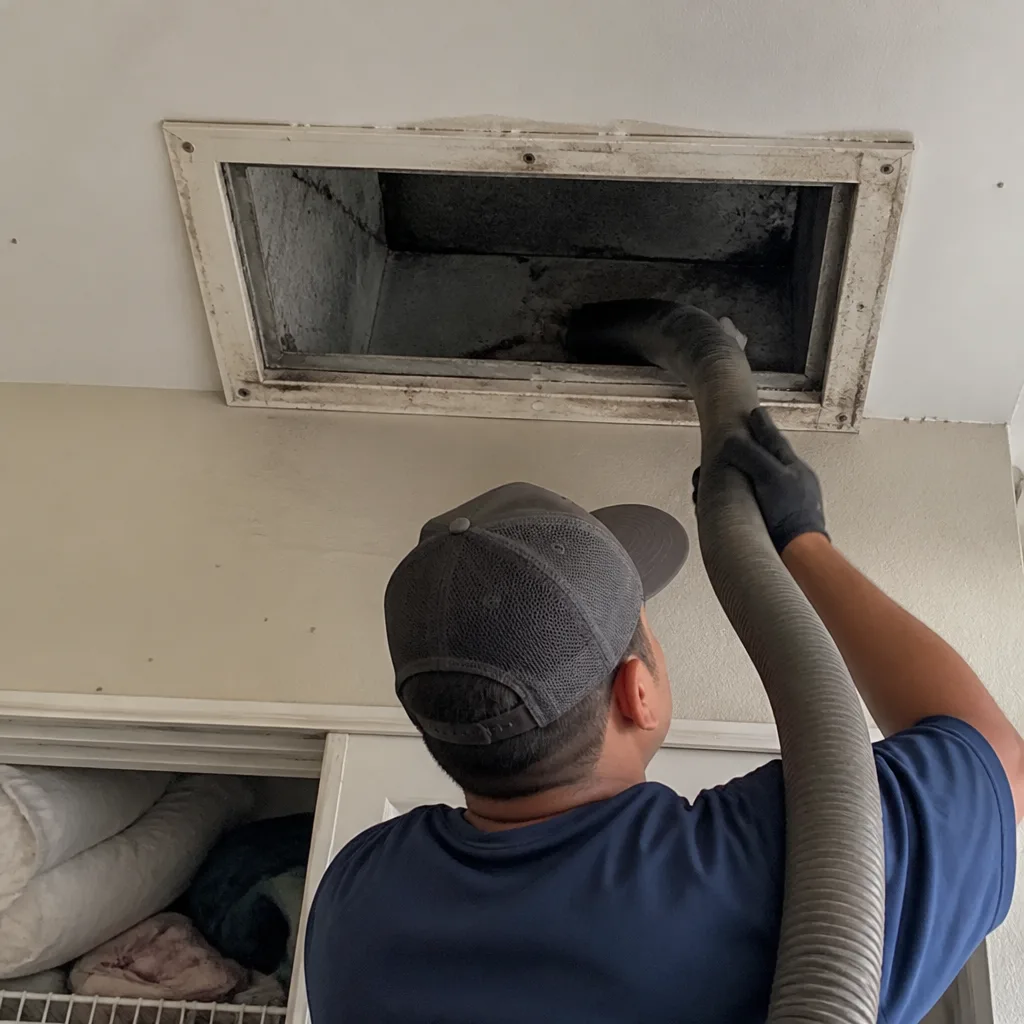 Before
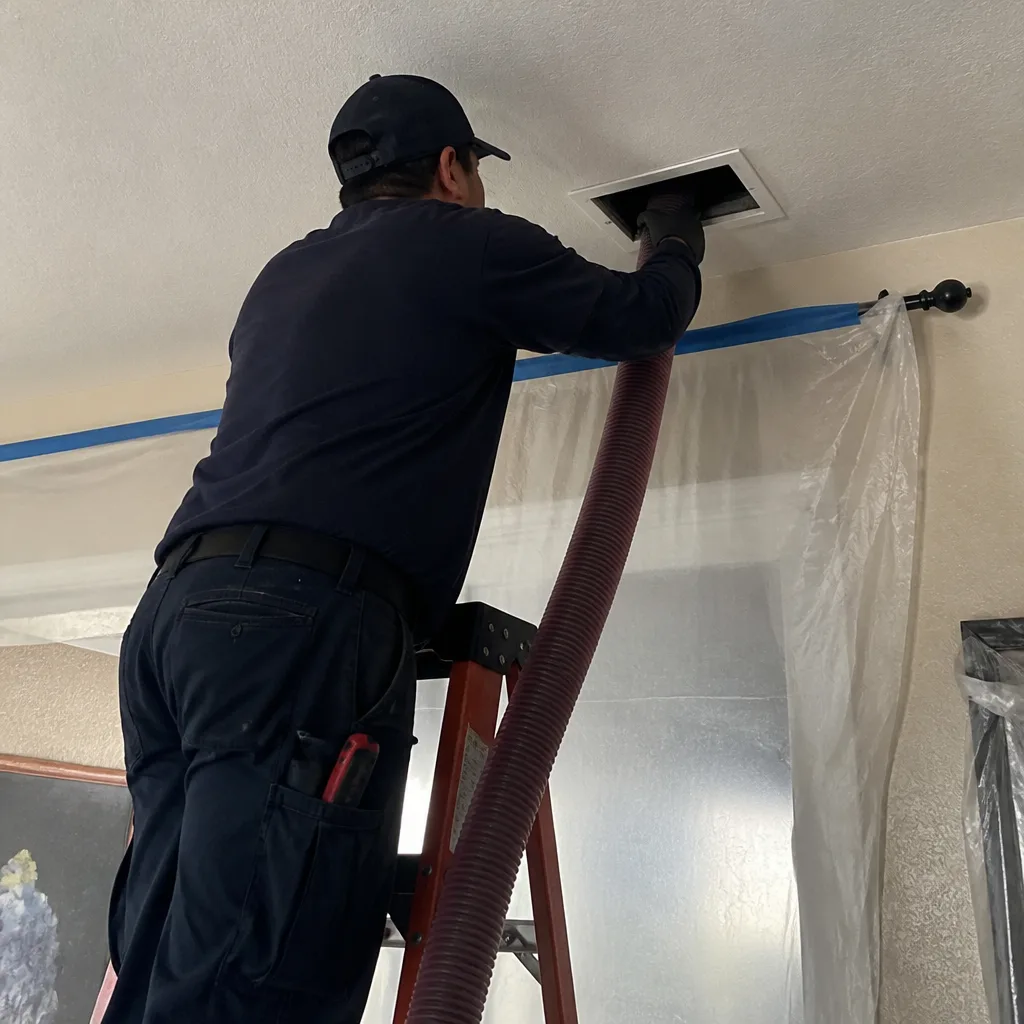 After