
Last updated November 2, 2026
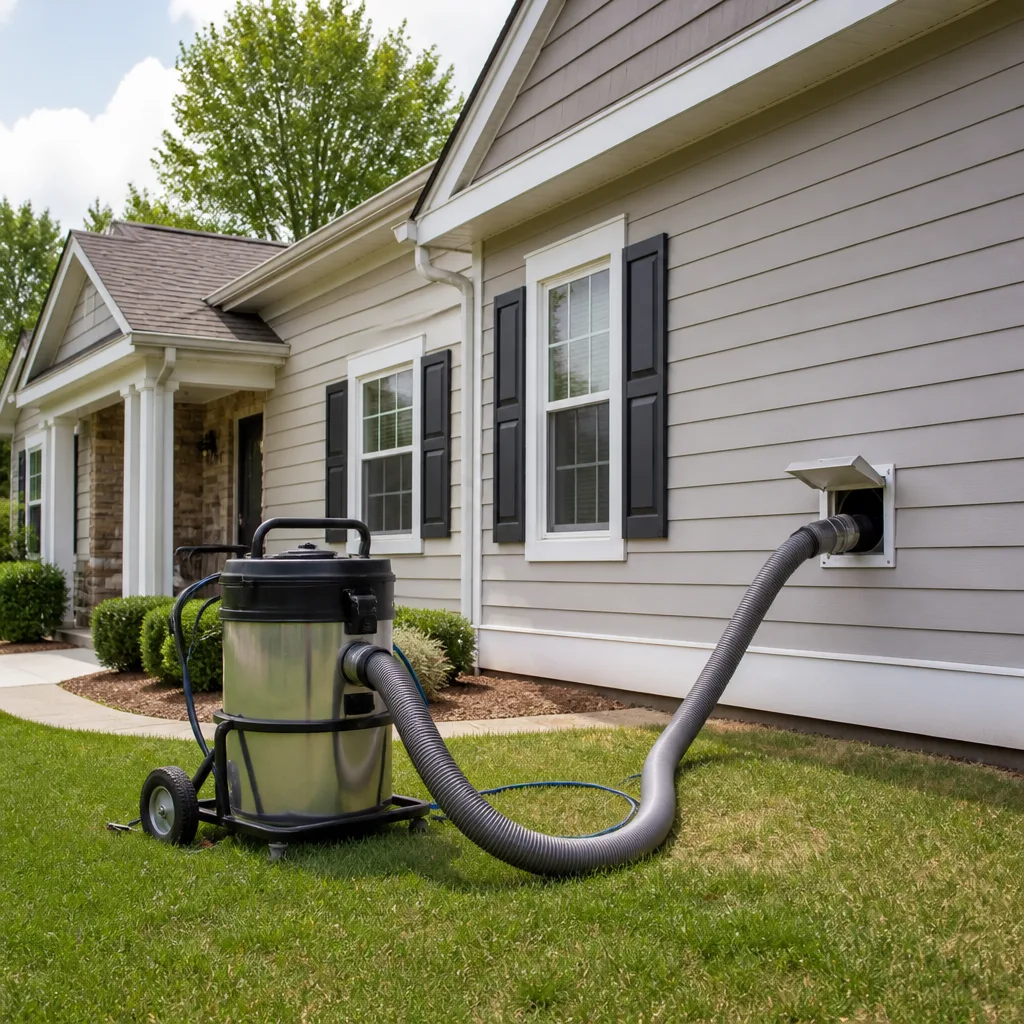 Whole-home duct cleaning
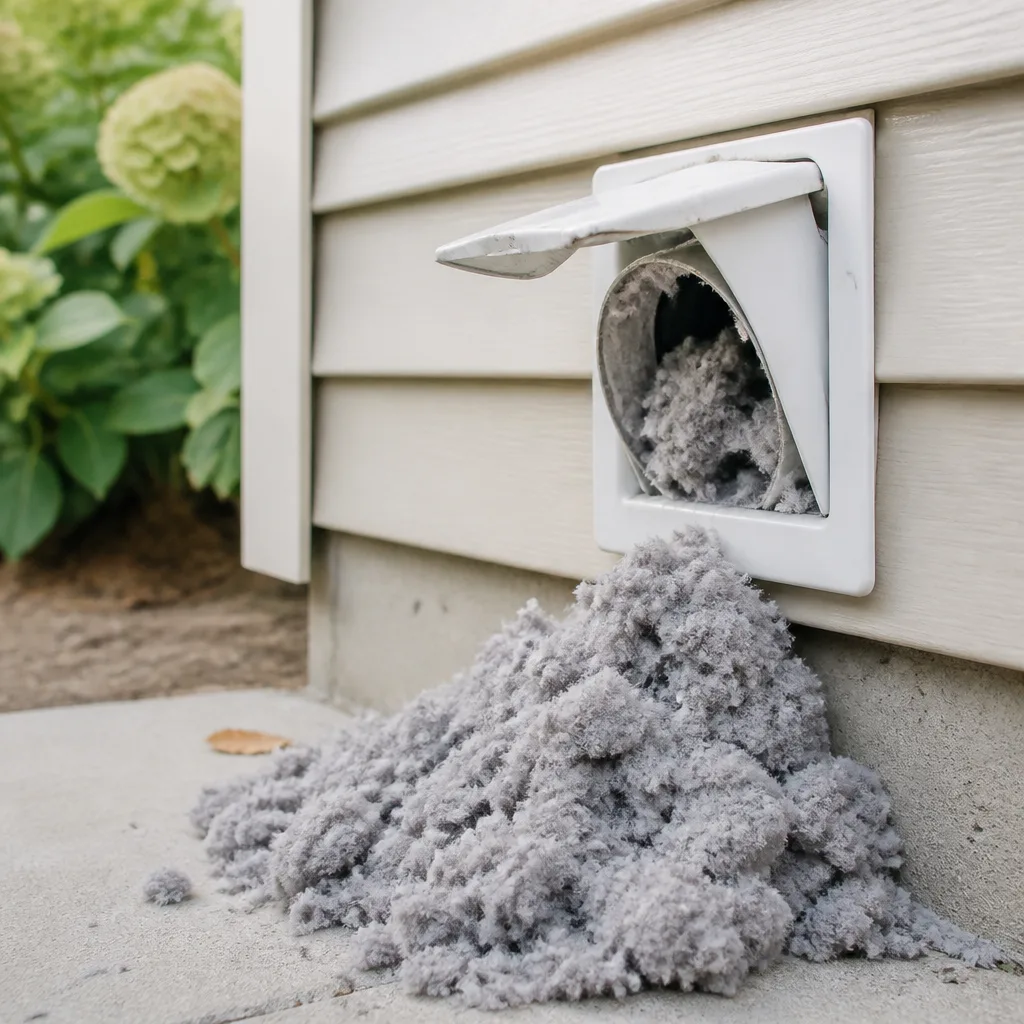 Dryer vent cleaning
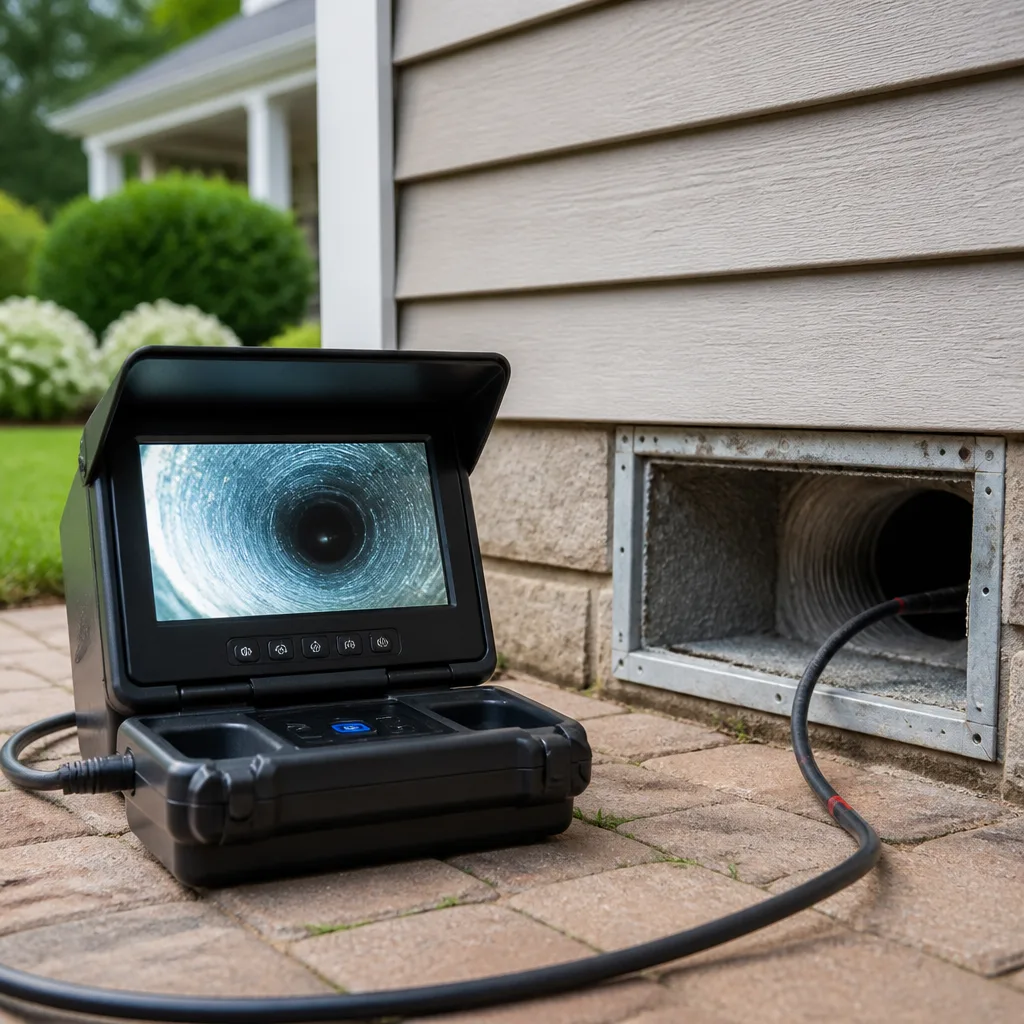 Camera inspection
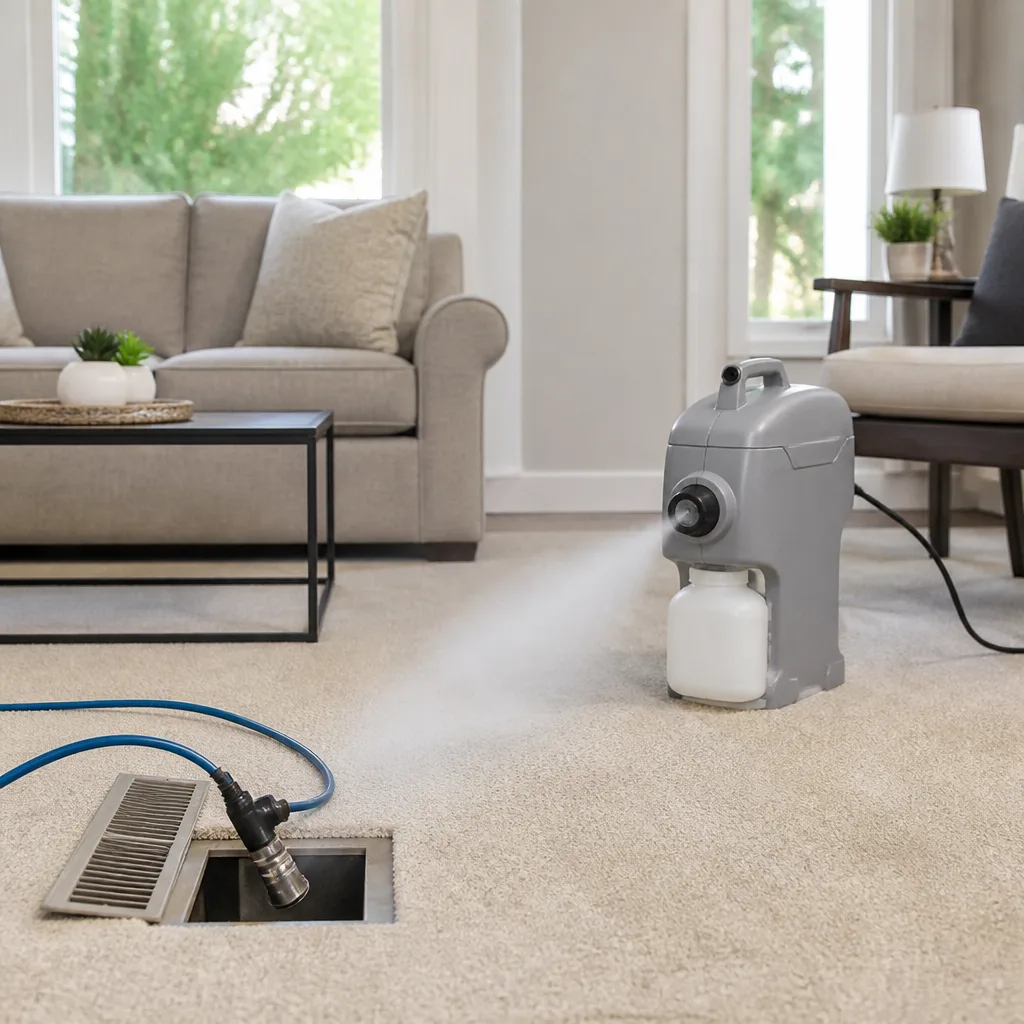 Sanitizing & deodorizing
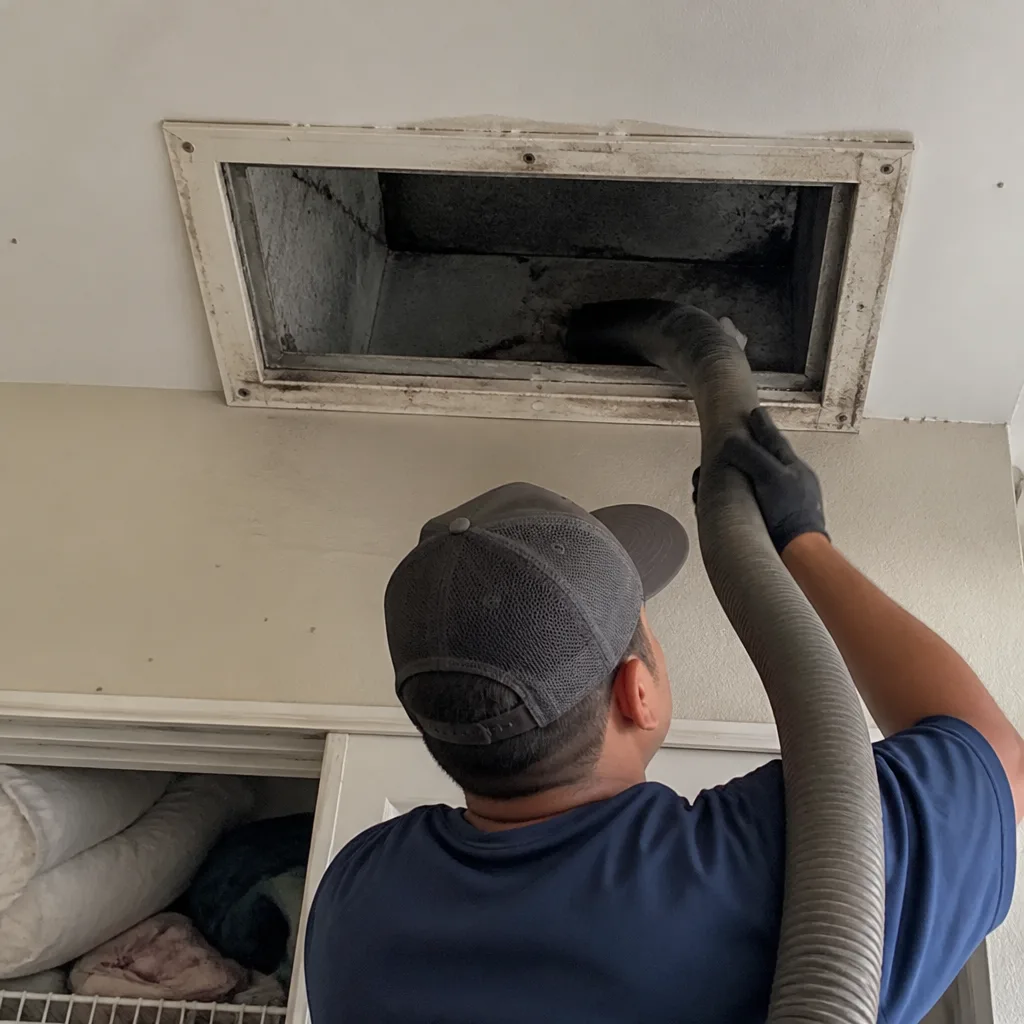
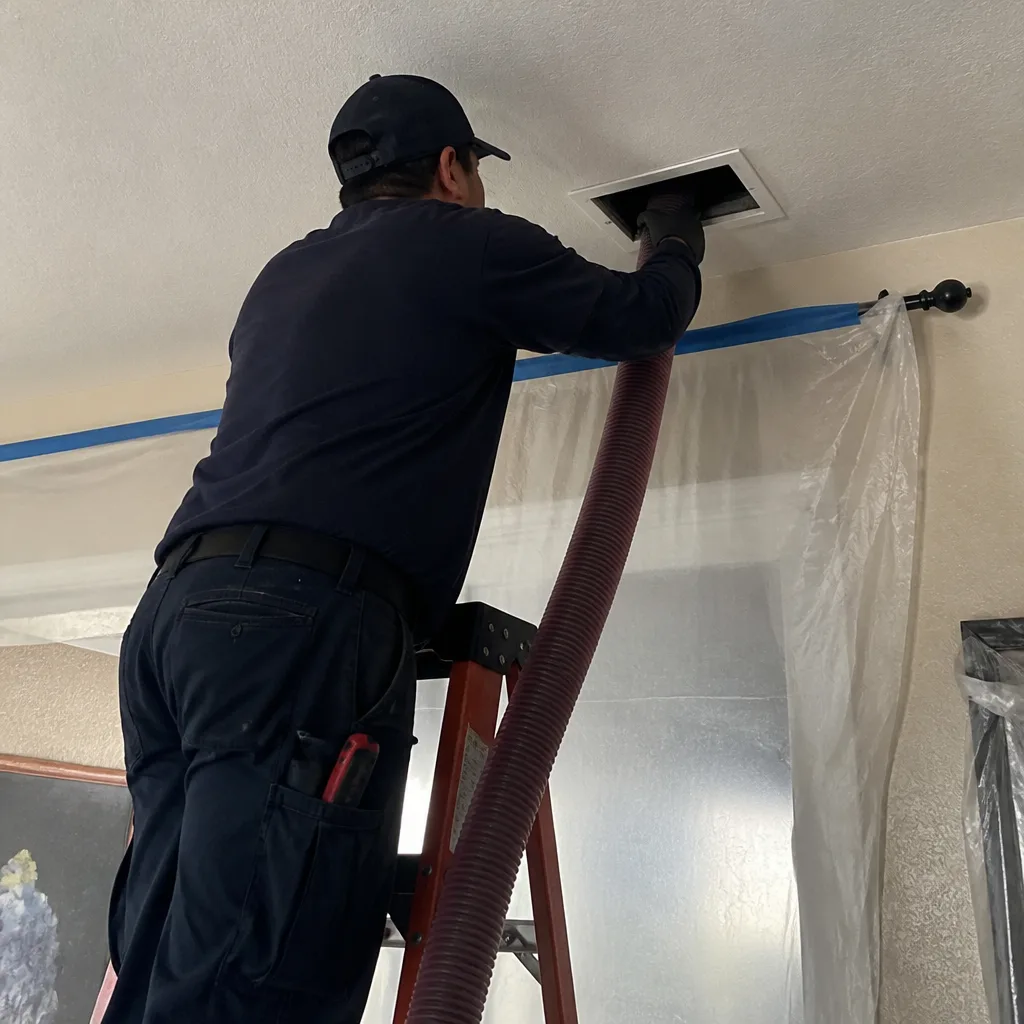
Whole-system duct and dryer vent check with before-and-after photos - you see exactly what came out of your vents
That "$99 whole-house special" is a bait ad - the real number appears once they are in your hallway, or the "clean" is a shop-vac at the register. We photograph the inside of your ducts before and after instead.
Air Duct Cleaning Permits, Codes & Inspections in CA: What You Need to Know
Here’s something that surprises most California homeowners: the average air duct cleaning job in Hemet never requires a permit, but the moment a technician suggests “just replacing that torn section” or “adding a new return,” you may have crossed from maintenance into regulated construction work without realizing it. That line matters because unpermitted duct modifications can come back to haunt you years later during a home sale. This guide walks through the actual code language, the permit triggers, the licensing requirements, and what to verify before anyone touches your ductwork, or you can explore our Air Duct Cleaning services if you’re just looking for maintenance.
Styles & brands we work with
- Whole-home duct cleaning
- Dryer vent cleaning
- Camera inspection
- Sanitizing & deodorizing
Quick Answer
In California, air duct cleaning alone does not require a permit because it’s classified as maintenance, not construction. However, any duct replacement, new duct run, plenum modification, or access panel addition that changes the system’s configuration triggers California Mechanical Code Chapter 6 requirements and typically needs a local building permit plus a licensed C-20 HVAC contractor in Hemet and throughout Riverside County. Verify the contractor’s license before work starts and always ask whether the proposed work crosses that cleaning-to-construction line.
Table of Contents
- What California Mechanical Code Chapter 6 Actually Says
- When Hemet and Riverside County Require a Permit
- The C-20 License Line: What a Handyman Cannot Touch
- How to Verify a C-20 License with the CSLB
- Unpermitted Duct Work and California Real Estate Disclosure
- Cleaning vs. Repair vs. Replacement: Knowing the Difference
- Why Hemet’s Climate Makes Duct Integrity a Bigger Deal
- Common Mistakes to Avoid
- When to Call a Professional
- Frequently Asked Questions
- The Bottom Line
What California Mechanical Code Chapter 6 Actually Says
California Mechanical Code (CMC) Chapter 6 governs duct systems statewide. The code is dense, but the sections relevant to homeowners in Hemet are fairly straightforward once you know what to look for. CMC Section 601.2 requires that all duct systems be constructed and installed in accordance with the code. That’s the broad umbrella. Section 603 covers materials, and Section 604 addresses installation. Here’s the key distinction most people miss: cleaning is not installation. The code regulates construction and modification, not maintenance. When we clean ductwork with professional-grade Rotobrush and Nikro equipment, we’re not altering the system’s configuration, so the code’s installation requirements don’t apply. The second a section of flex duct gets cut out and replaced, that’s installation work, and CMC Chapter 6 now governs the materials, the connection methods, the sealing requirements, and the support spacing.
What does the code specifically require for new or replacement duct work? It mandates that ducts be supported at specified intervals, that joints be sealed with approved mastic or tape, and that materials meet certain fire and smoke ratings. CMC Section 603.4 addresses metallic ducts, Section 603.6 covers flexible ducts, and Section 605 governs connections. If a contractor replaces duct sections in your Hemet home and does not pull a permit, that work sits outside the inspection system that verifies these code requirements were actually met. You’d have no way to know if the flex duct was properly connected, properly sealed, or properly supported in your attic.
When Hemet and Riverside County Require a Permit
Hemet issues building permits through the city’s Building Division, and the triggers align with state code. A permit is not required for cleaning ductwork. A permit is required when the work modifies the system’s physical configuration. Let’s be specific about what that means in practice, because the distinctions matter and they’re not always obvious even to contractors.
Here are the typical permit triggers for duct work in Hemet:
- Replacing any duct section beyond a simple patching repair. If a 6-foot length of crushed flex duct in your attic gets cut out and replaced, that’s technically a modification requiring a permit in most interpretations.
- Adding a new duct run to serve a room or register that wasn’t previously ducted. This changes the system’s design airflow and falls squarely under CMC Chapter 6 installation requirements.
- Modifying the plenum, which is the metal box attached to the furnace or air handler where ducts connect. Cutting a new opening into a plenum is a system modification.
- Adding access panels when the panel installation requires cutting into the duct system in a way that alters its configuration.
- Replacing the HVAC unit itself typically pulls a permit when the replacement involves duct connections, electrical, or refrigerant line changes.
What does not trigger a permit? Cleaning the interior surfaces of the duct system, including the supply and return trunks, branch lines, and register boots. Applying antimicrobial coatings or sealants to the interior of existing ducts during a cleaning service. Reattaching a loose duct connection by re-securing the existing fasteners and re-taping the joint. The line is whether the duct system’s physical configuration changes in a way the code would classify as installation or construction.
The C-20 License Line: What a Handyman Cannot Touch
California’s Contractors State License Board (CSLB) issues a C-20 classification for Warm-Air Heating, Ventilating and Air-Conditioning contractors. This license authorizes the holder to fabricate, install, and modify duct systems. Contrary to what some homeowners assume, cleaning ductwork does not require a C-20 license in California. That’s why you’ll see duct cleaning companies operating without one. But here’s where it gets tricky: the moment the job includes any repair or modification work, the C-20 requirement kicks in. A general contractor (B license) can legally perform some HVAC-adjacent work, but a C-20 is the correct classification for duct modification, and an unlicensed handyman cannot legally perform duct repair or replacement regardless of how simple it looks.
In our experience serving Hemet and the surrounding Riverside County area, we see a pattern: a homeowner hires a duct cleaning service, the technician discovers a disconnected duct in the attic, and offers to “just reconnect it” as part of the job. That offer comes from someone without a C-20 license, and the homeowner accepts because it’s convenient. The work usually functions, at least initially. But if that repair fails or causes a problem, the homeowner has no contractor’s license to file a complaint against, and that disconnected run may have been hiding a bigger issue that a licensed contractor would have identified and addressed properly through our Air Duct Repair in Hemet service scope.
The license exists for a reason. Duct systems interact with combustion appliances, airflow balance, and fire safety. A poorly executed duct modification can depressurize a space and cause backdrafting, where carbon monoxide from a gas furnace gets pulled into the living area instead of venting outside. That’s not a hypothetical concern. It’s a documented failure mode in residential HVAC systems, and it’s why California regulates who can touch ductwork.
How to Verify a C-20 License with the CSLB
Verifying a contractor’s license takes about two minutes and costs nothing. The California Contractors State License Board maintains a public database at cslb.ca.gov. You’ll need the contractor’s license number, which should appear on their website, their business cards, and their vehicle. If a contractor hesitates to provide a license number, that hesitation is your answer. Here’s the step-by-step process we recommend to every homeowner in Hemet before scheduling duct work:
- Go to cslb.ca.gov and click the “Check a License” button on the homepage.
- Enter the license number or the business name. If using a business name, select “Business Name” from the search options.
- Confirm the license classification. You’re looking for C-20 (Warm-Air Heating, Ventilating and Air-Conditioning) for any duct modification work. A B (General Building) classification may be acceptable for some projects, but C-20 is the correct classification for duct system work.
- Check the license status. It should read “Active.” A suspended, expired, or revoked license means the contractor cannot legally perform the work.
- Verify the license has no active disciplinary actions. The CSLB database shows any complaints, citations, or suspensions. A pattern of complaints about unfinished work or permit issues should weigh heavily in your decision.
- Confirm the bond is active. The database shows the bond amount and status. California requires contractors to maintain a surety bond, which provides a financial remedy if the work is defective or the contractor abandons the project.
One more verification step that protects Hemet homeowners: ask for the contractor’s workers’ compensation insurance certificate if they’re doing attic work or any repair that involves more than one person on site. If a worker gets injured on your property and the contractor lacks workers’ comp, your homeowner’s insurance may be the one paying the claim. We carry the documentation and make it available before work begins, because that’s what a serious operator does.
Unpermitted Duct Work and California Real Estate Disclosure
California real estate law requires sellers to disclose known material facts about the property, and that includes unpermitted work. The standard California Association of Realtors (CAR) Seller Property Questionnaire includes a direct question: “Are you aware of any significant repairs, alterations, or modifications to the property that were made without the necessary permits?” If you answer no and the truth comes out later, you’ve created liability for yourself. If you answer yes, you’ll likely be asked to either obtain retroactive permits or negotiate a price reduction.
Here’s what we’ve watched play out repeatedly in Hemet, as detailed in our Air Duct Cleaning Warning Signs: A Hemet Homeowner’s Reference Guide: a homeowner had duct sections replaced five years ago during what they thought was a routine cleaning service. No permit was pulled because the homeowner didn’t know one was required, and the technician never mentioned it. The home goes on the market. The buyer’s home inspector notices the duct work is newer than the rest of the system and asks for permit documentation. There is none. The sale stalls while the seller scrambles to determine what work was done, whether it meets code, and what it will cost to get it permitted after the fact. Retroactive permitting is not always possible, and when it is, it typically costs more than the original permit would have.
The permit is not bureaucratic overhead. It’s documentation that the work was done to a verifiable standard. When you sell a home in Hemet, that documentation becomes part of the property’s record. The buyer gets proof that the duct modification met California Mechanical Code requirements, and you get a cleaner sale. The few hundred dollars a permit costs is cheap insurance against a deal falling apart over undisclosed, unpermitted HVAC work.
Cleaning vs. Repair vs. Replacement: Knowing the Difference
Most homeowners in Hemet use the word “cleaning” to describe everything that happens to their ductwork, which creates confusion when a contractor uses the word “repair” midway through the job. Here’s a clear breakdown of what each word means in the context of California code and permitting.
Cleaning means removing accumulated dust, debris, and microbial growth from the interior surfaces of the duct system without altering the system’s configuration. No permit required. No C-20 license required. This is the work we perform with our Rotobrush rotary brush system and Nikro HEPA-rated vacuum collection, neither of which modifies the duct system. The ducts remain exactly where they were, connected exactly as they were, made of exactly the same materials. What changes is the amount of particulate matter inside them.
Repair means restoring a damaged component to its original condition without changing the system’s configuration. Sealing a leaky joint with approved mastic, reattaching a disconnected flex duct run, replacing a damaged register boot with a same-size boot, patching a small hole in a duct wall. Repairs that restore the system to its designed state without modification generally sit in a gray area. Some municipalities require permits for any repair involving duct replacement, while others treat minor repairs as maintenance. In Hemet, the practical line is whether the repair involves removing and replacing any duct component. If yes, a permit is the safer path; see our Air Duct Cleaning Troubleshooting: Common Problems and How to Fix Them for help diagnosing issues.
Replacement means removing a duct component and installing a new one, or adding duct components that didn’t exist before. This is where the permit requirement becomes unambiguous. New flex duct runs, modified plenums, additional returns, new supply branches. All of it is installation work under CMC Chapter 6, and all of it requires a permit and a C-20 licensed contractor. If your duct system has suffered damage that goes beyond cleaning, the honest conversation involves permit documentation. Our Air Duct Cleaning in Hemet work stays firmly on the cleaning side, and when we identify damage during a cleaning, we tell you what it is, what the code implications are, and what your options look like.
Why Hemet’s Climate Makes Duct Integrity a Bigger Deal
Hemet sits in the San Jacinto Valley with summer temperatures that routinely pass 100°F, and summer afternoons regularly hit 110°F during heat waves. Your duct system in Hemet works harder than duct systems in coastal California cities, because the temperature differential between conditioned air and attic air is extreme. A duct system in a Hemet attic might be surrounded by 140°F air while carrying 60°F conditioned air. That differential accelerates the breakdown of tape, mastic, and flex duct materials. Tapes dry out and lose adhesion. Flex duct outer jackets crack. Connections loosen as the metal expands and contracts through daily temperature swings.
What this means for the permit conversation is straightforward: Hemet homes are more likely to need duct repair than homes in milder climates, which means Hemet homeowners are more likely to face the cleaning-versus-repair decision. And when repair is the correct call, the permit and licensing questions become immediately relevant. A disconnected duct in an attic in Hemet is not a minor nuisance. It’s conditioned air being dumped into a 140°F attic space while your AC runs continuously trying to cool the house. That’s wasted energy, higher utility bills, and excess wear on the HVAC system. In our experience, Hemet homeowners often discover disconnected or collapsed duct runs during Dryer Vent Cleaning in Hemet appointments, because we’re in the attic access areas and the condition of the duct system is right there.
The valley’s dust conditions also play a role. Hemet’s semi-arid climate produces fine, airborne particulate matter, and nearby agricultural activity contributes to the dust load. Duct systems accumulate that fine dust faster here than in many other California markets. Regular cleaning with professional equipment, specifically our Rotobrush agitation combined with Nikro HEPA collection and Abatement Technologies air filtration during the job, keeps that particulate load from recirculating through your living space.
Common Mistakes to Avoid
- Assuming all duct work requires a permit. Cleaning-only work does not require a permit, and paying a contractor to pull a permit for cleaning is unnecessary. Ask specifically what the proposed work involves, and don’t accept vague language about “upgrades” without a clear definition.
- Assuming no duct work ever requires a permit. The opposite error is worse. If a technician replaces duct sections or modifies the plenum without mentioning a permit, that unpermitted work becomes part of your property’s record, and it will surface during a future sale in Hemet.
- Accepting a “quick fix” from an unlicensed technician mid-clean. The offer to “just reconnect” a duct run during a cleaning service comes from someone who may not hold a C-20 license and may not understand the system-level implications of the repair. Decline the offer and call a licensed contractor.
- Not documenting the before-and-after condition of the duct system. Photograph the duct work in the attic before any contractor touches it. Those photos are evidence if a dispute arises about what was damaged, what was repaired, and what was left undone.
- Confusing the CSLB website with a consumer review site. The CSLB database shows license status, classification, bond, and disciplinary actions. It does not show customer reviews. A clean CSLB record is necessary but not sufficient; check reviews separately and look for patterns around permit handling and repair work.
- Not asking whether a proposed repair changes the system’s configuration. The simplest question to ask: “Does this work require a permit?” Listen for a direct answer. A competent contractor will say yes or no immediately, not deflect with “well, technically…” or “most people don’t bother.”
When to Call a Professional
You should call a professional when you’re uncertain about the condition of your duct system, and that uncertainty is reasonable for any homeowner in Hemet who hasn’t had the ducts inspected or cleaned in three or more years. Specific scenarios that warrant a call: you’ve noticed visible dust accumulation around supply registers even after cleaning the room; your AC runs continuously on hot days without cooling the house adequately, which can signal duct leakage; you’ve seen signs of rodents or pests in the attic, because damaged ducts are a common consequence; or you’re planning to sell the home and want documentation that the duct system is clean and intact before the buyer’s inspector starts asking questions. Duct Cleaning Hemet home offers free estimates in Hemet. Call (877) 752-8890 to schedule an assessment and get clear answers about whether your duct system needs cleaning, repair, or both.
Frequently Asked Questions
No, air duct cleaning does not require a permit anywhere in California, including Hemet, because cleaning is classified as maintenance and does not alter the duct system’s configuration. You only need a permit when duct sections are replaced, new runs are added, or the plenum is modified.
Permit fees for duct work in Hemet typically range from $150 to $500 depending on the scope of the work, but the exact fee depends on the valuation of the work and the city’s current fee schedule. Call Hemet’s Building Division for current rates, or ask your contractor to include the permit fee as a line item in the proposal.
No. Replacing a duct section is installation work that requires a C-20 Warm-Air Heating, Ventilating and Air-Conditioning contractor license in California. A handyman without that license cannot legally perform the work, and the homeowner carries the liability if the unlicensed work fails or causes a problem.
You’ll be asked to disclose the unpermitted work on the standard California Association of Realtors disclosure forms, and the buyer may require retroactive permits or a price reduction. Retroactive permitting is not always available, and when it is, the cost typically exceeds what the original permit would have been.
Check the California Contractors State License Board database at cslb.ca.gov and confirm the company holds a C-20 license with an active status. Cleaning-only companies frequently lack the C-20, which is fine for cleaning but disqualifies them from any repair or modification work.
Yes, cleaning delivers real value in Hemet’s dusty, hot climate, where duct systems accumulate fine particulate matter faster than in many other California markets. Cleaning improves airflow, reduces the dust load recirculating through your home, and gives you a documented baseline of the duct system’s condition. Call (877) 752-8890 for an exact quote from Duct Cleaning Hemet; estimates are free.
The Bottom Line
The permit question for air duct work in California comes down to one distinction: cleaning does not require a permit, modification does. Know that line, verify the contractor’s C-20 license before any repair work begins, and don’t let convenience talk you out of documentation. In Hemet, where attic temperatures push duct materials to their limits and dust accumulation is constant, the odds of needing both cleaning and repair are higher than average. When the repair conversation starts, permit compliance is part of doing the work correctly, and correctness is what protects you from liability, from wasted energy, and from a sale that falls apart over undisclosed HVAC work. Duct Cleaning Hemet offers professional-grade cleaning with Rotobrush, Nikro, and Abatement Technologies equipment, plus licensed repair scope for when cleaning isn’t enough. Browse our more guides & resources for additional homeowner tips. Call (877) 752-8890 for a free estimate.
Written by the team at Duct Cleaning Hemet, serving Hemet since 2013.
See the difference
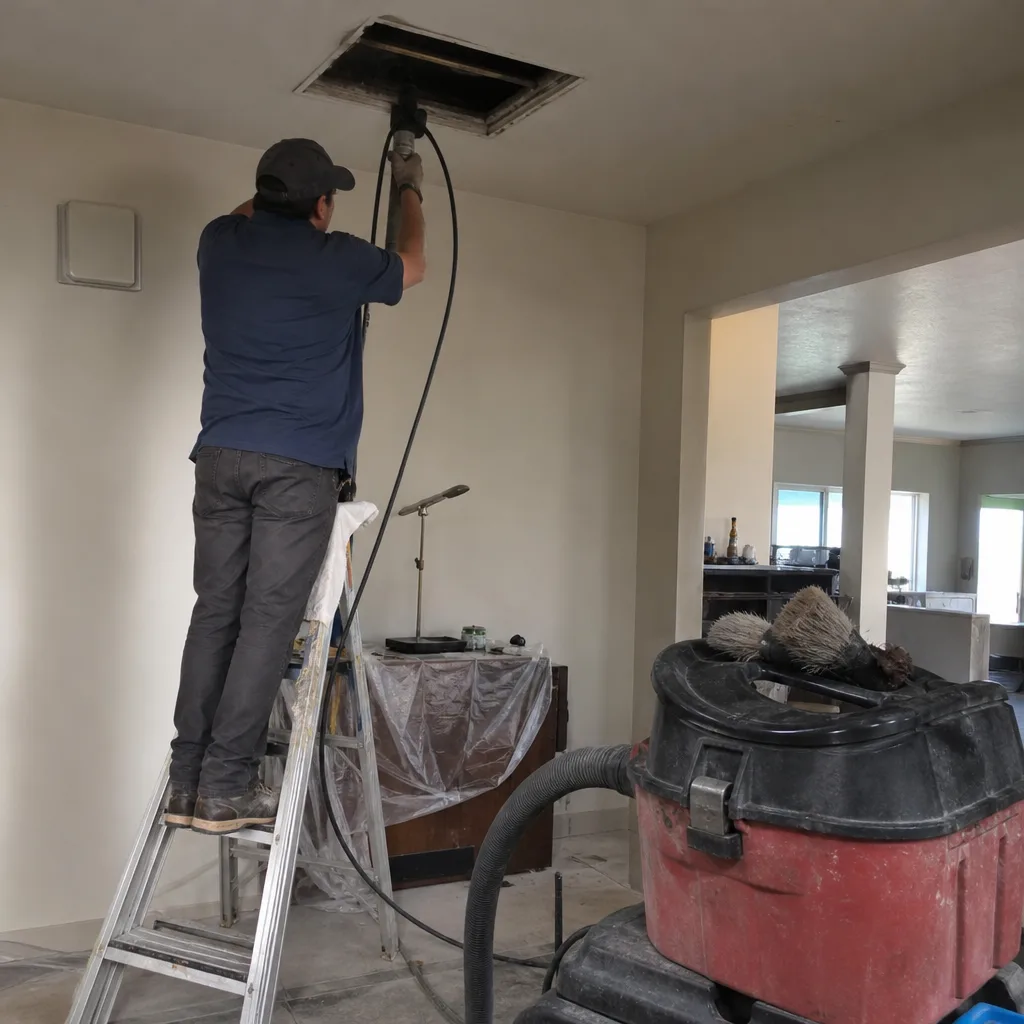 Before
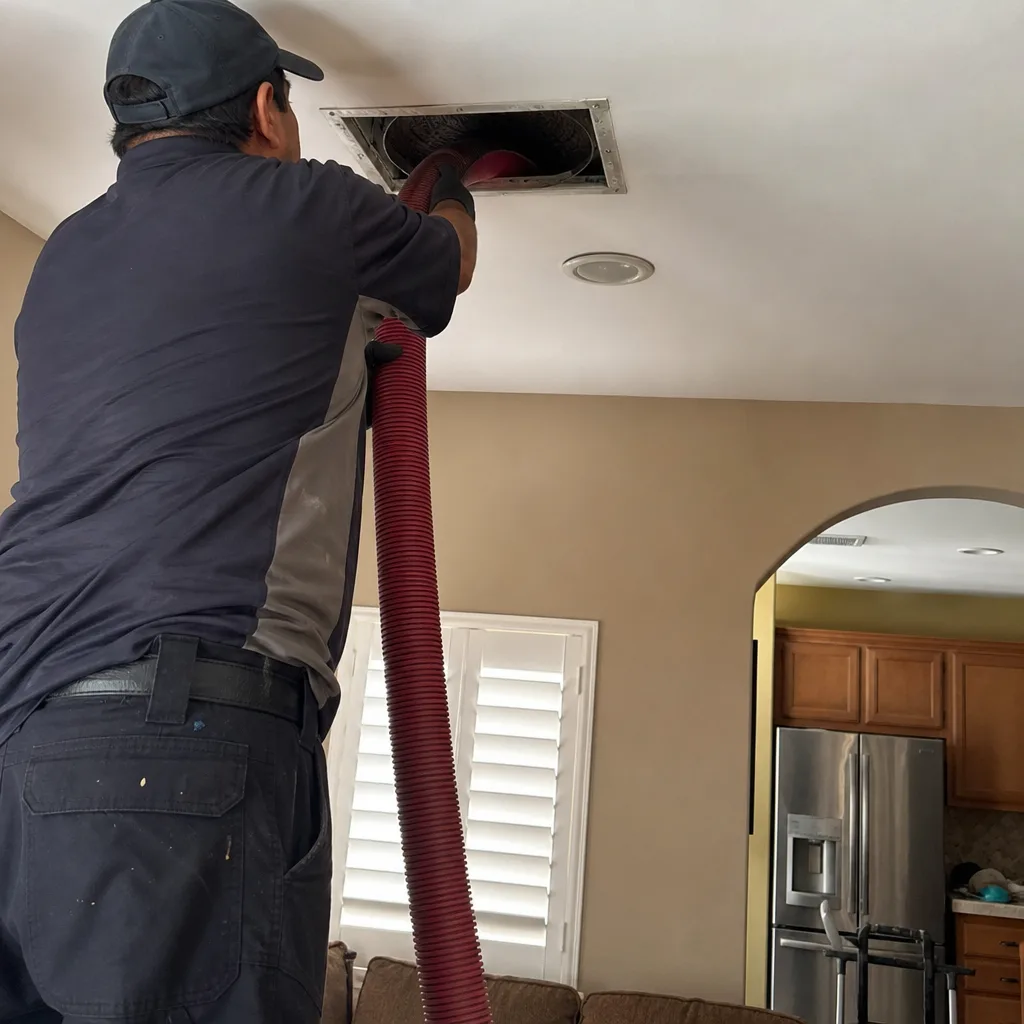 After
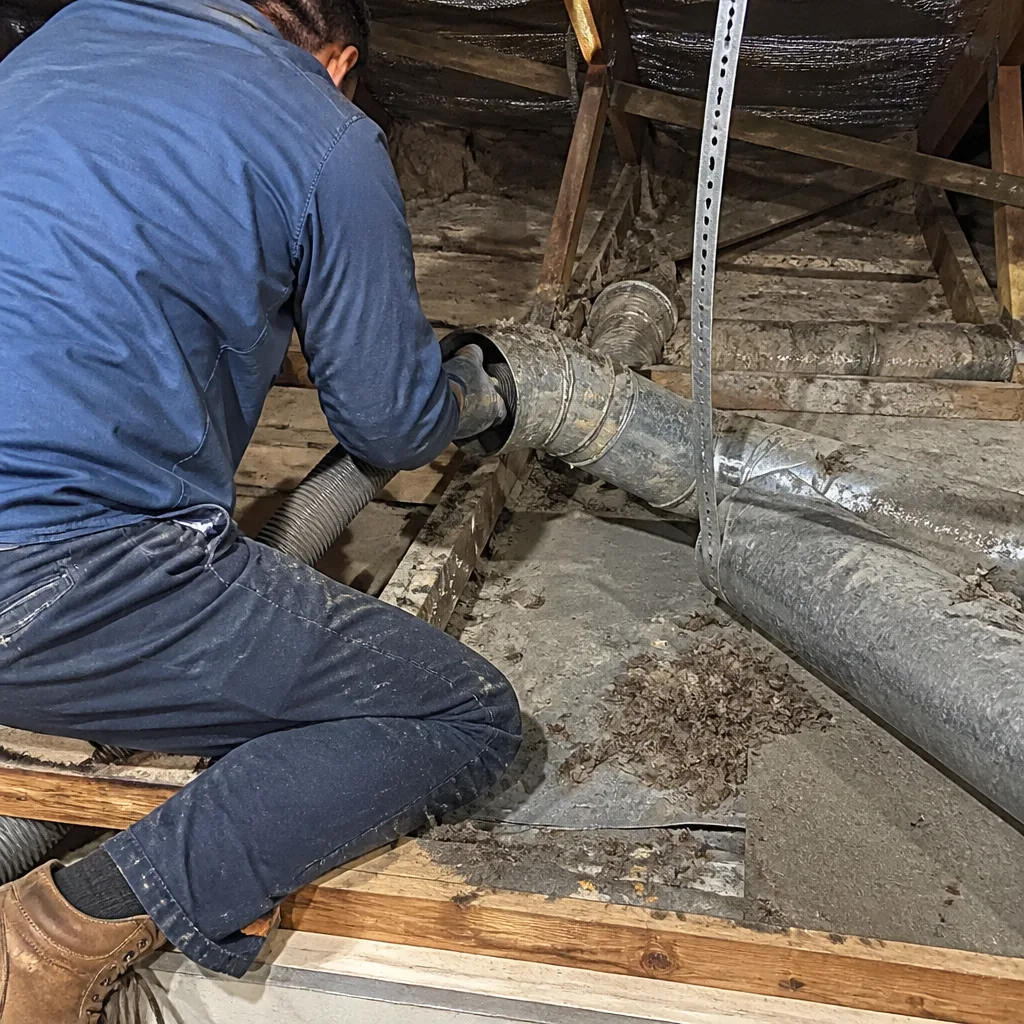 Before
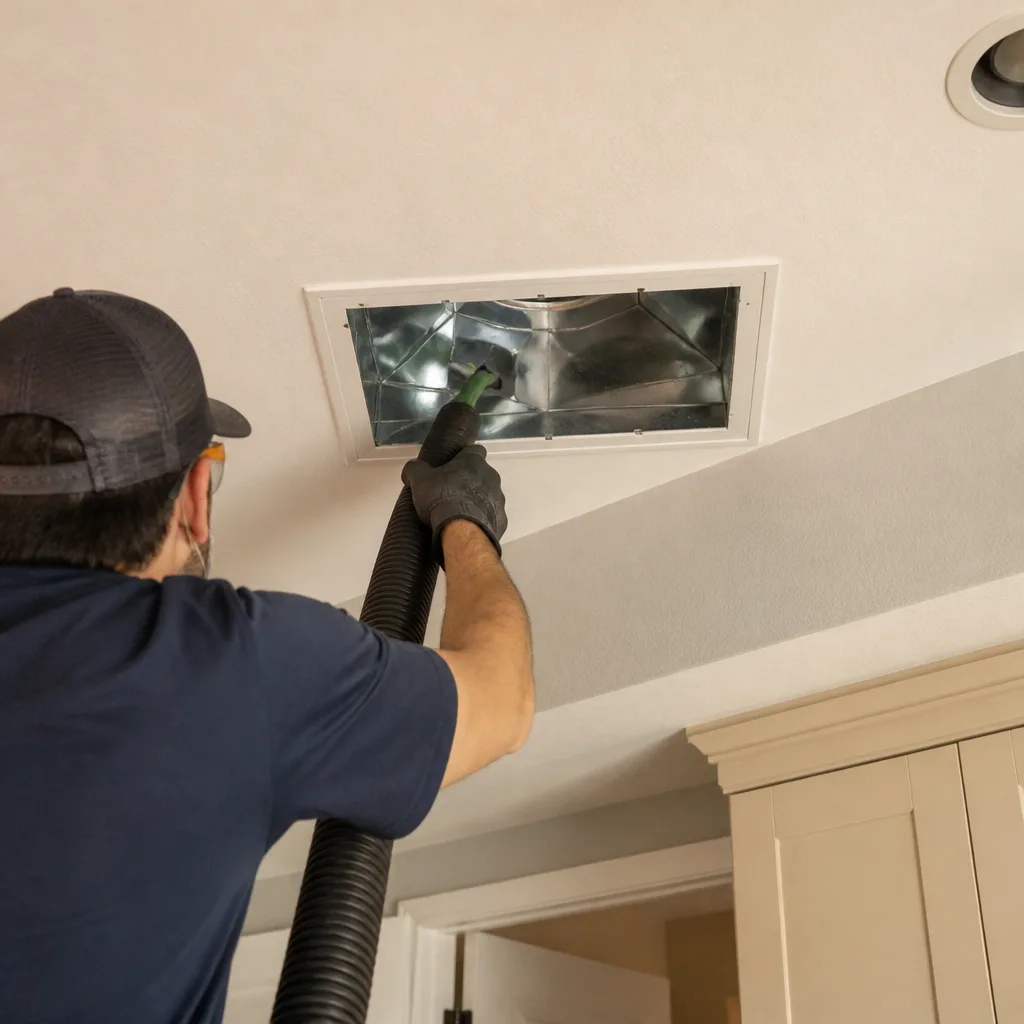 After
 Before
 After