
Last updated November 2, 2026
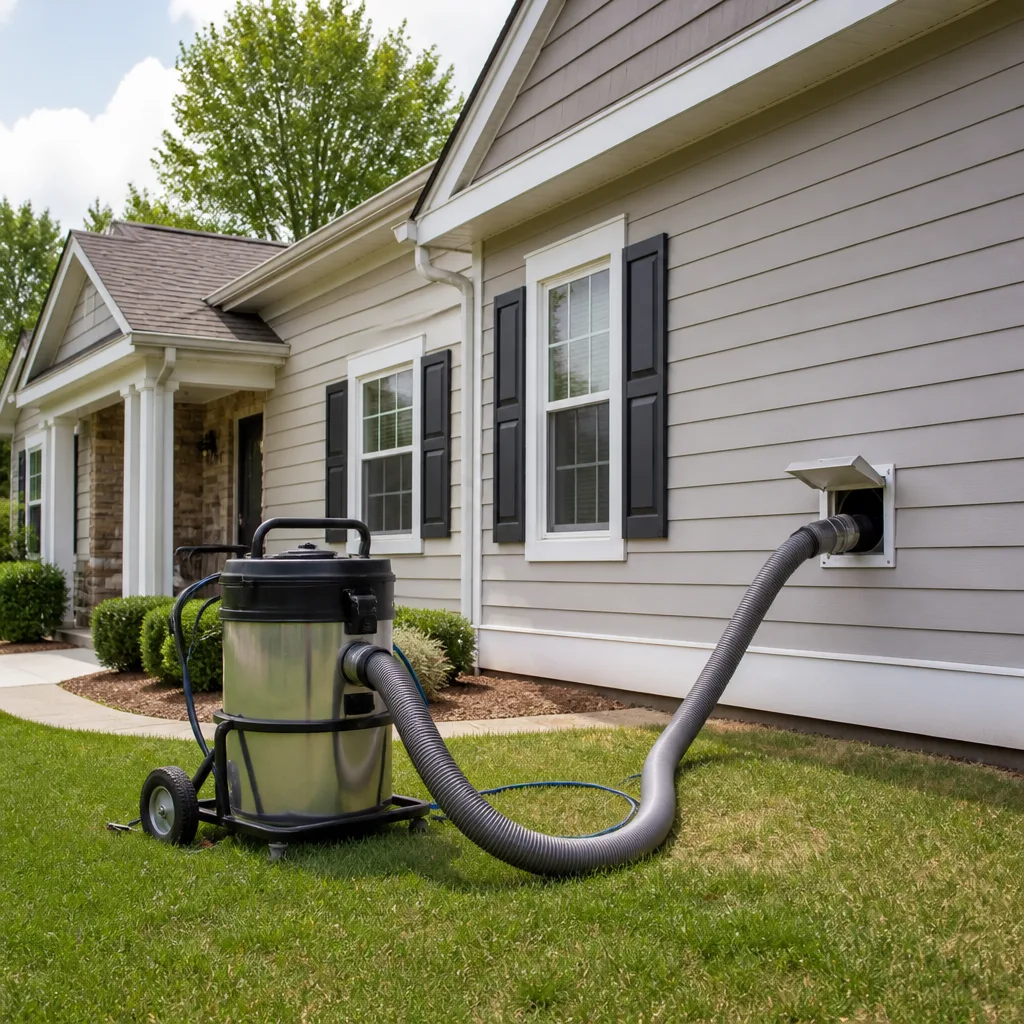 Whole-home duct cleaning
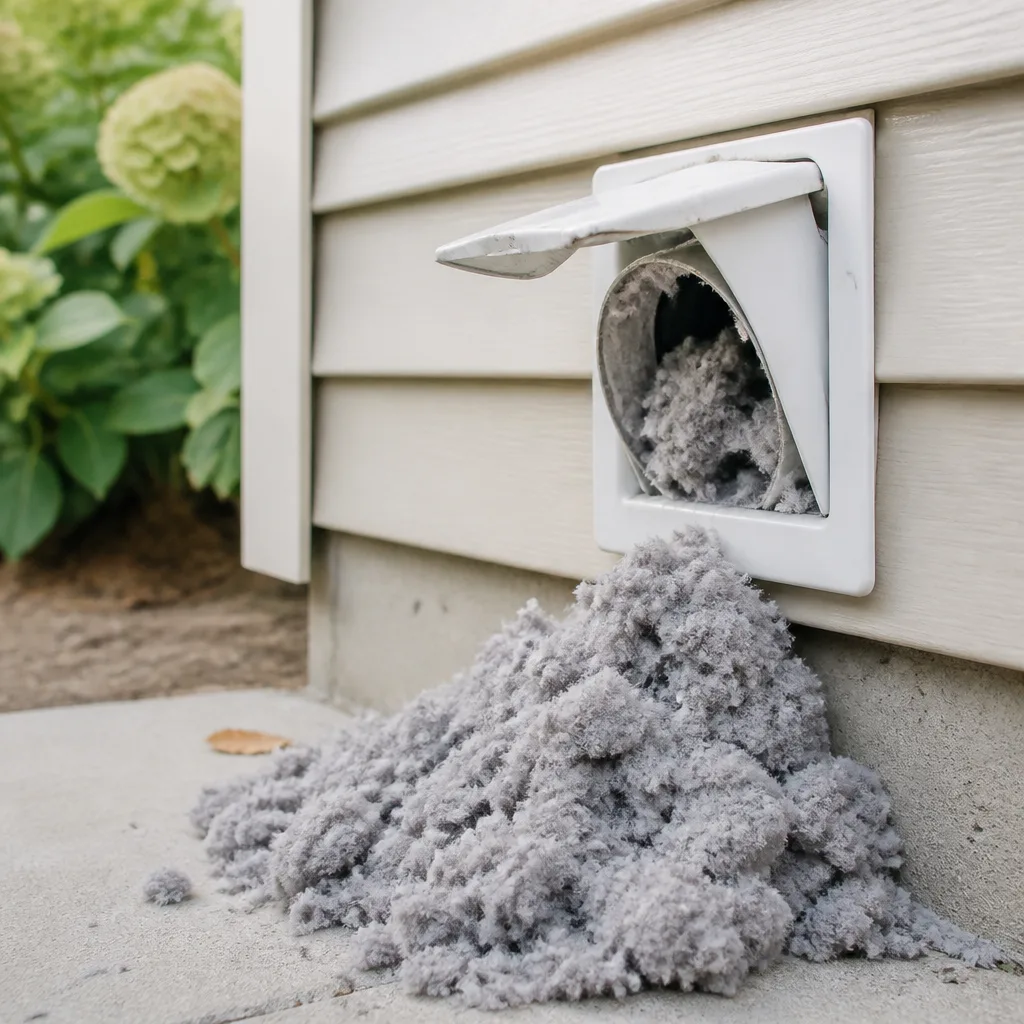 Dryer vent cleaning
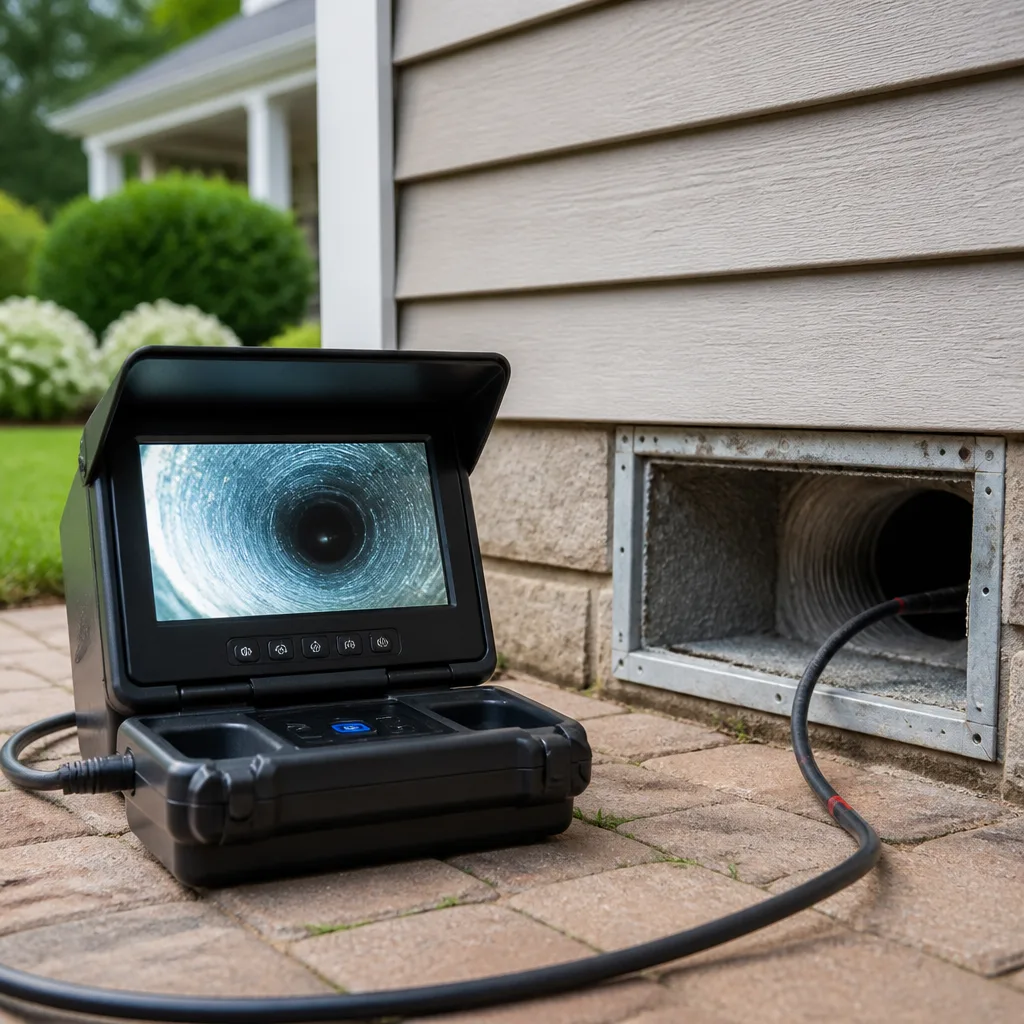 Camera inspection
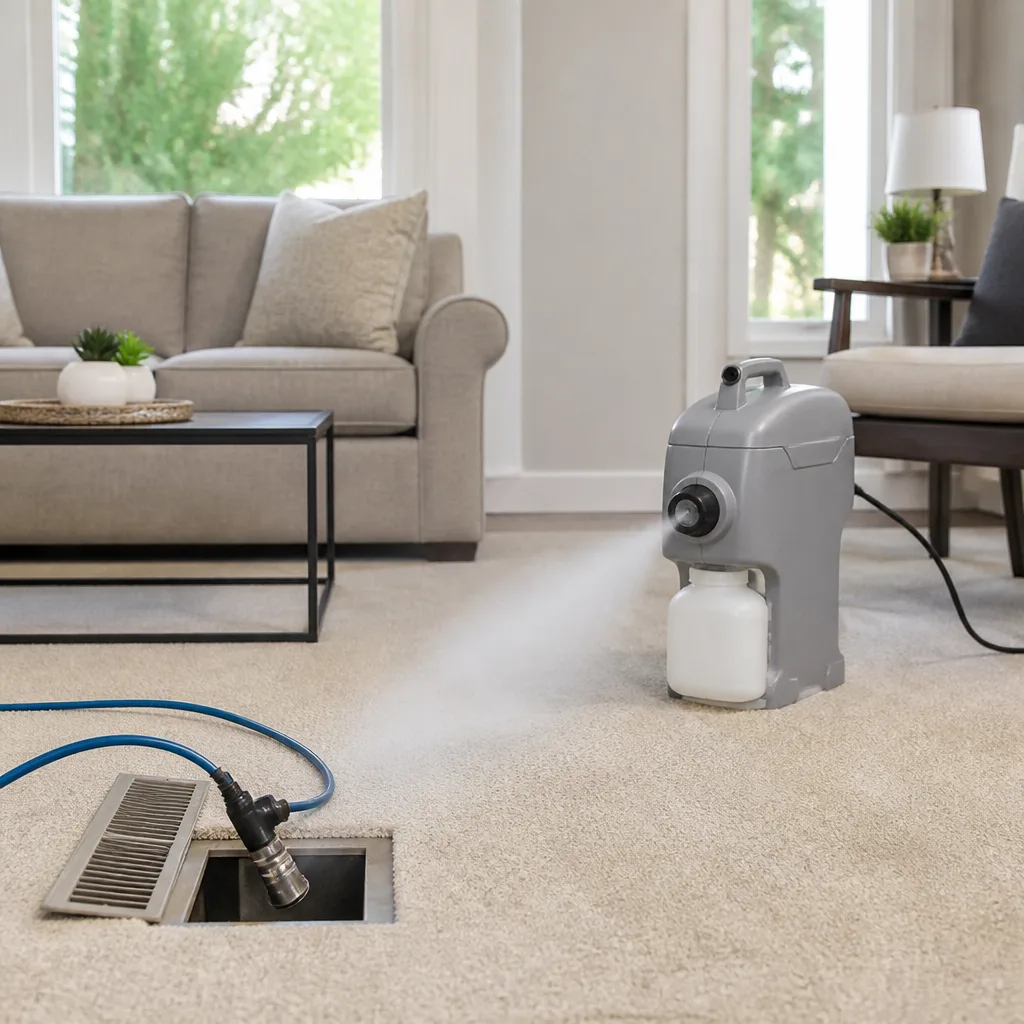 Sanitizing & deodorizing
Whole-system duct and dryer vent check with before-and-after photos - you see exactly what came out of your vents
That "$99 whole-house special" is a bait ad - the real number appears once they are in your hallway, or the "clean" is a shop-vac at the register. We photograph the inside of your ducts before and after instead.
Air Duct Cleaning Troubleshooting: Common Problems and How to Fix Them
If your home still smells musty two weeks after a duct cleaning, the crew almost certainly cleaned the wrong thing. Microbial growth on the evaporator coil or in the drain pan is the source of persistent odor roughly 70% of the time, and no amount of duct vacuuming touches it. This guide treats post-cleaning symptoms as diagnostic data. We’ll walk through what each lingering problem actually indicates about your system, how to tell whether leakage rather than contamination is driving your indoor air quality complaints, and what to do when a cleaning demonstrably failed. Homeowners in Hemet face a specific set of challenges here: summer attic temperatures above 140°F bake flex duct until the inner liner delaminates, and the dry, dusty Santa Ana season pushes fine particulate through even small return-side leaks. By the end, you’ll know exactly what to ask a technician and what a legitimate fix looks like.
Quick Answer
Air duct cleaning fails when the actual problem was never inside the ducts: persistent musty odor usually points to the evaporator coil or drain pan, rapid dust return points to duct leakage or a missing filter seal, and weak airflow points to collapsed flex duct or undersized returns. The fix is rarely another cleaning. It’s a proper diagnosis using static pressure testing, visual inspection of the coil and plenums, and duct leakage assessment. If a company cleaned your ducts and the problem persists, the cleaning wasn’t the failure. The diagnosis was.
Styles & brands we work with
- Whole-home duct cleaning
- Dryer vent cleaning
- Camera inspection
- Sanitizing & deodorizing
Table of Contents
- Symptom 1: Musty Odor Persists After Cleaning
- Symptom 2: Dust Returns Within Weeks
- Symptom 3: Airflow Is Still Weak in Certain Rooms
- Symptom 4: Allergy Symptoms Don’t Improve
- Duct Leakage: The Problem Cleaning Can’t Solve
- Collapsed Flex Duct and Why Cleaning Won’t Fix It
- Static Pressure Testing: The Diagnostic Most Companies Skip
- How to Document and Escalate a Failed Cleaning
- Common Mistakes to Avoid
- When to Call a Professional
Symptom 1: Musty Odor Persists After Cleaning
A musty smell that survives a duct cleaning is almost never coming from the ducts. The odor source in most homes is the evaporator coil and its drain pan, which sit downstream of the filter and upstream of the supply ducts. Dust, skin cells, and pet dander that slip past an undersized or poorly sealed filter land on the wet coil, where they bind with condensation and form a biofilm. That biofilm is what you smell. It lives in the air handler, not the ductwork.
In Hemet, the pattern is predictable. Homeowners run air conditioning from May through October, the coil stays wet most of that time, and the drain pan beneath it rarely dries completely. The result is a persistent earthy or locker-room smell that starts at the supply registers every time the blower kicks on. We’ve opened air handlers in Hemet homes where the ductwork was spotless after a professional cleaning and the coil looked like a science experiment. The cleaning wasn’t the problem. Nobody looked at the coil.
What to check:
- Remove the access panel on the air handler and inspect the coil for visible dark patches or slime. If you’re not comfortable doing this, have a technician do it.
- Check the drain pan for standing water or sludge. A pan that doesn’t fully drain breeds odor-causing bacteria year-round.
- Smell each supply register with the blower running. If the odor is strongest at the registers closest to the air handler, the source is upstream of the ducts.
The fix is coil cleaning with a dedicated antimicrobial treatment and, in some cases, a drain pan replacement or condensate line flush. Duct cleaning cannot reach this area. A company using Abatement Technologies air filtration equipment during the coil cleaning can also capture the aerosolized material instead of blowing it into your living space, which is what happens when the coil is brushed without containment.
Symptom 2: Dust Returns Within Weeks
If visible dust settles on furniture within two to four weeks of a duct cleaning, the ducts are being refilled from outside. The cleaning removed what was in the ductwork, but something is actively feeding new particulate into the system. The three most common sources, in order of likelihood:
- A return-side duct leak pulling attic or crawlspace air into the system. The return side operates under negative pressure, so any gap draws in whatever surrounds the duct: blown insulation fibers, drywall dust, rodent droppings, soot.
- A filter that doesn’t seal properly in its slot, allowing unfiltered air to bypass the media entirely. A 1-inch fiberglass filter in a loose slot lets a meaningful percentage of airstream particles pass around the edges.
- A supply-side leak in a vented attic that depressurizes the house enough to pull dust through wall cavities and can lights. This one surprises people: a supply leak doesn’t just waste conditioned air, it creates negative pressure in the living space.
In Hemet homes built before the 2000s, return ducts are frequently flex runs that have been chewed by rodents or pulled loose at the plenum connection. The dry attic environment makes the flex outer jacket brittle, and the connections fail at the takeoff collars. Dust return after cleaning is often the first symptom homeowners notice that points to Air Duct Repair as the real solution. A cleaning cannot seal a hole.
Symptom 3: Airflow Is Still Weak in Certain Rooms
Weak airflow that persists after a cleaning is rarely a contamination problem. It’s a duct geometry or integrity problem. If the back bedrooms in a Hemet home are still noticeably warmer than the rest of the house after the ducts were cleaned, the cleaning was addressing the wrong variable. The real culprits, in order of what we find most in the field:
- Collapsed flex duct inner liner. The inner liner separates from the insulation and folds over itself, reducing the effective diameter of the run by 50% or more. No vacuum or rotary brush opens it back up.
- Crushed or kinked flex runs. Attic work, storage boxes placed on duct runs, or original installation through tight framing can kink a flex duct enough to strangle airflow to one branch.
- Undersized supply runs. A 6-inch flex run feeding a room that needs 8 inches will never deliver adequate airflow, no matter how clean the duct is.
- Disconnected branch runs. Especially in attics with blown insulation, a run can pull loose from a wye and dump conditioned air into the attic instead of the bedroom.
Here’s how to narrow it down yourself: with the system running, hold a tissue near each supply register. Compare how far the tissue deflects in the problem room versus a comfortable room. Then close the door to the problem room and listen at the return. If the return grille pulls hard and the room still doesn’t cool, the supply run is compromised. If the supply register barely moves air but the duct run is visible in the attic, check for kinks or collapse. When in doubt, a professional evaluation with static pressure testing will pinpoint the restriction in under an hour.
Symptom 4: Allergy Symptoms Don’t Improve
You paid for a duct cleaning expecting allergy relief, and two months later you’re still waking up congested. The ducts are not the only thing that matters, and in many homes they’re not even the primary driver. Allergy symptoms are driven by fine particulate that remains airborne for hours: dust mite frass, pollen fragments, pet dander, and mold spores. Duct cleaning removes the settled debris inside ductwork, which matters. But it does nothing for the sources that continuously generate airborne allergens.
What to investigate when symptoms persist:
- Filter type and installation. A 1-inch fiberglass filter captures almost nothing below 10 microns. A quality MERV 11 or MERV 13 pleated filter, properly seated, removes a meaningful fraction of the airborne allergen load. We work with Honeywell and Aprilaire air quality products specifically because the filter housing seal and media quality determine what actually reaches the coil and the air you breathe.
- Carpet and upholstery reservoirs. Dust mite allergen lives in carpet pile, bedding, and upholstery. Ducts are a minor reservoir compared to a 10-year-old bedroom carpet.
- Return-side leakage. As covered in the dust section, return leaks pull unfiltered attic air directly into the airstream. If the return duct pulls air through a gap before the filter, the filter cannot help you.
- Humidity-driven mold growth in the air handler. The coil and drain pan issue from Symptom 1 is also an allergy driver. If you smell mustiness and still have allergies, this is likely a contributing factor.
One Hemet-specific note: the region’s dry climate means mold in wall cavities and crawlspaces is less common than in coastal Southern California, but the air handler itself can still provide enough sustained moisture for microbial growth. Allergy symptoms that don’t improve after a duct cleaning often lead us to recommend a HEPA-rated filter cabinet upgrade and a coil inspection before any further duct work is quoted.
Duct Leakage: The Problem Cleaning Can’t Solve
Here’s the counterintuitive part of this whole conversation: in many Hemet homes, duct leakage is a bigger indoor air quality problem than duct contamination. That’s not what most duct cleaning companies will tell you, because cleaning equipment doesn’t fix leaks. But the physics is straightforward. A supply-side leak dumps conditioned air into the attic, which drops the pressure inside the house relative to outside. That negative pressure pulls unfiltered outside air through every gap: window seals, door sweeps, can light housings, wall outlets. The air coming in through those paths is not filtered. It’s attic air, wall cavity air, garage air. That’s the air you’re breathing while you sleep.
A return-side leak is even more direct. The return operates under negative pressure, so any gap in a return duct actively sucks attic air, crawlspace air, and whatever else shares that space right into the airstream. That air mixes with the filtered return air downstream of the filter. In homes with significant return leakage, you could install a MERV 16 filter and still breathe unfiltered attic air all summer.
How to tell if leakage is your real issue:
- Check your utility bills against similar homes. A 20 – 30% cooling-cost premium with no obvious explanation often traces to duct leakage in the attic.
- Look for telltale attic signs: dirty insulation around duct connections (the leak acts as a filter, depositing dust at the gap), condensation on duct exteriors in summer, or visible gaps at plenum takeoffs.
- Schedule a duct leakage test. A qualified technician can pressurize the duct system and quantify leakage in CFM. Results above 10% of system airflow indicate repair, not cleaning.
This is why the full-service approach matters. We clean ducts, but we also repair ductwork in Hemet when the diagnosis calls for it. The right tool for a leaking duct is mastic and mesh, not a rotary brush.
Collapsed Flex Duct and Why Cleaning Won’t Fix It
Flex duct is the default duct material in most Hemet homes built after 1980, and it fails in a specific way that no cleaning can reverse. The inner liner, a thin plastic tube, separates from the insulation jacket and collapses inward. The duct run still looks fine from the outside, but airflow through it falls to a fraction of the original capacity. We see this in Hemet attics constantly during summer, when attic temperatures in the peak afternoons stay above 130°F for weeks at a time and the liner adhesive loses its grip.
The failure sequence goes like this: attic heat degrades the liner, the liner develops a small tear or loosens from the jacket, the tear widens as the duct is flexed during service visits or attic work, and eventually the liner folds over itself inside the insulation. The duct is now an obstruction, not a duct. A rotary brush passes through it and does nothing. A vacuum pulls air around the collapsed section. The homeowner is told the ducts were cleaned, and the back bedroom is still 10 degrees warmer than the rest of the house.
When we suspect a collapsed liner, we don’t suggest another cleaning. We inspect the run, verify the collapse, and recommend replacement of that branch. If multiple runs show the same failure pattern, especially on the second story or southwestern exposure where attic heat peaks, the conversation shifts to partial or full duct replacement with properly sized, R-8 insulated flex or rigid alternatives. This is air duct repair work, not maintenance. The two services are complementary: clean the ducts that are functional, replace the runs that can’t be saved.
Static Pressure Testing: The Diagnostic Most Companies Skip
Static pressure testing is the single most useful diagnostic in residential HVAC troubleshooting, and most duct cleaning companies never do it. The reason is simple: a static pressure reading often reveals that the problem is not duct dirt at all, and that changes the service recommendation. A company equipped and trained to measure static pressure is a company equipped to tell you the truth about your system.
The test takes about 15 minutes. A technician drills two small probe holes: one in the supply plenum after the coil, one in the return plenum before the filter. A digital manometer measures the pressure the blower is working against, in inches of water column. Total external static pressure should be 0.5 inches or less on a properly designed residential system. Readings above 0.8 indicate the blower is fighting excessive resistance. Readings above 1.0 indicate a system that is likely noisy, inefficient, and possibly damaging the blower motor over time.
What high static pressure tells you:
- High return-side pressure points to an undersized return, a restrictive filter, or a collapsed return duct. The fix is larger returns, a better filter housing, or duct repair.
- High supply-side pressure points to undersized supply runs, closed dampers, or a dirty coil. Coil cleaning solves the third cause. Duct work changes solve the first two.
- Balanced but high pressure often means the filter is too restrictive for the system’s designed airflow, especially with high-MERV filters in systems never designed for them.
In our experience across Hemet’s housing stock, homes built in the 1980s and 1990s frequently have undersized return air systems and restrictive filter grilles. The original equipment was installed to meet code minimums of that era, not to handle today’s filter efficiency. If your duct cleaning company cannot discuss static pressure numbers with you, they’re leaving diagnostic value on the table.
How to Document and Escalate a Failed Cleaning
If a company cleaned your ducts and the stated problem demonstrably persists, you have a reasonable basis to demand recourse. The key is documentation. Companies are more likely to revisit a job when the homeowner presents organized evidence rather than a phone complaint.
Here’s the documentation sequence we recommend:
- Photograph everything before and after. If you didn’t photograph before, photograph the current condition: visible dust at supply registers, musty-smelling registers, debris in the return grille. Date-stamp the photos.
- Keep the invoice and any written report. Note what the company claimed to have done. If they claimed to have cleaned the coil, and you later find the coil fouled, that’s a direct contradiction.
- Log the symptom timeline. Record when the cleaning happened, when the odor returned, when dust reappeared, and what the system was doing at each point. A two-week timeline of post-cleaning recurrence is strong evidence.
- Request a re-inspection in writing. Email is better than phone. State the specific symptom, when it started, and what you’re asking them to verify.
- Get a second opinion if needed. A third-party diagnostic with photos and static pressure readings provides leverage. If the second opinion identifies the real issue, you can present that to the original company.
- Escalate through licensing channels or payment disputes. If the company refuses to address documented failures, file a complaint with the California Contractors State License Board if applicable, or dispute the charge with your card issuer.
One note on expectations: a legitimate cleaning company will re-inspect when a customer reports persistent symptoms. A company that refuses to engage with documented evidence was never going to make it right, and you should move on to someone who will. The next call should be to a provider that does its own diagnostics rather than subbing them out.
Common Mistakes to Avoid
- Assuming persistent odor means the cleaning failed. Persistent odor usually means the source was never in the ducts. A coil inspection is the next step, not a refund demand.
- Re-cleaning ducts as a default response to dust return. If dust returns within weeks, the system is pulling new particulate in. A second cleaning without sealing the leak doubles the cost and changes nothing.
- Replacing a perfectly good system before checking duct design. In Hemet homes with weak airflow to specific rooms, we’ve seen homeowners spend $15,000 on new equipment when the real fix was one collapsed flex run and two undersized branch lines. Diagnose before you replace.
- Installing a high-MERV filter without measuring static pressure. A MERV 13 filter in a system designed for a fiberglass filter can push static pressure high enough to reduce airflow and trigger blower overheating. Check pressure, then choose the filter.
- Ignoring dryer vent issues while focused on ducts. A clogged dryer vent is a fire hazard that no duct cleaning addresses. Dryer vent cleaning in Hemet is a separate safety service, not an upsell.
- Accepting a quote without seeing the ductwork. Any legitimate duct cleaning or repair quote in a Hemet attic should involve an actual attic inspection. A phone quote without an inspection is a guess.
- Waiting until peak summer to address airflow issues. Hemet’s cooling season stretches from May through October. Scheduling diagnostics and repairs in the shoulder season gets you better availability and avoids the heat wave rush.
When to Call a Professional
Call a professional when the symptoms point to something beyond the reach of your own inspection: you can’t access the air handler, static pressure testing is beyond your tools, you suspect duct leakage but can’t locate it, or you’ve documented a failed cleaning and need third-party verification. If you’re in Hemet and dealing with any of the issues described in this guide, Duct Cleaning Hemet offers free estimates and the diagnostic capability to tell you what’s actually wrong. Our trucks carry Rotobrush rotary brush systems for mechanical agitation cleaning, Nikro HEPA-rated vacuums for containment, and Abatement Technologies filtration units when the job calls for remediation-grade air scrubbing. We also handle the repairs that cleaning alone can’t fix, including flex duct replacement and plenum resealing. The point is this: call a company that can diagnose before it cleans. Duct Cleaning Hemet home services are available throughout the Hemet area. Call (877) 752-8890 for a free estimate.
See the difference
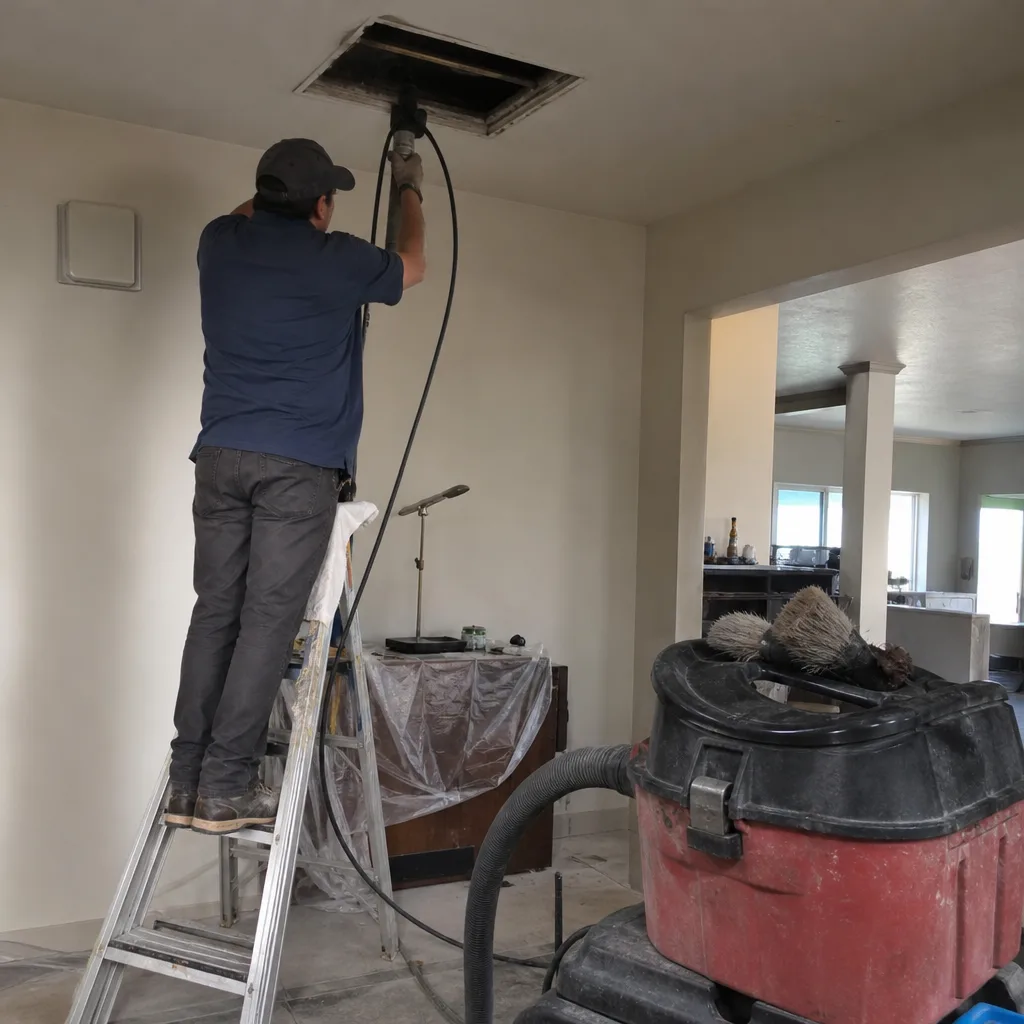 Before
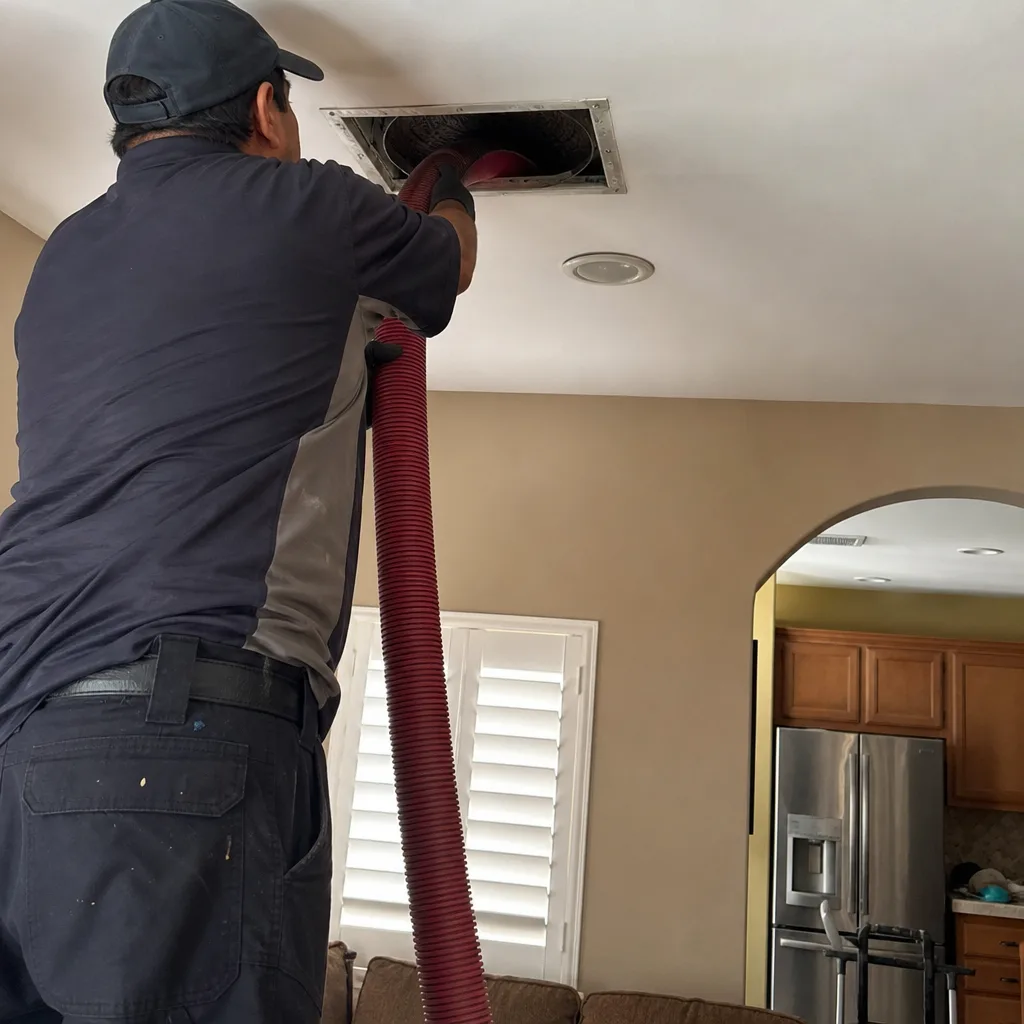 After
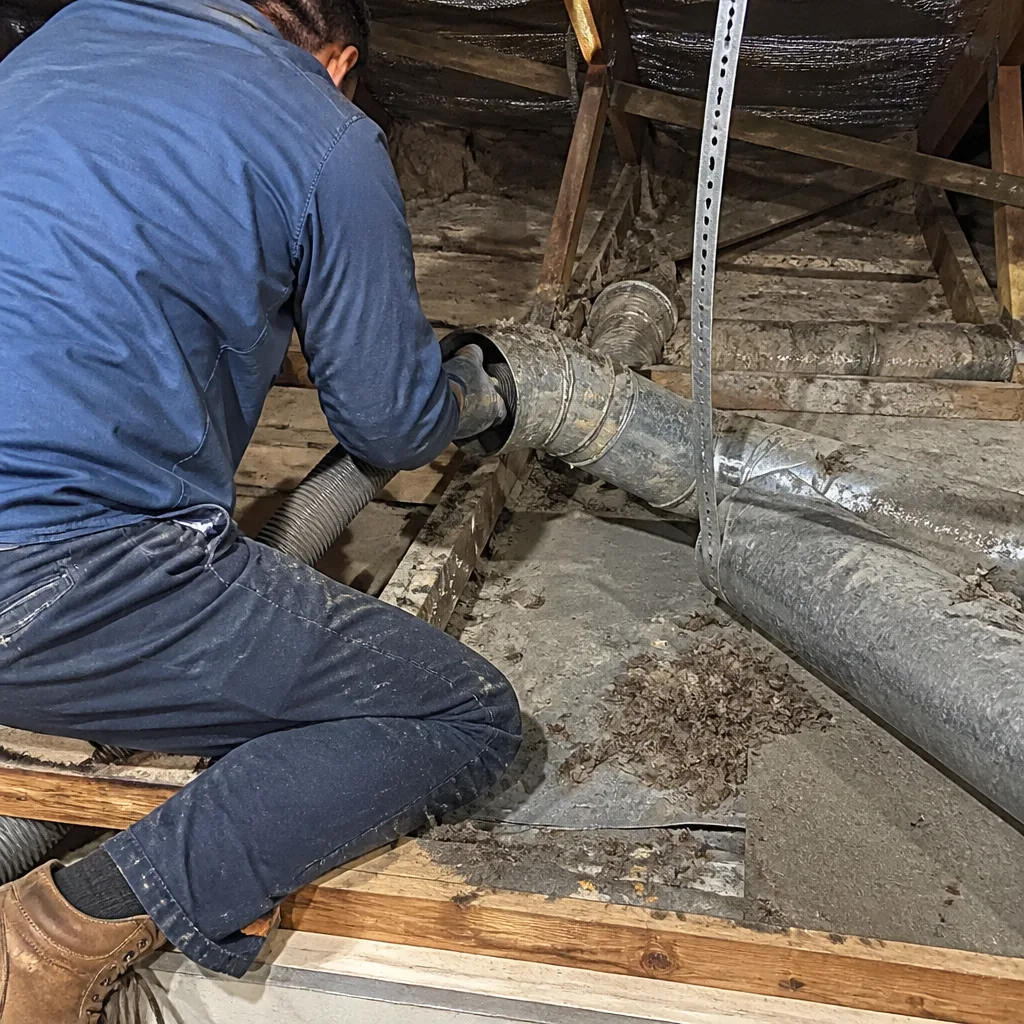 Before
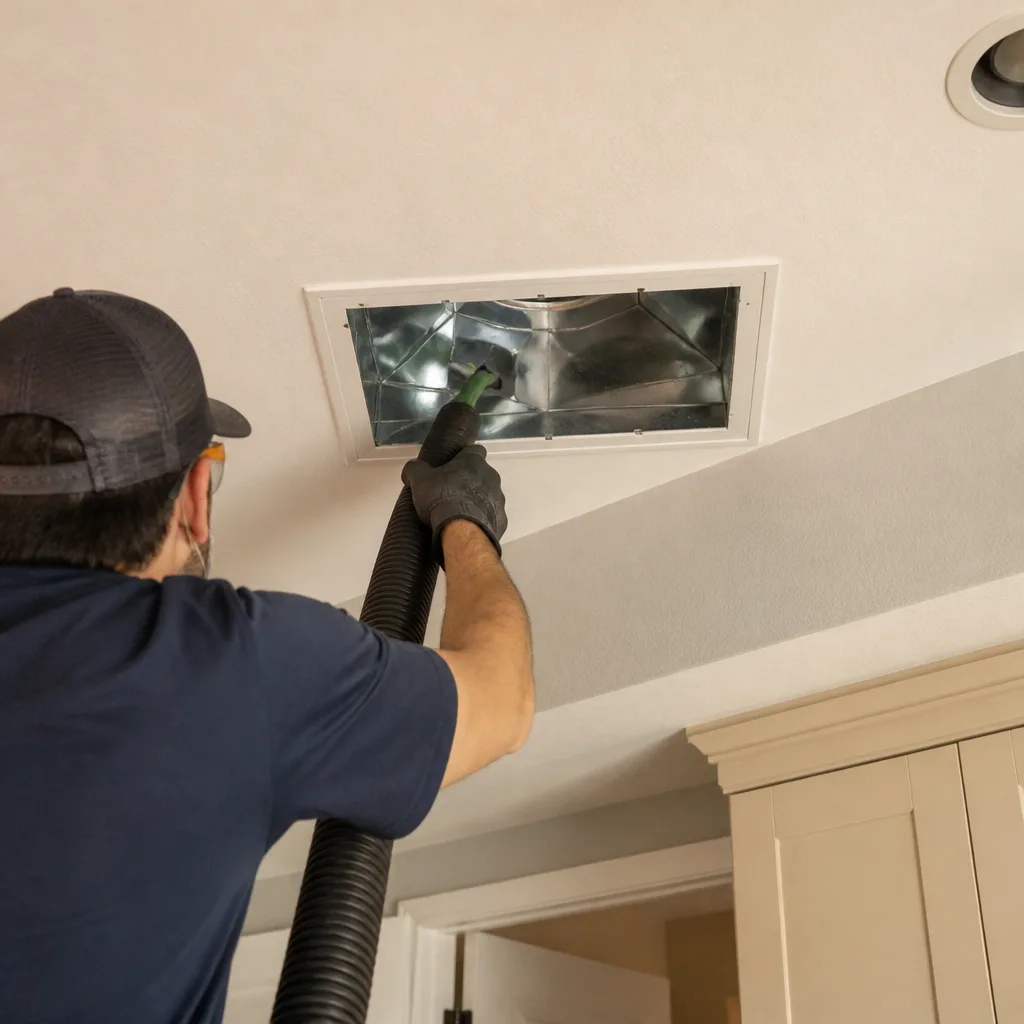 After
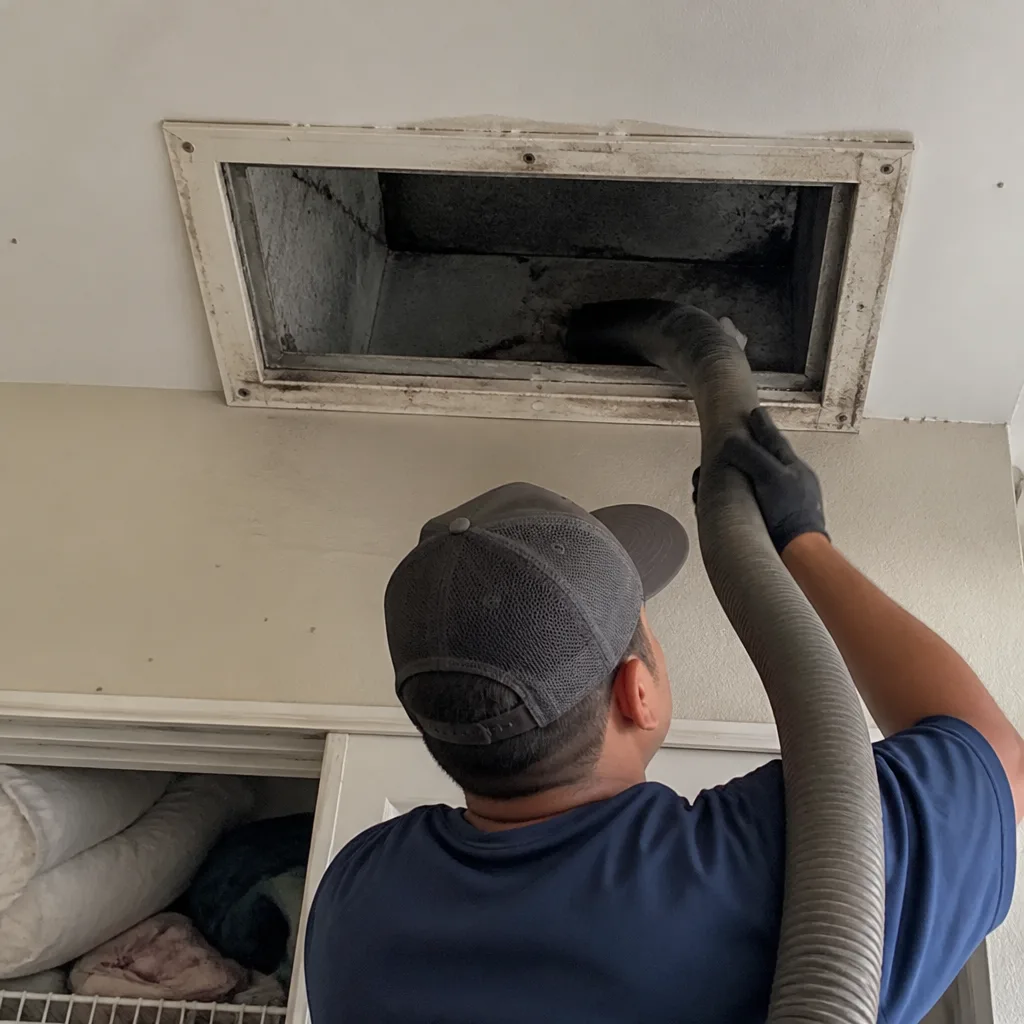 Before
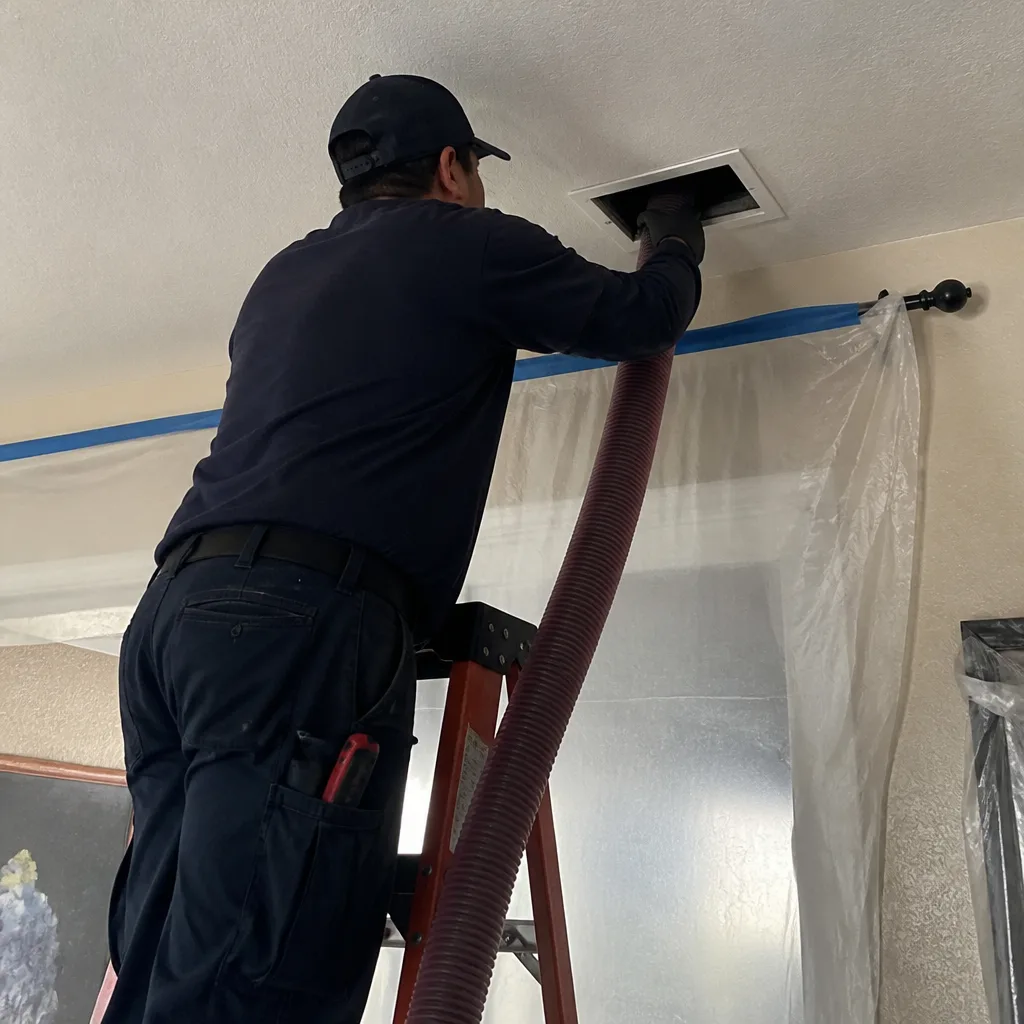 After
Frequently Asked Questions
Whole-system air duct cleaning in Hemet typically runs $350 to $700 for a standard single-family home, depending on system size, number of returns, and accessibility. The key differentiator is what’s included: coil cleaning, plenum access, and equipment quality all affect the price. Our pricing uses professional-grade equipment including Rotobrush and Nikro systems, with one flat price per system agreed before work starts. Call (877) 752-8890 for an exact quote. Estimates are free.
Cheaper quotes usually reflect smaller equipment, skipped steps, or both. A shop vac through a register removes almost nothing from the duct interior. A Rotobrush rotary brush mechanically agitates the duct walls while a HEPA-rated Nikro vacuum contains the particulate. Companies that quote $99 whole-house cleanings are almost certainly performing a visual inspection with a camera and calling it cleaning, or running an underpowered vacuum from the register side. We do neither. We’re at Air Duct Cleaning in Hemet if you want to see what the difference looks like.
Request before-and-after photos from inside your ducts. The company should photograph the interior of the supply plenum, several branch runs, and the return before work starts, then the same locations after. With the right equipment, this is straightforward. If a company refuses to provide interior photos, treat that as a red flag. We also recommend asking which equipment they run: a company using Rotobrush and Nikro systems is working with industry-recognized machinery, not an improvised setup.
Every 3 to 5 years is a defensible interval for most Hemet homes, but the honest answer depends on filter quality, pets, occupancy, and whether the system has leaks. Homes with sealed ducts, a quality filter, and no indoor pets can go longer. Homes with return-side leakage or heavy shedding pets may need it every 2 to 3 years. A system that draws attic air through unsealed returns is being continuously re-contaminated, and cleaning on a fixed schedule without addressing the leak is money spent twice. We’d rather diagnose first and clean when the clean will last.
No, and this is the most common misconception we encounter in Hemet. Musty odor originates at the evaporator coil and drain pan in roughly 70% of cases, not in the ductwork. The coil sits downstream of the filter and upstream of the supply ducts, and it’s the wettest, most biologically active surface in the system. Cleaning the ducts while ignoring the coil removes the symptom’s bystander and leaves the source untouched. A proper fix requires coil access, antimicrobial cleaning, and in some cases drain pan remediation.
Yes. Repairs are part of the service scope at Air Duct Repair in Hemet. We replace collapsed flex runs, seal plenum connections with mastic, repair disconnected branch lines, and address return-side leakage that drives dust and allergy problems. The cleaning removes what’s in the ducts; the repair keeps it out. It’s one provider for both sides of the problem, with equipment that matches the scope of work.
The Bottom Line
Duct cleaning is valuable when it’s done properly and when it’s the right tool for the problem. But it’s not a universal fix. Persistent musty odor points to the coil, not the ducts. Rapid dust return points to leakage, not residual dirt. Weak airflow points to geometry and integrity, not contamination. If your duct cleaning didn’t solve the problem, the answer is not another cleaning. It’s a real diagnosis using the right tools: static pressure measurement, visual coil inspection, leak assessment, and an honest look at the ductwork itself. We built our service around that reality. We use Rotobrush and Nikro equipment for cleaning, Abatement Technologies for air filtration, and we carry Honeywell and Aprilaire air quality products because the filter and the coil matter as much as the ducts. We also clean dryer vents in Hemet because that’s a fire-safety conversation, not an air quality conversation. If the ducts were cleaned and the problem persists, stop re-cleaning. Start diagnosing. Call (877) 752-8890 for a free estimate in Hemet.
Written by the team at Duct Cleaning Hemet, serving Hemet since 2013.